
 AI photo
Broccoli and Pear Salad
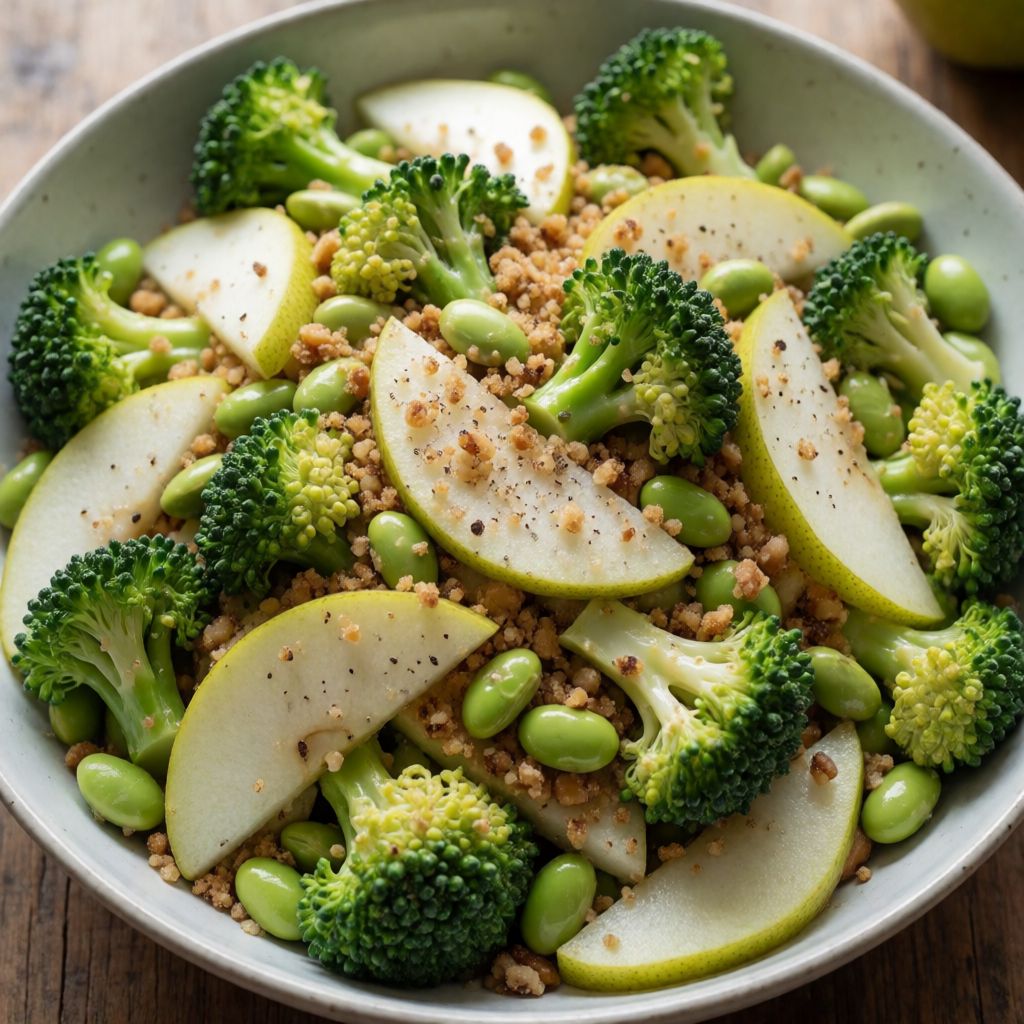
A light salad of steamed broccoli, edamame and pear, finished with a ginger-chilli dressing and dukkah.
Labels are worked out automatically from the ingredients and can be wrong. Check the packaging if it matters to you.
Ingredients
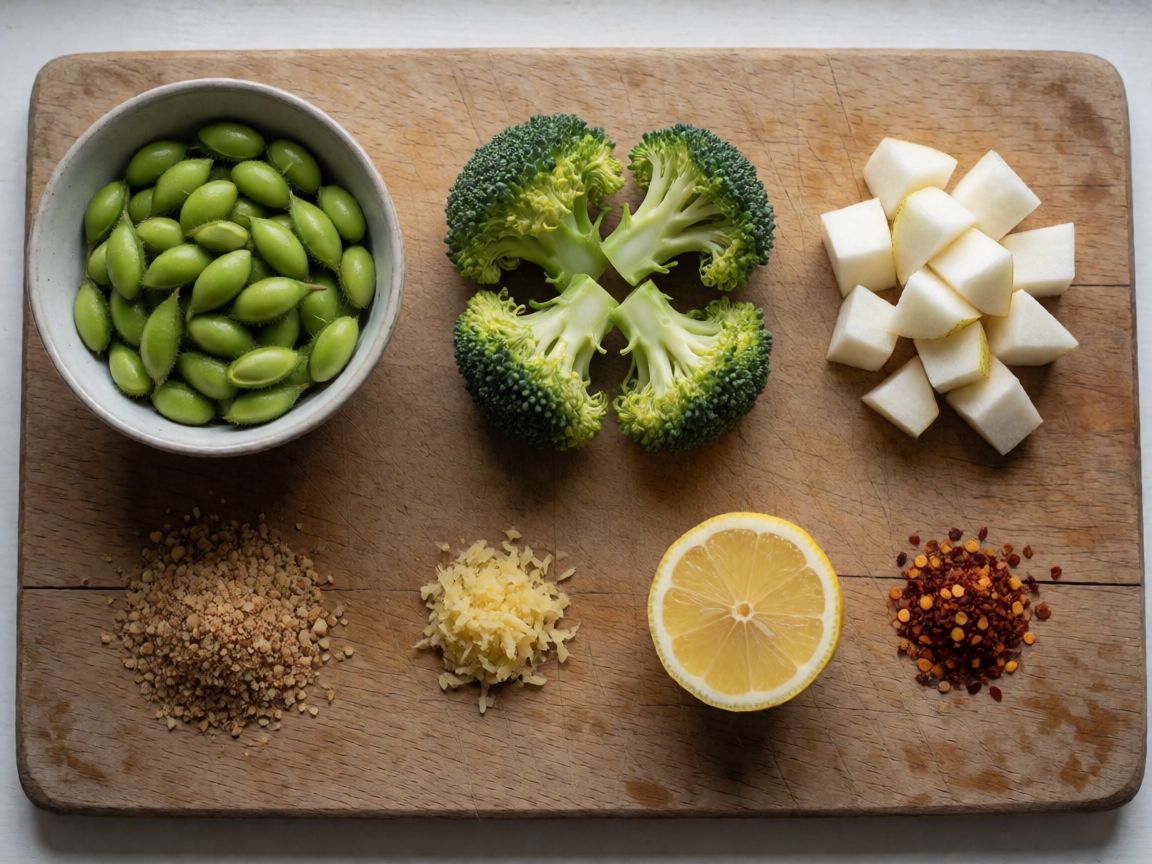
- 150 g Edamame beans shelled
- 1 pcs Broccoli broken into florets
- 2 pcs Pear diced
- 2 tbsp Dukkah
- Salt
- Black pepper freshly ground
- 0.5 pcs Lemon juiced
- 10 g Ginger finely grated
- 0.5 tsp Chilli flakes
- 3 tbsp Olive oil










Steps
Pour boiling water over the edamame beans and leave to stand briefly.
3 minPour a little water into a pan and bring to the boil.
3 minPlace the broccoli florets in a steamer basket and steam over the water, covered, for two minutes.
2 minMix the ginger, lemon juice, chilli flakes and olive oil together to make a smooth dressing.
1 minCombine the edamame beans, broccoli and diced pear with the dressing on a serving plate.
1 minSprinkle with dukkah, salt and pepper before serving.
1 min
This isn't really a cooked dish. It's three raw-ish things persuaded to sit on one plate without any of them losing their character — beans just warmed through, broccoli barely steamed, pear left entirely alone. Whatever heat you use here is there to stop something, not to finish it: stop the beans being icy, stop the broccoli being raw-hard. The whole thing lives or dies on you knowing when to pull back.
Some say broccoli needs boiling to go tender — no, because boiling is exactly what you don't want. Submerge it and the sulphur compounds that give broccoli its bite leach straight into the water, and what comes out the other side is grey-green and smells faintly of school dinners. Steam it instead, briefly, with the lid on so the heat stays where it's working: the colour should deepen to something close to emerald, the stem should give a little resistance when you bite, not collapse. That resistance is half the reason this salad is interesting to eat.
The dressing isn't trying to be a vinaigrette in the formal sense — there's no mustard, no whisking in oil drop by drop, because you're not building an emulsion that has to hold. You're making something thin enough to run off a spoon and coat rather than cling: oil to carry the heat of the chilli and the sharpness of the ginger into every floret, lemon to cut back through the oil so it doesn't sit heavy on the tongue.
Edamame sold shelled and frozen have already been blanched at the factory before freezing — that's standard practice, it's what stops the beans discolouring and going mealy in the freezer. So pouring boiling water over them and leaving them a few minutes isn't cooking, it's thawing and warming. If you ever get hold of fresh edamame still in the pod, that's a different job entirely — a few minutes of actual boiling in salted water, then shuck them. Don't treat shelled frozen beans the same way or you'll overcook something that was already done.
For the broccoli, one head, florets cut roughly to the same size so they steam at the same rate — a big floret and a small one side by side means one's still hard when the other's gone soft, and you end up fishing pieces back out. Don't throw the stalk away: peel the tough outer skin off it, slice it thin, and it steams perfectly well alongside the florets, it just wants a touch longer because it's denser. If you don't own a steamer basket — most flats don't — a metal sieve or colander set over the pan of boiling water works the same way, and a plate sat on top does the job of a lid. The water never touches the broccoli; that's the whole point.
Pear wants to be ripe but not soft-ripe — press near the stem and it should give slightly, not squash. Dice it last of the three, right before you mix, because cut pear starts browning in the air within minutes and there's no dressing step rescuing it after the fact. No pear in the house, a firm, sweet apple will stand in, though apple carries less natural sugar so you may want a touch less lemon to keep the balance.
Dukkah is an Egyptian spice-and-nut mix, and its whole history is domestic thrift, not fine dining — a way of using up nuts and seeds you had in the cupboard, toasted and crushed with whatever spice was to hand, eaten with bread and oil for breakfast. The criterion for buying or making one: toasted nuts and seeds, coarsely crushed, not ground to a paste or a powder — you want texture, not dust. A homemade version off hazelnuts or almonds, sesame seeds, cumin and coriander seed, all toasted dry in a pan and bashed in a mortar, will do exactly what the shop-bought version does, for less money.
Ginger has to be fresh and grated, not dried and ground — dried ginger is warm and musky, a different spice really, and it won't release that sharp, almost citrus oil the way fresh ginger does when it hits lemon and olive oil. Chilli flakes are doing a specific job too: being already dried, they infuse evenly into the oil rather than giving you wet pockets of heat the way fresh chopped chilli would. The oil itself is chosen for flavour here, not neutrality — a fruity extra virgin olive oil can stand up to the ginger and chilli without disappearing. A good cold-pressed rapeseed oil, easy enough to find in a British supermarket, does the same job with a grassier note instead.
Salt and pepper go on at the very end, over the assembled salad, never earlier — salted broccoli sitting around starts weeping water onto the plate, and that waters down the dressing just as it's meant to be doing its work.