
 AI photo
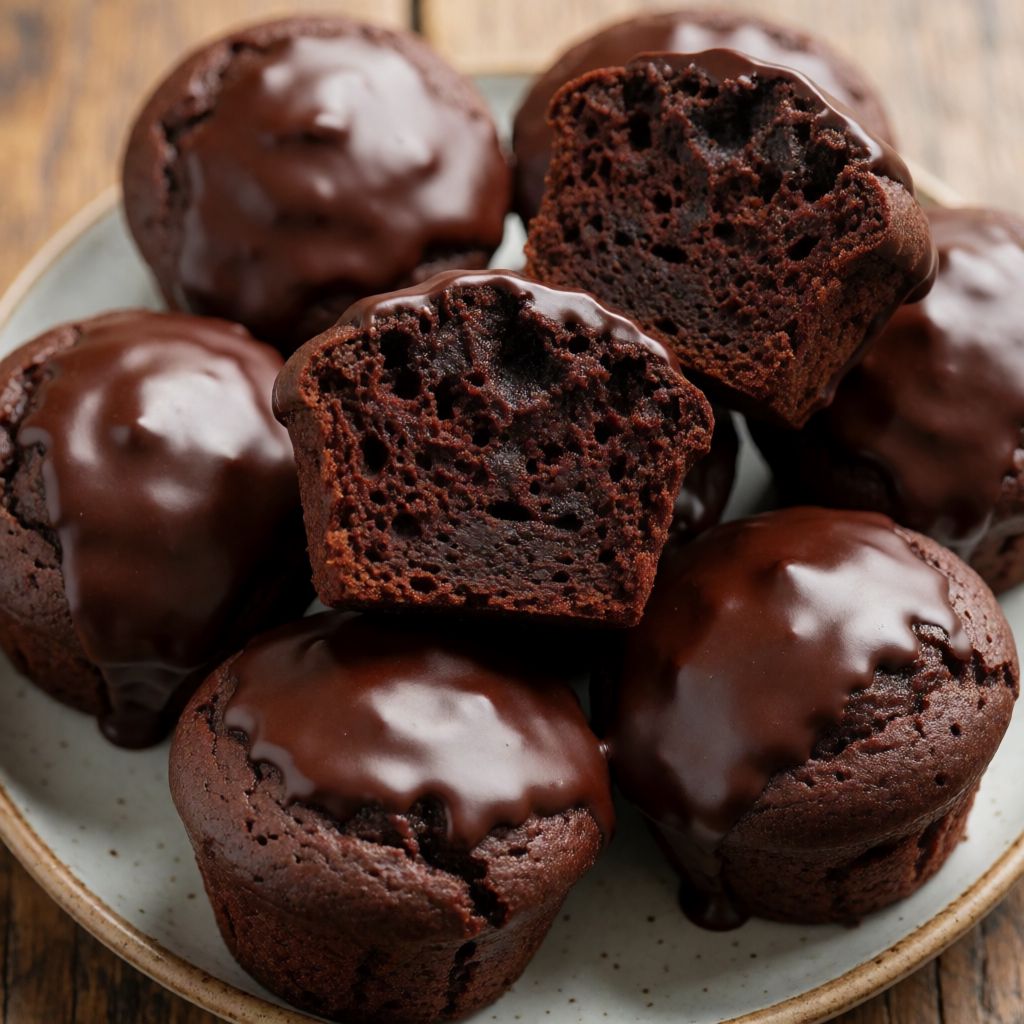
Brownie Muffins with Chocolate Ganache
Rich brownie muffins topped with a dark chocolate ganache, chilled overnight for the best texture.
Labels are worked out automatically from the ingredients and can be wrong. Check the packaging if it matters to you.
Ingredients
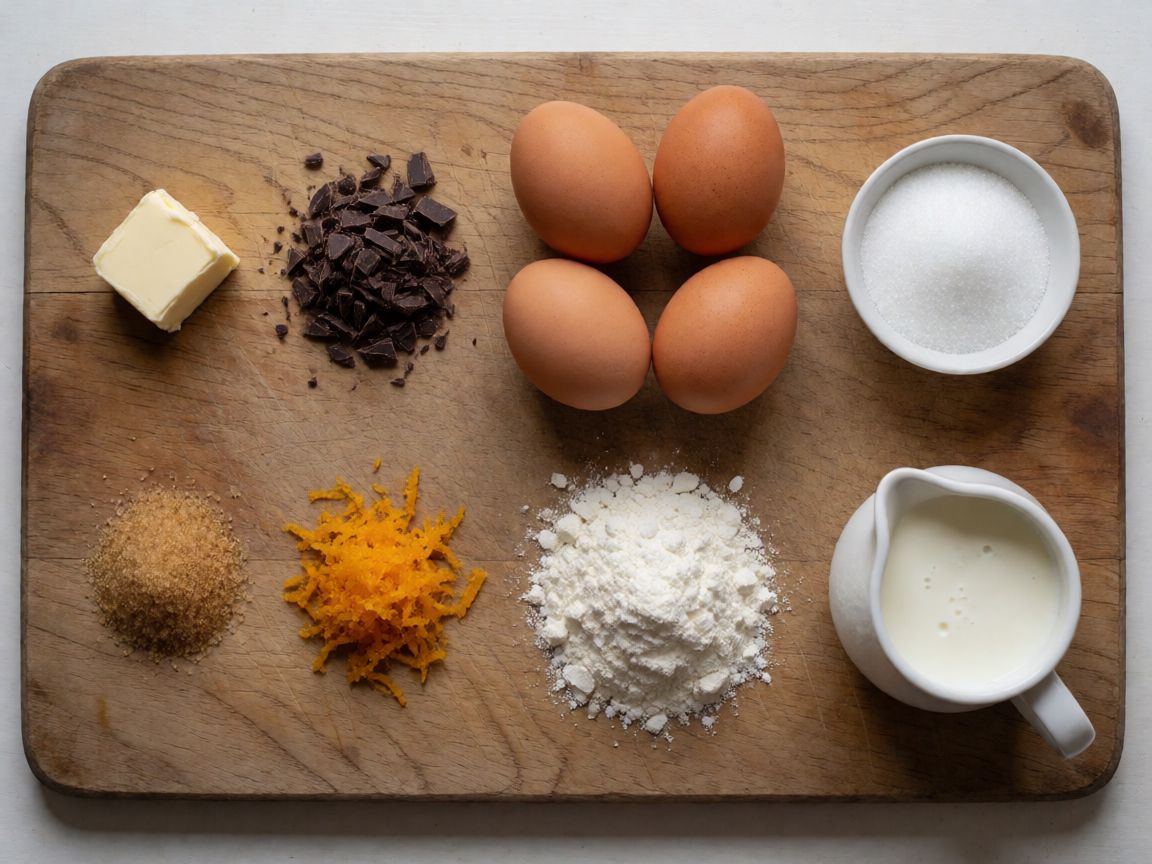
- 200 g Butter
- 200 g Dark chocolate roughly chopped
- 4 pcs Eggs
- 225 g Caster sugar
- 1 tsp Vanilla sugar
- 110 g Plain flour
- 1 pcs Orange finely grated zest
- ½ tsp Salt
- 200 ml Double cream
- 200 g Dark chocolate finely chopped








Steps
Melt the butter in a saucepan over low heat. Remove from the heat and stir in two-thirds of the chocolate until completely smooth.
Whisk the eggs, sugar and vanilla sugar until light and fluffy. Pour in the chocolate-butter mixture and combine.
Combine the flour, orange zest and salt, sift into the batter and mix well. Add the last third of the chocolate and fold in gently.
Pour the batter into a buttered muffin tin and bake at 170°C fan for about 15 minutes.
15 minPlace the tin in the fridge and chill until the next day before removing from the tin.
Heat the cream almost to boiling point and remove from the heat. Stir in the dark chocolate until smooth. Blitz with a blender if needed.
Transfer the ganache to a bowl, cover with cling film and refrigerate for at least 4 hours.
240 minTake the ganache out 1 hour before use. Whip with a hand mixer until creamy, transfer to a piping bag and pipe onto the muffins.
60 min
This isn't a muffin trying to behave like a brownie — it's a brownie that's agreed to live in a muffin tin, with a crust of actual ganache piped on like it's icing a cupcake. The whole point is the contradiction: dense, fudgy, barely-risen interior, dressed up in party clothes. What decides whether it works is restraint in two places — how long the batter sees heat, and how long the ganache sees cold.
Brownies fail the moment you bake them like a sponge, chasing a clean skewer. A skewer coming out clean means the eggs have fully set and the sugar has fully recrystallised — which is exactly the texture you don't want. You're baking until the top has a thin matte crust and the middle still wobbles like it's thinking about it. Pull it then. It firms up as it cools, and that's the only firming-up you get, so don't try to finish the job in the oven.
Then comes the step everyone skips because it feels unnecessary: chilling the whole tin overnight before unmoulding. Warm brownie batter is basically set fat and chocolate suspended in a barely-cooked egg structure — it has no spine yet. Turn it out warm and it collapses or tears at the base. Cold, the butter and chocolate have gone rigid, and the muffin holds its shape coming out of the tin instead of slumping into it.
The orange zest is doing real work, not decoration — it cuts through what would otherwise be a one-note hit of sugar and cocoa fat, the way a squeeze of citrus does in any very rich dessert. Skip it and nothing collapses, you just lose a bit of lift on the palate.
The ganache is where most people lose the plate of biscuits, so to speak. Cream brought "almost to the boil" means you watch for the surface starting to move and steam rising properly — not a full boil, which would drive off water you need and risk scorching the milk solids on the bottom of the pan. Pour that over chopped chocolate and you're not cooking anything, you're melting chocolate with heat borrowed from the cream — which is why the chocolate for the ganache is chopped fine and the chocolate for the batter can stay rough: fine pieces melt evenly from stored heat, rough chunks are fine in batter because the batter itself gets baked.
Some say ganache needs whisking hard to come together — no, because beating air into warm ganache just gives you bubbles that later collapse into a grainy surface. You stir gently until smooth, and if it won't cooperate (cocoa percentage too high, chocolate seized), you blitz it briefly with a blender, which breaks the fat crystals down mechanically rather than beating air in.
The four-hour fridge rest for the ganache isn't about safety, it's about the fat crystallising into a stable network — cocoa butter needs time at cold temperature to set into the form that gives ganache body rather than puddle. Pipe it straight from the pan and you get chocolate sauce running off the muffins. Then you bring it back to room temperature for an hour before whipping — straight-from-fridge ganache is too stiff to aerate properly and will just shear and crack under a mixer; you need it cool but pliable, cold enough to hold air, warm enough to take it.
On the butter: use a proper butter, nothing with added water content marketed as "spreadable," because that water will throw off the ratio you're relying on for the fudgy set. Dark chocolate should be something you'd eat on its own — 60-70% cocoa solids is the sensible range here; go much higher and the batter turns bitter and dry, much lower and it won't set properly because there's not enough cocoa solid structure, just sugar and fat.
Double cream is the right cream because it has enough fat (typically 48%+) to form a stable emulsion with chocolate without splitting; single cream doesn't carry enough fat and the ganache will look greasy and separate rather than glossy.
Vanilla sugar, if you can't find it, is just caster sugar that's lived next to a vanilla pod — a few drops of vanilla extract added with the eggs does the same job, no mystery there.
A standard muffin tin on a UK hob setup is fine for this — no kazan logic needed, no special equipment. The only thing worth being honest about: domestic ovens vary more than their dials suggest, so the 170°C fan and 15 minutes is where you start checking, not where you stop. And patience here isn't a virtue for its own sake — it's the actual ingredient that makes the difference between a wet mess and a dense square of something worth piping chocolate onto.