
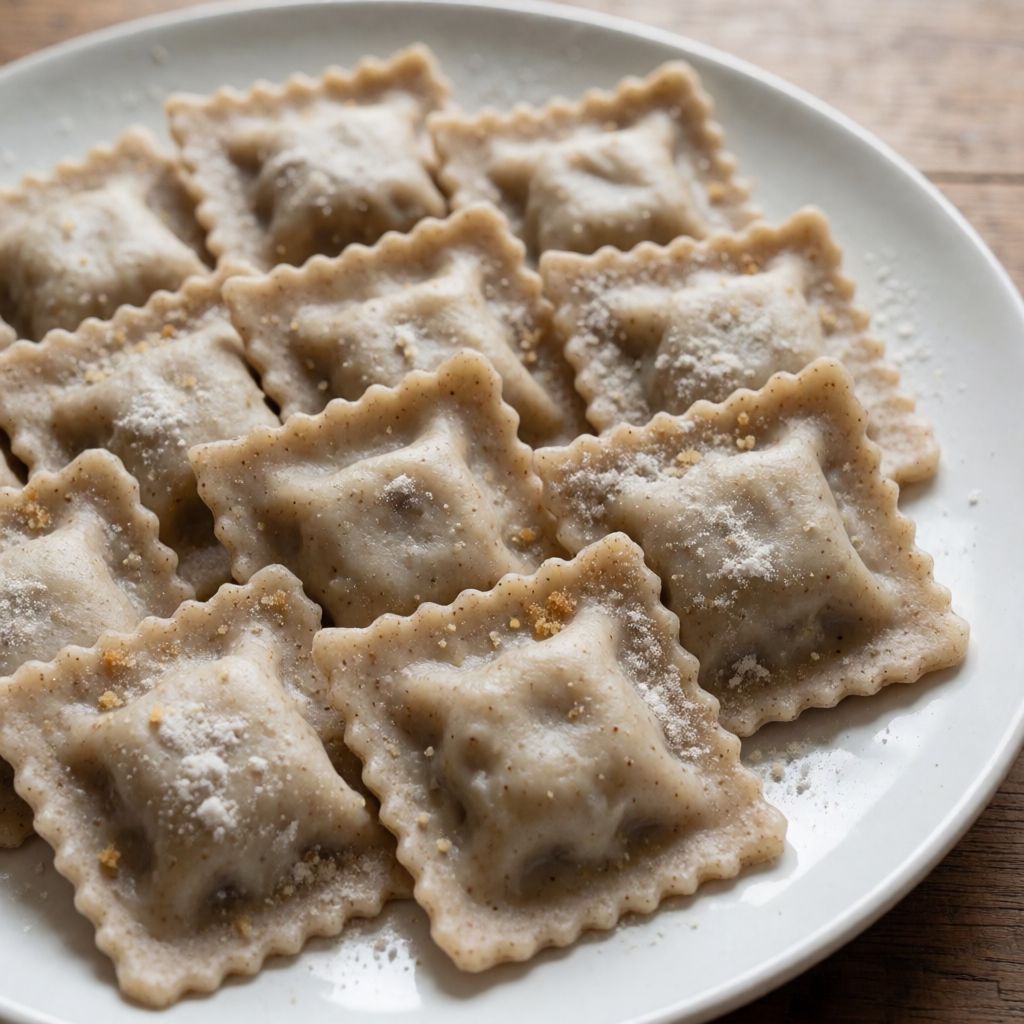
 AI photo
Buckwheat Flour Ravioli
Homemade ravioli with a buckwheat-flour pasta dough, filled with an aubergine and ricotta filling, finished in butter and mint.
Labels are worked out automatically from the ingredients and can be wrong. Check the packaging if it matters to you.
Ingredients
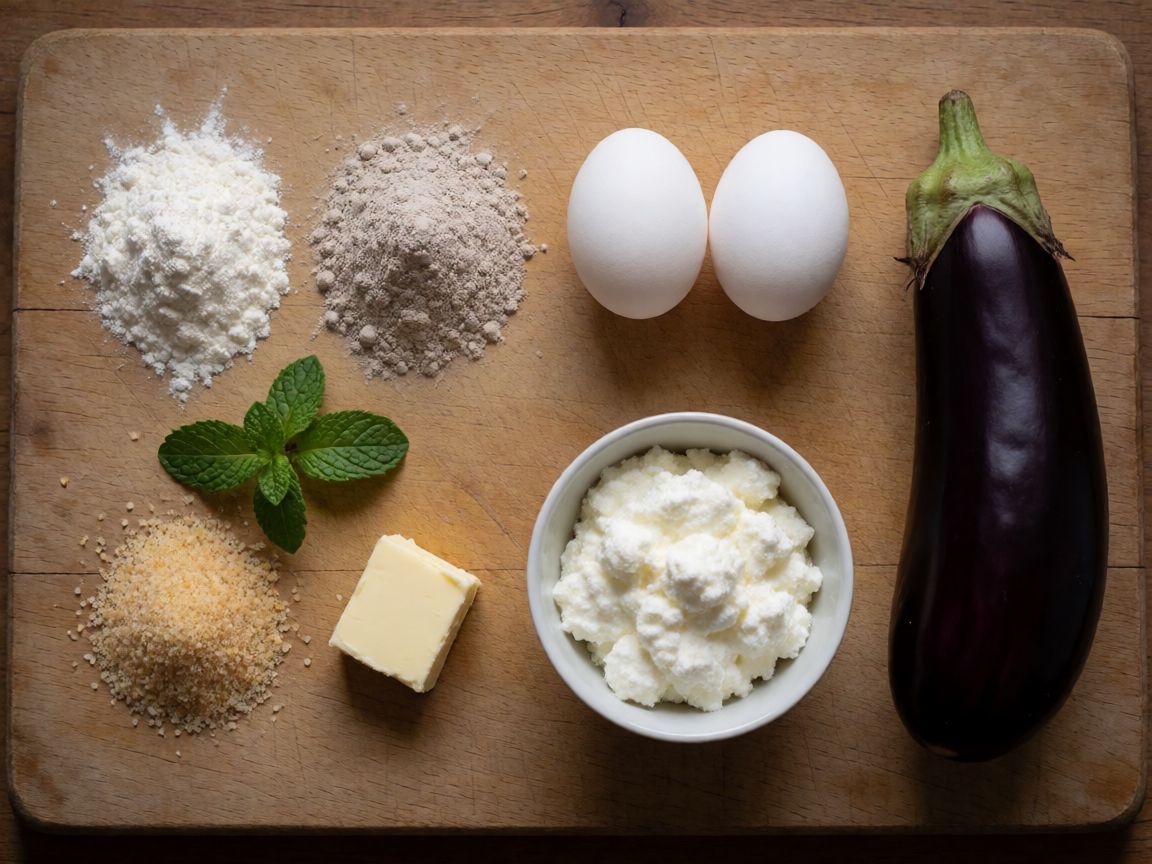
- 200 g Plain flour
- 30 g Buckwheat flour
- 2 pcs Eggs
- 250 g Ricotta
- 1 pcs Aubergine
- 2 tbsp Breadcrumbs dried
- Salt to taste
- Black pepper to taste
- Olive oil
- Water
- Butter
- 2-3 pcs Mint fresh leaves












Steps
In a bowl, combine the plain flour and buckwheat flour, and mix with a fork.
Add the eggs and, after a brief mixing, turn the dough out onto the worktop; knead by hand until smooth and elastic.
Wrap the dough in cling film and leave to rest in the fridge for about 1 hour.
60 minPeel the aubergine and cut the flesh into cubes.
Cook the aubergine cubes over medium heat for at least 15 minutes, adding a little water from time to time.
15 minTransfer the cooked aubergine to a blender, season with salt and pepper, add olive oil and blend until smooth.
Transfer the aubergine mixture to a bowl, add the ricotta and breadcrumbs, and mix.
Roll out the dough with a rolling pin or pasta machine into a thin, but not too thin, sheet.
Using a spoon, place balls of filling on the dough, about 4–5 cm apart.
Fold the dough over to cover the filling, and press the layers of dough firmly together.
Using a cutter about 6 cm in diameter, cut out the ravioli.
Lay the ravioli out on a clean, dry cloth.
Bring a pot of water to the boil.
Drop the ravioli into the boiling water and cook for 4–5 minutes.
Melt the butter and add two or three fresh mint leaves.
Transfer the cooked ravioli to the pan with the butter and warm through for a couple of minutes.
Buckwheat ravioli are a plain-flour pasta with a stubborn 15% of the flour swapped for buckwheat — not enough to make the dough collapse, enough to give it that grey-brown fleck and a nutty, slightly bitter edge that plain egg pasta doesn't have. The filling is aubergine, cooked down and blended smooth, then cut with ricotta and breadcrumbs. What decides whether this works is not the folding or the cutting — it's whether the aubergine filling is dry enough to sit inside dough without turning it to paste.
Aubergine is mostly water held in a sponge of flesh. Cook it fast and hot and you caramelise the outside while the inside stays wet and bitter — that's the dish failing before it's even a filling. Cook it slow, with small splashes of water instead of a flood, and the flesh collapses evenly, the bitterness cooks off, and you're left with something closer to a soft purée than a stewed vegetable. The breadcrumbs afterward aren't padding — they're there to pull out whatever moisture is left, because wet filling is the single most common reason ravioli split or turn gluey on the inside.
Some say pasta dough needs oil or water added. No — two eggs and flour, kneaded by hand until it stops fighting you, is enough; the eggs supply all the fat and liquid this dough needs, and extra water just makes it slack and hard to roll thin. The hour in the fridge isn't dead time — it's the gluten relaxing so the sheet doesn't spring back and shrink when you roll it, which is why a dough that fought you at kneading suddenly behaves an hour later.
Plain flour gives you the gluten, the stretch, the thing that lets you roll a sheet thin enough to see your fingers through without it tearing. Buckwheat flour has no gluten at all — it's not even a wheat, it's related to rhubarb — so it can only ever be a minority partner here. 30g against 200g is roughly the ceiling before the dough stops holding together and starts crumbling at the edges like shortcrust. If you want more buckwheat flavour, don't push the ratio much further; you'll fight the dough all afternoon. Eggs: two, unspecified size, so use what's in the fridge, but know that bigger eggs make a wetter dough and you may need a spoonful more flour on the board to stop it sticking.
Ricotta needs to be the dry, crumbly kind sold for cooking, not a wet tub swimming in whey — tip it into a sieve for ten minutes first if yours looks loose, or the filling will never firm up no matter how many breadcrumbs you add. If you can't get ricotta, a well-drained cottage cheese blitzed smooth, or curd cheese, does the same job: something mild, slightly grainy, that carries flavour without adding its own.
The aubergine itself: pick one that's heavy for its size and firm — a light, spongy aubergine has already started drying out inside and will give you less flesh and more seed. Peeling is not fussiness; the skin doesn't break down in that gentle, water-assisted cooking and would sit as tough strips inside a filling that's meant to be silky. Breadcrumbs should be dried, not fresh from a soft loaf — fresh crumbs bring their own moisture in, which defeats the point of using them to dry the filling out in the first place. If you're out of breadcrumbs, a spoonful of fine semolina or even grated dry parmesan does the same absorbing job.
Olive oil in the aubergine mixture should have as little flavour of its own as you can find — this is a background player, loosening the blend, not a Sunday-roast-drizzling extra virgin shouting over the top. Any neutral vegetable oil works if that's what's open.
On a domestic hob you don't have a wide, steady kazan-style heat — you have one ring that runs hotter at the centre than the edge. That's exactly why the aubergine wants frequent small additions of water rather than being left alone: it stops the base catching while the middle is still raw, which on a thin domestic pan happens faster than you'd think. A pasta machine helps get the sheet thin and even, but a rolling pin and patience — genuinely, patience is the ingredient here, not a figure of speech — will get you there too; just roll, rest, roll again, rather than forcing it thin in one pass, or the gluten will spring back and you'll be rolling the same bit three times.
A 6cm cutter and a clean dry cloth to lay the finished ravioli on matters more than it sounds: a wet cloth or oiled tray and the dough skins will stick and tear when you lift them for the pot. Four to five minutes in boiling water is a lower bound — buckwheat flour behaves a little differently from pure plain flour in water, so watch for the ravioli floating and the edges turning translucent rather than trusting the clock alone. This feeds four as a starter-sized pasta course, which is the honest scale for a filled pasta like this — it's not built to be a mountain on one plate.