
 AI photo
Bulgur Burgers
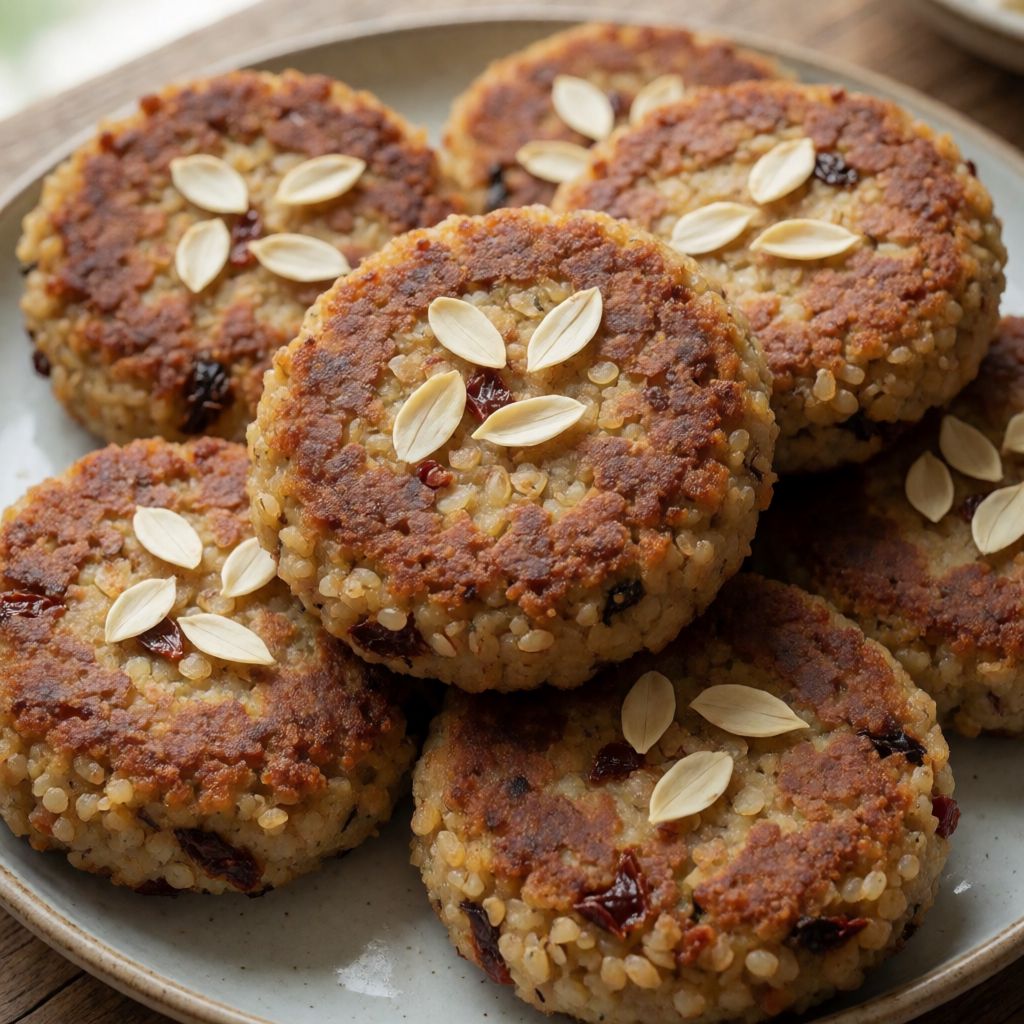
Potato and bulgur burgers served with a sun-dried tomato pesto.
Labels are worked out automatically from the ingredients and can be wrong. Check the packaging if it matters to you.
Ingredients
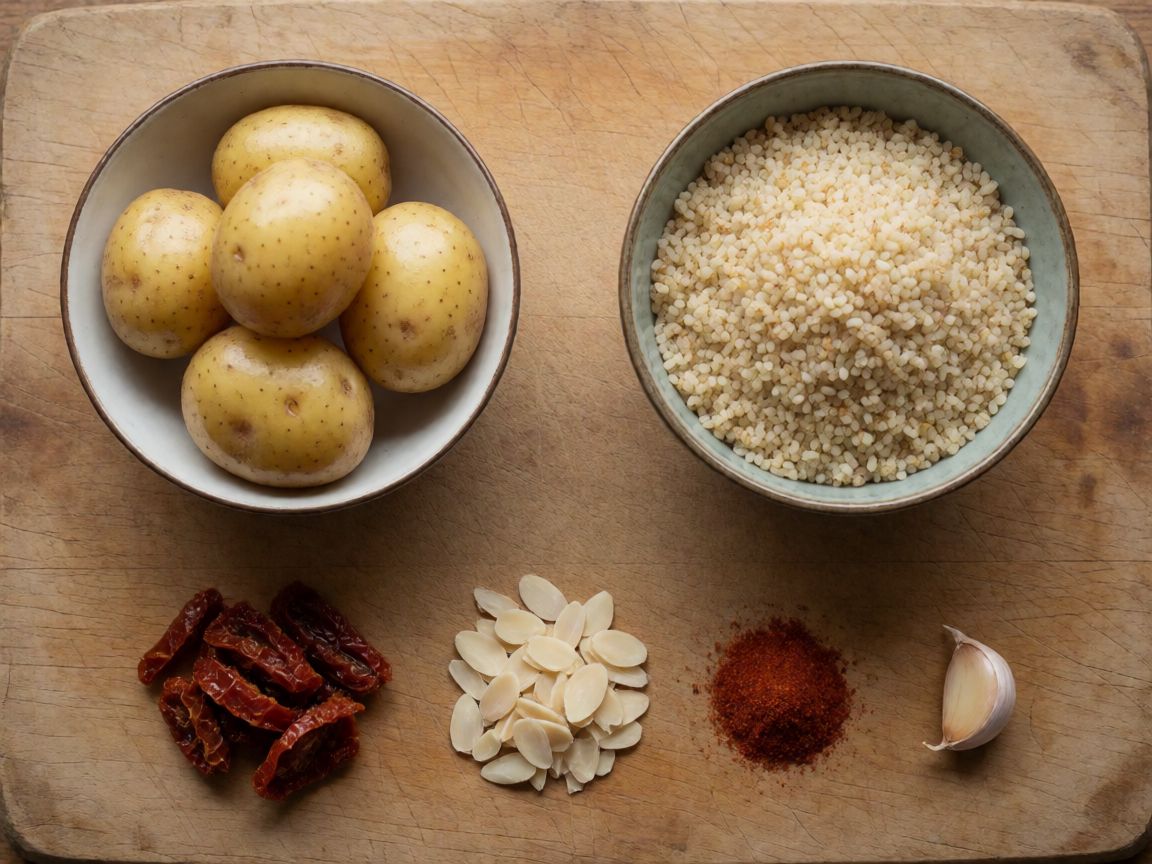
- 500 g Potatoes
- 250 ml Water
- 125 g Bulgur
- 130 g Sun-dried tomatoes dried
- 30 g Olive oil
- 8 g Almond flakes
- 1 tsp Smoked paprika
- 1 clove Garlic
- Salt to taste









Steps
Soak the sun-dried tomatoes in warm water until softened.
10 minDrain and transfer the tomatoes to a blender with the garlic, almond flakes, olive oil and salt. Blend until smooth.
Boil the potatoes in plenty of water until tender, drain, peel and mash with a potato masher.
Pour 250 ml of water into a saucepan, add the bulgur, bring to the boil, cover and cook for 10 minutes on the lowest heat.
10 minLeave the bulgur to rest for 5 minutes, then fluff with a fork.
5 minCombine the bulgur with the mashed potato, mix by hand, add the paprika and salt until smooth.
Line a tray with baking parchment and shape the burgers using a ring mould, pressing and levelling well.
Brush the surface with olive oil and bake in the oven at 160°C for about 15 minutes.
15 minServe the burgers with the sun-dried tomato pesto.
This isn't a burger pretending to be meat — it's a potato-and-bulgur patty that uses mashed potato as glue and bulgur as backbone, baked hard enough to hold its shape and no further. What decides whether it works is starch, not seasoning: too wet a mash and the patty slumps on the tray; too dry and it cracks at the edges when you lift it. The sun-dried tomato pesto is not garnish — it's the fat and acid the patty itself doesn't have, because there's no meat fat to carry flavour, so everything savoury has to arrive on the side.
Some say bulgur burgers need an egg to bind them. No — because the starch released by freshly mashed potato, still slightly warm, acts as the binder on its own; an egg just adds a flavour this dish doesn't ask for and a cooking smell it doesn't need. What actually holds the patty together is how you mash: a ricer or a hand masher breaks the cell walls and lets the starch out, a food processor would turn the potato gluey and the burger rubbery. Mash it, don't blitz it.
The ring mould is doing a job most home cooks skip and then wonder why their burgers are uneven lumps: it compresses the mix so there are no air pockets to collapse in the oven, and it gives you a flat top and bottom so the patty bakes evenly instead of the middle staying pale while the rim browns. If you don't own one, a clean tuna tin with both ends removed does exactly the same compression.
Potatoes here are structure, not flavour — pick a floury variety (Maris Piper, King Edward, the ones that fall apart into fluff rather than hold a cube shape) because their starch is what binds everything else. A waxy salad potato will leave your mix slick and loose, and no amount of extra bulgur will fix that; you'll just be diluting the problem.
Bulgur is the texture decision. It gives bite where mashed potato alone would be baby food — chew, not mush. The 2:1 water-to-bulgur ratio with a lid and the lowest flame your hob can hold is standard pilaf technique: bulgur, like rice, swells by absorbing steam trapped under the lid, not by boiling in open water. Lift the lid early and you let that steam escape, and you'll end up adding extra water and extending the time, which just makes it gluier. The 5-minute rest afterwards lets the grains finish steaming off the residual heat rather than the direct flame, so fluffing with a fork separates them instead of mashing them further.
Sun-dried tomatoes need the warm-water soak because dried tomato is tomato with its moisture pulled out for shelf life — an old preservation trick from when tomato season was short and winter was long, nothing mystical about it. Warm water rehydrates the flesh so it blends into a paste instead of staying chewy and leathery through the blender. If you can only get the oil-packed jarred kind, skip the soak — they're already soft — but drain the oil off first or your pesto turns greasy rather than glossy.
Almond flakes in the pesto are there for body and a faint toasted fat, standing in for the pine nuts a classic pesto would use — pine nuts are expensive and almonds do nearly the same job for less money, which is the actual reason this swap exists, not some rule about Mediterranean cooking. Any mild nut with some natural oil works; walnuts would push the pesto more bitter, cashews would make it sweeter and blander. Skip nuts entirely and you lose creaminess, not flavour — you could mend that with a spoon more olive oil instead.
Olive oil should be a plain one, not your good finishing bottle — once it's blended with garlic and tomato and baked onto a patty surface, you won't taste the difference between a mid-range and an expensive oil, you'll taste the garlic and tomato. Any oil without a strong smell of its own works for brushing the burger tops; a flavourless vegetable oil is fine there, you're using it to carry heat and help the surface colour, not to add taste.
Smoked paprika is the one ingredient doing the job meat usually does here — it's what gives these a savoury, slightly charred suggestion without an actual fire. Sweet paprika will make the patties taste flatter and a bit sweet instead; if that's all you have, add it anyway rather than skip paprika altogether, but know you're trading away the smoke note on purpose.
Patience shows up twice and both times it's the same lesson: let the bulgur sit covered rather than rushing the lid open, and let the baked patties cool a few minutes on the tray before you try to lift them. Straight out of the oven they're still soft in the centre and will break at the ring edges; a few minutes of rest lets the structure set the way a rested steak lets its juices settle. Eight patties from this mix feed eight people as a light lunch, not as a stand-in for a Sunday roast — this is a different kind of meal, built around grain and starch rather than resting meat, and it's worth not expecting it to behave like one.