
 AI photo
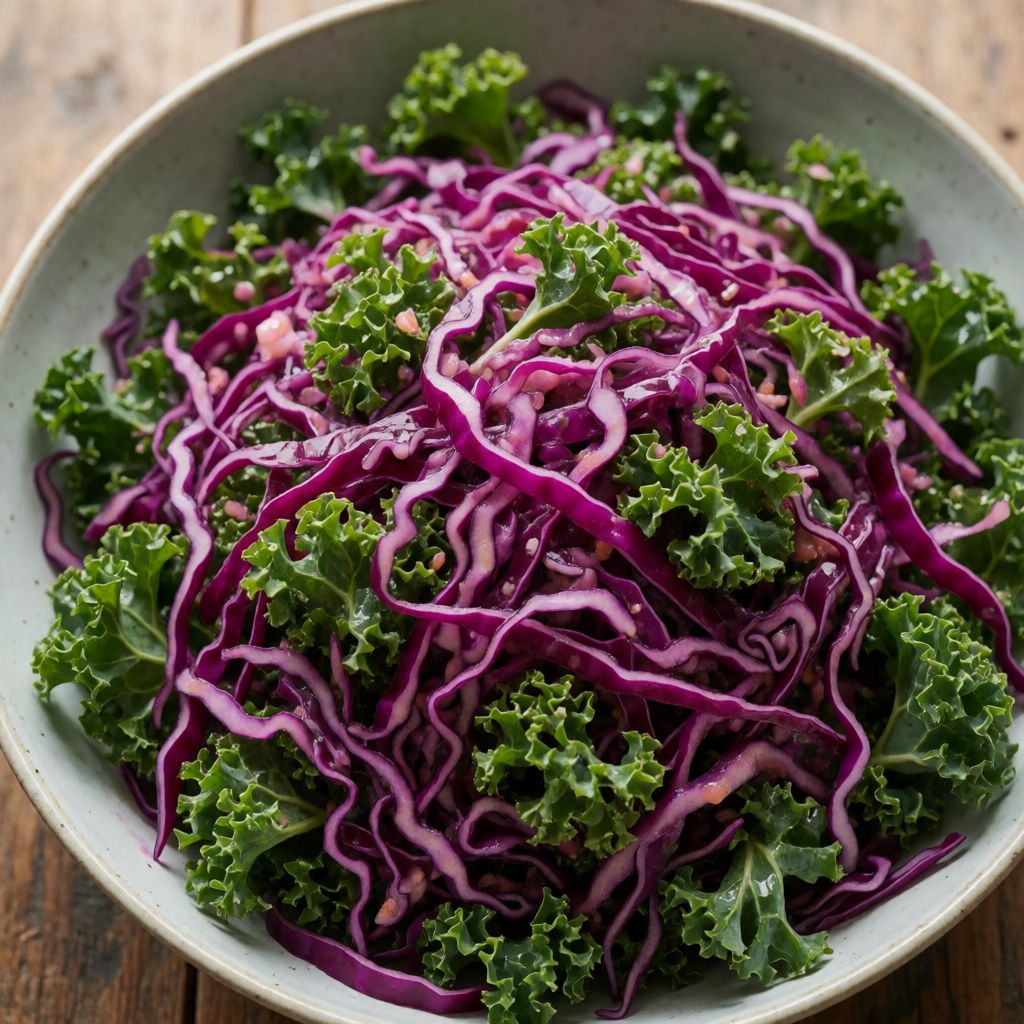
Red Cabbage, Kale and Orange Salad
A crunchy winter salad of red cabbage and kale with orange, grapes, pomegranate and toasted hazelnuts.
Labels are worked out automatically from the ingredients and can be wrong. Check the packaging if it matters to you.
Ingredients
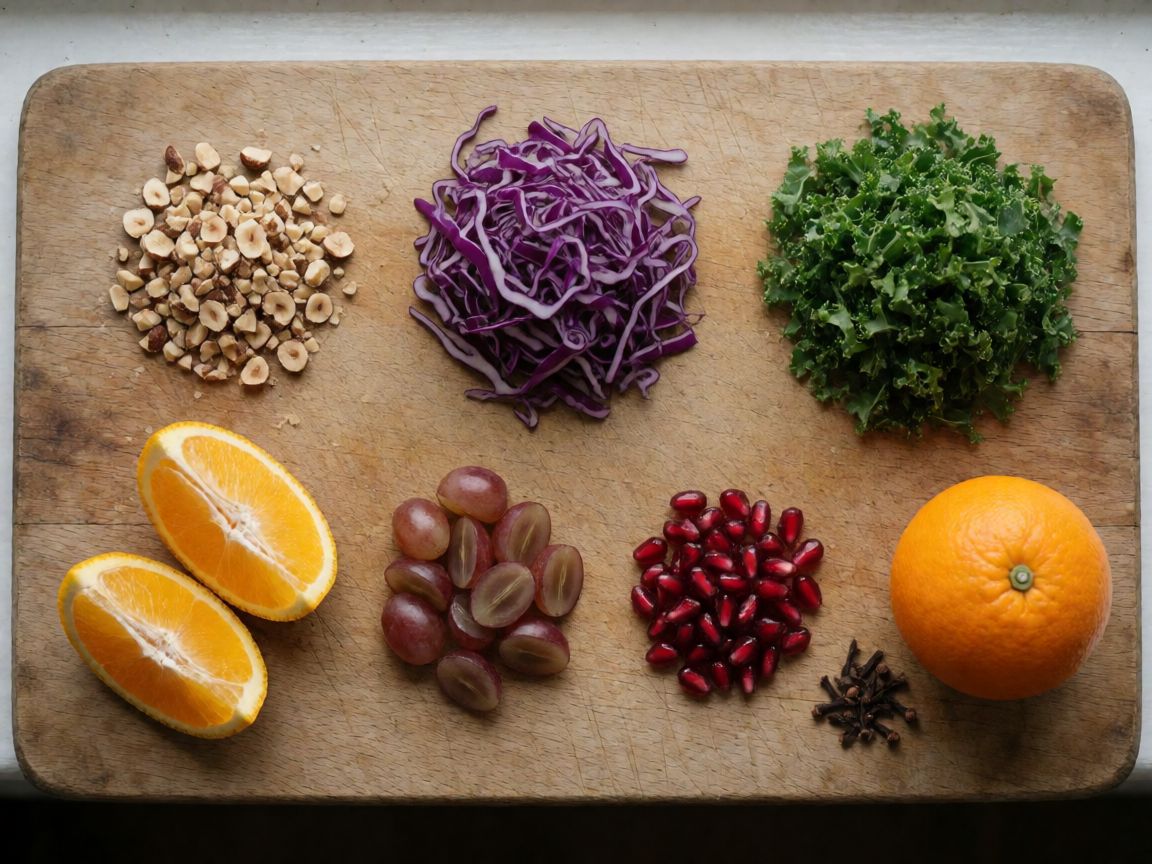
- 50 g Hazelnuts roughly chopped
- 100 g Red cabbage finely shredded
- 200 g Kale washed and finely shredded
- 2 pcs Orange segmented, pith removed
- 50 g Grapes halved
- 50 g Pomegranate
- 3 tbsp Olive oil
- 1 pcs Orange juiced
- 1 pinch Cloves ground
- 1 pinch Allspice ground
- 1 tsp Dijon mustard
- 0.5 tsp Salt
- Black pepper to taste, freshly ground



Steps
Toast the hazelnuts in a pan over medium heat, stirring, until the skins start to crack.
5 minPut the hot hazelnuts in a clean cloth and rub to remove the skins. Roughly chop the hazelnuts.
3 minIn a cup, mix the olive oil, orange juice, cloves, allspice, mustard and salt to make a dressing. Taste and adjust.
2 minToss the red cabbage and kale with the dressing. Gently massage the cabbage with your hands so it softens slightly and becomes pleasant to eat.
2 minSpread the cabbage on a platter or in a bowl and top with the orange segments, grapes, pomegranate seeds and hazelnuts.
1 minBefore serving, sprinkle with a little freshly ground black pepper.
This is a raw salad that fights back a little — kale and red cabbage, both tough enough to need convincing before they're pleasant to eat, sweetened by orange, grape and pomegranate, and finished with hazelnuts for crunch. What decides whether it works isn't any single ingredient — it's whether you actually massage the dressing into the leaves, and whether you let the fruit's juice do the seasoning rather than vinegar.
Kale raw is bitter and leathery because its cell walls are rigid — that's the plant's own defence against being eaten, not a flaw in your batch. Salt and acid (here, orange juice and a bit of oil) break down those walls over a few minutes of hands-on rubbing, the same way a steak tenderises under pressure. Skip the massage and you'll have a salad that's correct on paper and miserable in the mouth — raw kale sitting in dressing without being worked into it stays raw kale.
Some say red cabbage and kale need a long marinating rest, hours in the fridge, to soften properly. No — because the massaging does the mechanical work in minutes; what a long rest actually does is let the cabbage bleed purple into everything else on the plate, which is a cosmetic loss, not a flavour gain. Five minutes of real contact with your hands beats an hour of passive sitting.
The orange, grape and pomegranate aren't garnish, they're the only sweetness in the dish — there's no sugar anywhere in this recipe, which is unusual and deliberate. That's also why the dressing leans on orange juice rather than vinegar: vinegar would compete with the fruit instead of extending it.
Toasting the hazelnuts isn't about colour, it's about the skins. Raw hazelnut skin is bitter and papery, and it won't come off cold — heat makes the oil underneath expand just enough to lift the skin away from the nut, which is why you rub them hot, in a cloth, straight off the pan. Wait for them to cool and you're just massaging cold nuts for nothing. If you don't own a clean tea towel for this, a folded sheet of kitchen paper does the same job — the point is friction against a skin that's already loosened, not the fabric itself.
Medium heat here means watching, not timing: you're waiting for the skins to crack and start flaking, a visible cue, and the pan should smell nutty, not acrid — that line between toasted and burnt arrives faster than you'd think with hazelnuts because their oil content is high. If they're going dark before they crack, your heat's too fierce for the pan you're using.
The dressing is built on orange juice instead of vinegar because this isn't a salad asking for sharpness — it's asking for more of the same sweetness that's already on the plate, repeated and concentrated. Cloves and allspice are there in a pinch because they're warm, slightly bitter spices that stop the whole thing tasting like fruit salad with leaves in it — they anchor the sweetness back toward "savoury." If you don't have both, use whichever one you have; they're doing a similar job and neither is irreplaceable. The mustard isn't for heat, it's an emulsifier — it keeps the oil and juice from separating back into two layers in the cup, so use any mustard with enough bite to bind, Dijon just happens to be mild enough not to argue with the oranges.
Olive oil here should be the kind with no flavour of its own worth defending — you're not showcasing it, you're carrying the spices and softening the leaves, so a light or "pure" olive oil works as well as an excellent one, and any neutral vegetable oil is a fair substitute if that's what's in the cupboard.
Red cabbage and kale are shredded finely for a mechanical reason, not a visual one — thin shreds have more cut surface exposed to the dressing and to your hands, so the massage step actually reaches the fibres instead of sliding over whole leaves. If you shred thick, you'll need to massage longer and harder to get the same softening, and the salad will eat tougher no matter how long you leave it dressed.
The orange segments want the pith properly off, not just the peel — pith is the bitter white layer, and leaving strands of it on is the single commonest reason a citrus salad tastes "off" without anyone being able to say why. Cut the top and bottom off the orange, stand it up, and slice the peel and pith away together in strips, following the curve of the fruit; what's left should look like bare orange flesh with no white showing.
Pomegranate seeds and halved grapes are both there for a pop against the softened cabbage — texture contrast, not flavour contribution, so if pomegranate's out of season or too expensive, dried cranberries or pomegranate molasses stirred into the dressing will cover the same gap, just differently.
This feeds four as a side, which in a British Sunday-roast kitchen is worth saying plainly — it's not built to be the main event, it's the sharp, cold thing on the table cutting through a plate of roast and gravy, the same role a bowl of red cabbage or apple sauce plays in that same meal, just raw instead of cooked.