
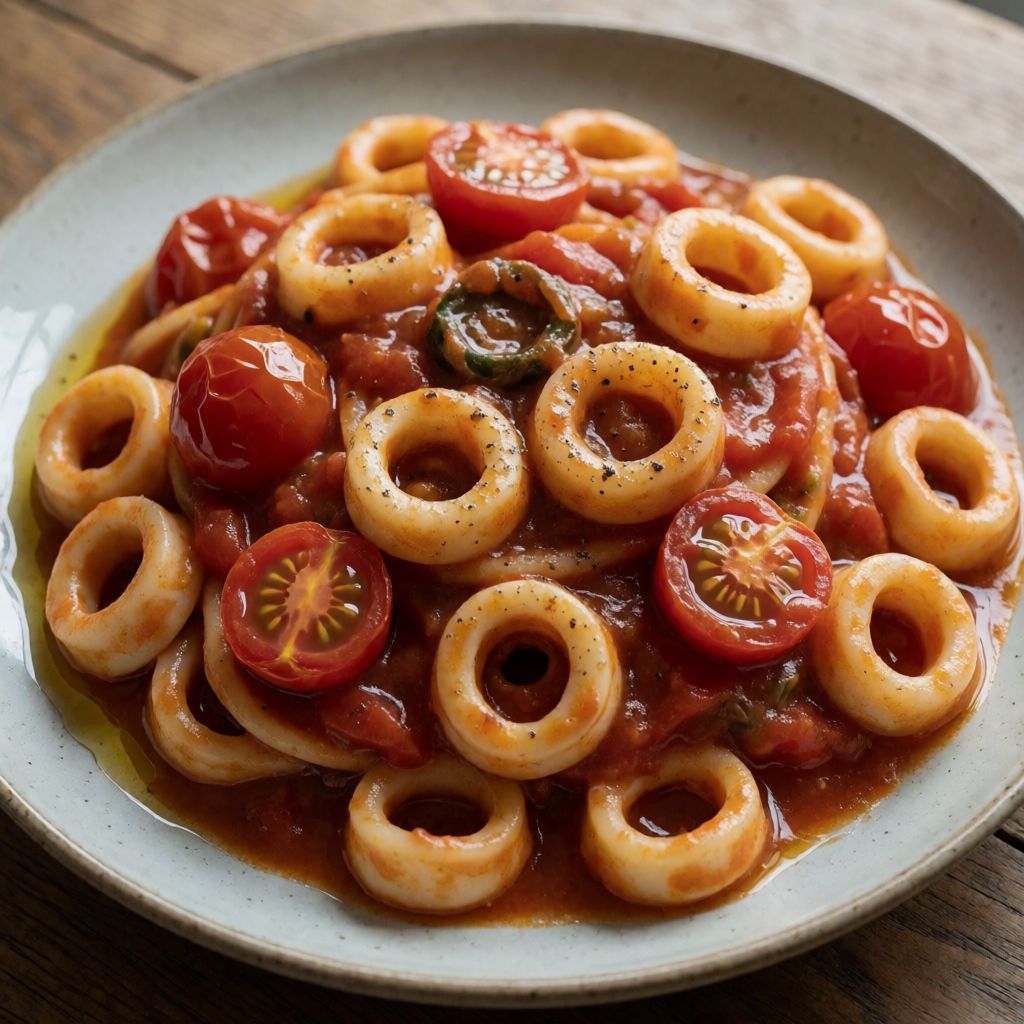
 AI photo
Calamarata alla Napoletana
A simple Neapolitan-style calamari pasta with cherry tomatoes and tomato passata.
Labels are worked out automatically from the ingredients and can be wrong. Check the packaging if it matters to you.
Ingredients
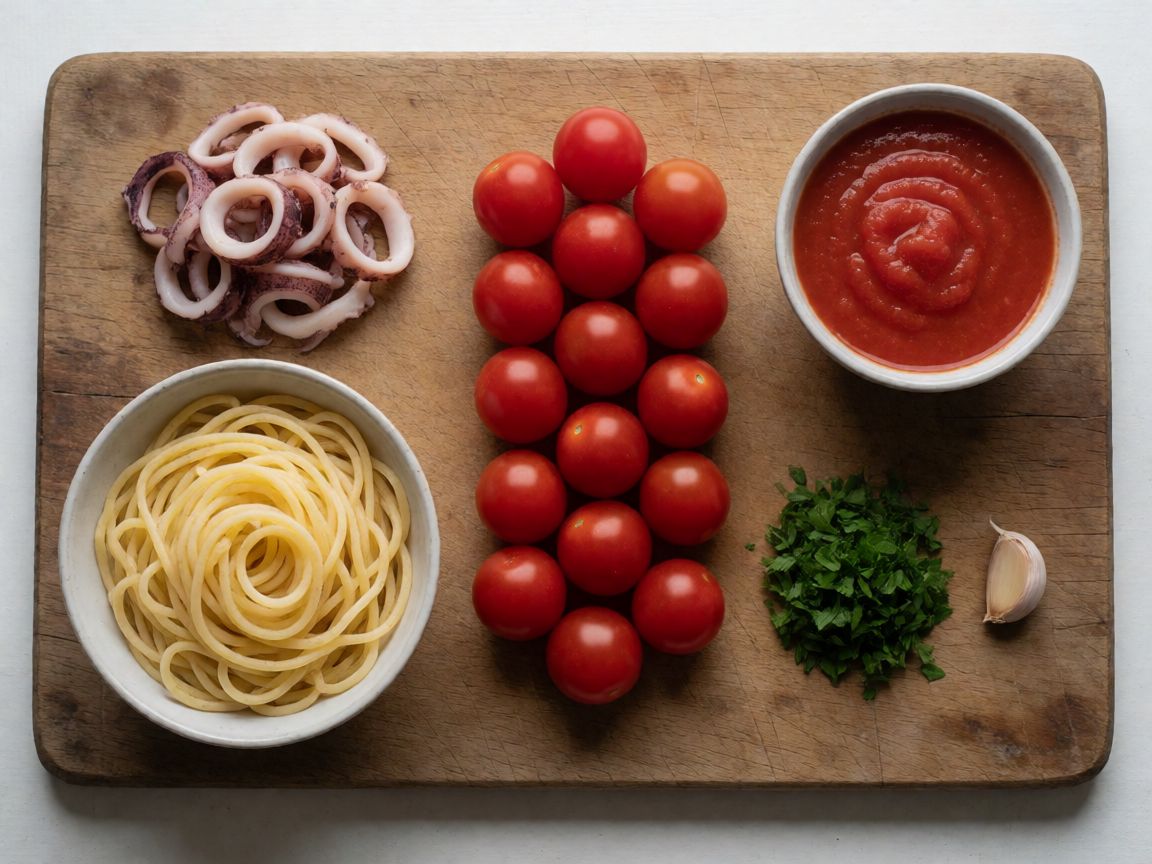
- 350 g Calamarata pasta
- 1 kg Squid
- 20 pcs Cherry tomatoes
- 200 g Tomato passata
- Salt to taste
- Black pepper to taste
- 1 bunch Parsley
- 1 clove Garlic
- Olive oil to taste









Steps
Clean the squid: remove the head, quill, skin, tentacles and fins, then rinse and pat dry with a paper towel.
Cut the squid bodies into rings about 2 cm thick.
Fry a clove of garlic in olive oil until golden.
Add the cherry tomatoes and tomato passata, season with parsley and cook for a few minutes over high heat.
Add the squid rings, cover and simmer over low heat, stirring gently.
10 minCook the calamarata pasta until al dente, then drain.
Combine the calamarata with the tomato and squid sauce.
Serve immediately, sprinkled with fresh parsley.
Calamarata is a joke the shape of a pasta tube plays on you: these wide rings are deliberately cut to size so that in the bowl you can't quite tell pasta from squid, and that confusion is the whole point. Naples has always stretched expensive seafood with cheap wheat, and a pasta shaped like your main ingredient is the oldest trick for making a little squid look like a lot of dinner. Nobody invented this for poetry — it was arithmetic.
What decides the dish is not the sauce, it's the squid, and specifically how long it sits in heat. Squid muscle is mostly collagen, and collagen has two good states and one terrible one in between. Cooked seconds, it stays soft because the fibres haven't had time to seize. Cooked long and gently, thirty, forty minutes, the collagen melts into something closer to gelatin and goes soft again, the way an octopus leg does in a slow braise. The middle ground — the ten-or-so-minute simmer this recipe asks for — sits right in the danger zone where the fibres have clenched but not yet relaxed. So watch the ring, not the clock: it should bend without resistance under a fork, not spring back rubbery. If it fights you, either you stopped too early in the toughening or your rings were too thick for the time given — thin them next time, or give the pan more patience than the ten minutes written down.
On the squid itself: buy it whole if you can bear the cleaning, because the quill — that transparent plastic-looking spine — and the skin are both there to protect the animal, not to feed you. Leave skin on by mistake and you get a faint chewy membrane that won't dissolve in ten minutes of simmering; leave the quill in and you'll bite something that shouldn't be in food at all. Fresh squid smells of the sea, faintly sweet, never of ammonia — if it smells sharp, it's old, no amount of sauce fixes that. If whole squid isn't on your fishmonger's counter that day, pre-cleaned rings from the freezer are an honest substitute; just know frozen squid releases more water into the pan, so give the sauce an extra minute uncovered at the end to tighten back up.
Cherry tomatoes and passata aren't two versions of the same thing, they're two jobs split in half. Cherry tomatoes, left whole or halved, burst under heat and give you pockets of concentrated sweetness that a smooth sauce can't; passata gives you the base that coats the pasta evenly. If you've only got one, lean passata — tinned chopped tomatoes drained of excess liquid will do in a pinch, but you lose those little bursts, so stir in a pinch of sugar to fake the sweetness back.
Garlic goes in to flavour the oil, not to be eaten as garlic, which is why it's cooked "until golden" and not "until done" — past gold it turns bitter, and bitterness in oil spreads through everything cooked in it afterwards. Watch the colour, not a timer; a domestic hob runs cooler and more unevenly than people assume, so gold might take longer here than it would over a professional burner, and that's fine.
Olive oil here isn't just "an oil" — unlike dishes where you want something with no smell of its own, this one leans on olive oil's own fruitiness as a base note under the tomato and the sea flavour of the squid. Don't swap it for a neutral oil; you'd lose part of the dish's voice. If you must substitute, use the mildest extra virgin you have, not the most expensive peppery one — you want it to support, not shout.
Parsley and black pepper are finishing notes, added raw or near-raw at the end so they stay sharp and green rather than cooking down into something muddy — stir half in with the sauce, keep half back for the plate.
On the pasta: calamarata specifically because its tube width is cut to match a squid ring, so if you can't find it, any wide, short tube — rigatoni at a push, even large paccheri cut down — will do the job of looking like what's in the sauce, which is really the only criterion that matters here. 350g for four people is a fairly lean serving by Italian standards, deliberately so, because the squid is meant to be the weight in the bowl, not the starch. Cook it in well-salted water until it still resists a bite, because it finishes its last minute in the hot sauce, and keep a cup of that pasta water by the pan — if the tomato sauce looks tight when you combine everything, a splash loosens it without diluting the flavour. Serve the moment it's combined; this isn't a dish that improves sitting on the hob waiting for everyone to sit down, it just goes from al dente to soft while you wait.