
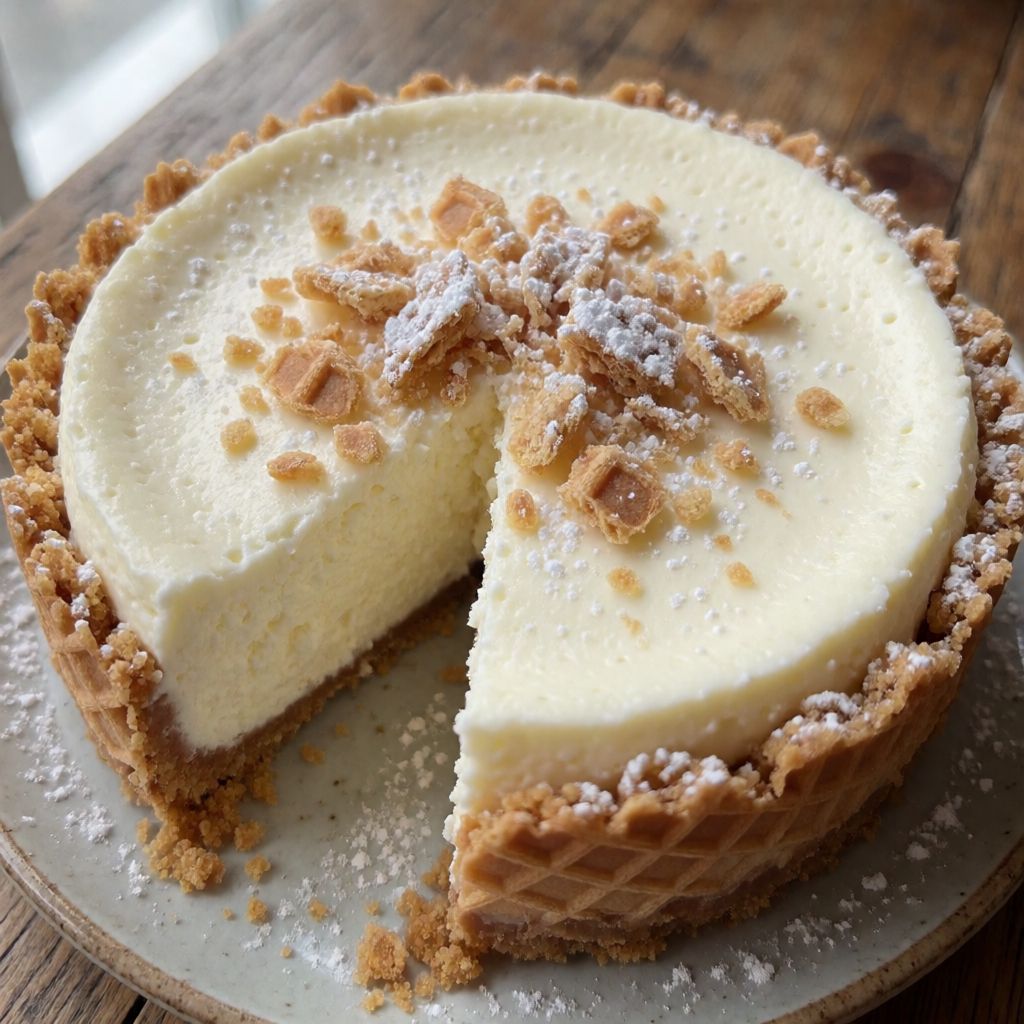
 AI photo
Cannoli Cheesecake
A no-bake cheesecake built on crushed cannoli shells, with a creamy ricotta filling and chocolate chips.
Labels are worked out automatically from the ingredients and can be wrong. Check the packaging if it matters to you.
Ingredients
- 280 g cannoli shells
- 150 g Butter
- 500 g Sheep's milk ricotta
- 350 g Double cream for whipping, unsweetened
- 130 g Icing sugar
- 12 g Gelatine
- 100 g Chocolate chips
- 1 pcs Pistachios chopped, to taste
- 1 pcs Candied fruit to taste
- 1 pcs Glacé cherries to taste









Steps
Crush the cannoli shells in a blender, mix with the melted butter and press into a tin.
Smooth the mixture in the tin and chill in the fridge for 15-20 minutes.
15 minSoak the gelatine in cold water and let it soften.
Beat the ricotta with the icing sugar, add the chocolate chips and mix.
Squeeze out the gelatine and dissolve it in 50 g of hot cream, then let it cool.
Separately, whip the remaining cream with an electric mixer.
Fold the dissolved gelatine and whipped cream into the ricotta mixture, mixing gently.
Spread the filling over the base and smooth it out.
Chill the cake in the fridge for at least 3 hours.
180 minRemove the cake from the tin, place on a serving plate and decorate with pistachios, candied fruit and glacé cherries.
This isn't a baked cheesecake — it's a cannoli that gave up pretending to be a pastry and became a cake instead. Same filling, same idea of crisp shell meeting soft sweetened ricotta, but instead of frying tubes of dough one at a time, you press the shells into a base and let the filling set with gelatine, no oven involved. That's the whole logic of a "no-bake" cheesecake: gelatine does the structural job that eggs and heat do in a baked one.
What decides whether it works is two separate things behaving correctly at the same time. The base has to hold together without turning to paste, and the filling has to set firm enough to slice but still taste like ricotta, not like jelly. Get the ratio of melted butter to crushed shells wrong and the base either crumbles off the slice or goes greasy and dense — butter is glue here, not flavour, so you want just enough to bind, no more.
The filling is the part people get nervous about, because gelatine has a bad reputation: some say it makes a cheesecake taste "rubbery". No — rubbery is what happens when you use too much, or let it set unmixed in lumps. Twelve grams across this much cream and ricotta is a light set, just enough to let the cake hold its shape when you cut it, and the dissolve-and-fold step exists precisely to spread that structure evenly instead of leaving streaks of jelly through a soft filling.
Cannoli shells are the one ingredient you can't really substitute and keep the name honest — they're what makes this a cannoli cheesecake rather than any other ricotta cheesecake. If you can't get them, a crushed digestive or amaretti base will give you a cake, just not this one; the shells bring a faint fry-and-sugar flavour that plain biscuit doesn't.
Ricotta is doing the real work of flavour, and sheep's milk ricotta specifically matters because it has more fat and a sharper, slightly tangy edge than the cow's milk version supermarkets usually stock in the UK — cow's milk ricotta will work, but the filling comes out milder and a touch wetter, so you may want to drain it in a sieve for half an hour first to stop the filling going soft. The criterion for any ricotta you buy: it should be firm enough to hold a shape on a spoon, not runny like a dip, because a wet ricotta is the single commonest reason this kind of cheesecake refuses to set properly even with the gelatine doing its job.
The double cream is split in two jobs and that split matters. Fifty grams of it is just a solvent — warmed to dissolve the softened gelatine evenly, nothing more, so don't bother whipping that portion. The rest gets whipped to soft peaks and folded in cold, which is what gives the filling its lightness; whip it to stiff peaks and you'll fold in lumps that show as streaks, whip it too loosely and the filling won't hold air at all and ends up dense. Any cream that whips — double or whipping cream — does the job; single cream has too little fat and simply won't aerate.
Gelatine sheets or powder both work here as long as you bloom them properly in cold water first — that soak is what stops little hard granules turning up in the finished filling, because dry gelatine dropped straight into warm liquid seizes into clumps rather than dissolving smooth. If you want a vegetarian version, agar-agar will set the cream but behaves differently — it sets firmer and faster, at room temperature even — so you'd need less of it and a shorter, not longer, chill.
Icing sugar rather than caster sugar is a texture choice, not a taste one: caster sugar dissolves slowly into a cold ricotta mixture and can leave the filling slightly gritty, where icing sugar's fine grind disappears into the fat immediately. Chocolate chips, pistachio, candied fruit and glacé cherries are the cannoli's traditional garnish lifted onto the top of the cake — true to the pastry it's descended from, where the chopped pistachio and candied peel were there partly for colour, partly because pistachios and candied citrus were the luxury ingredients a Sicilian kitchen could show off with. None of them affect whether the cake sets, so treat the amounts as "to taste" exactly as the recipe says — this is the one place in the whole method where precision doesn't matter.
A tin with a loose or spring-release base matters more than people expect in a domestic kitchen, because unmoulding a chilled, gelatine-set filling from a fixed tin by tipping it out is how the base cracks and the filling slides. If yours only has a solid base, line it with cling film with enough overhang to lift the whole cake out by the edges — a small trick, but it's the difference between a tidy cake on the plate and one in pieces.