
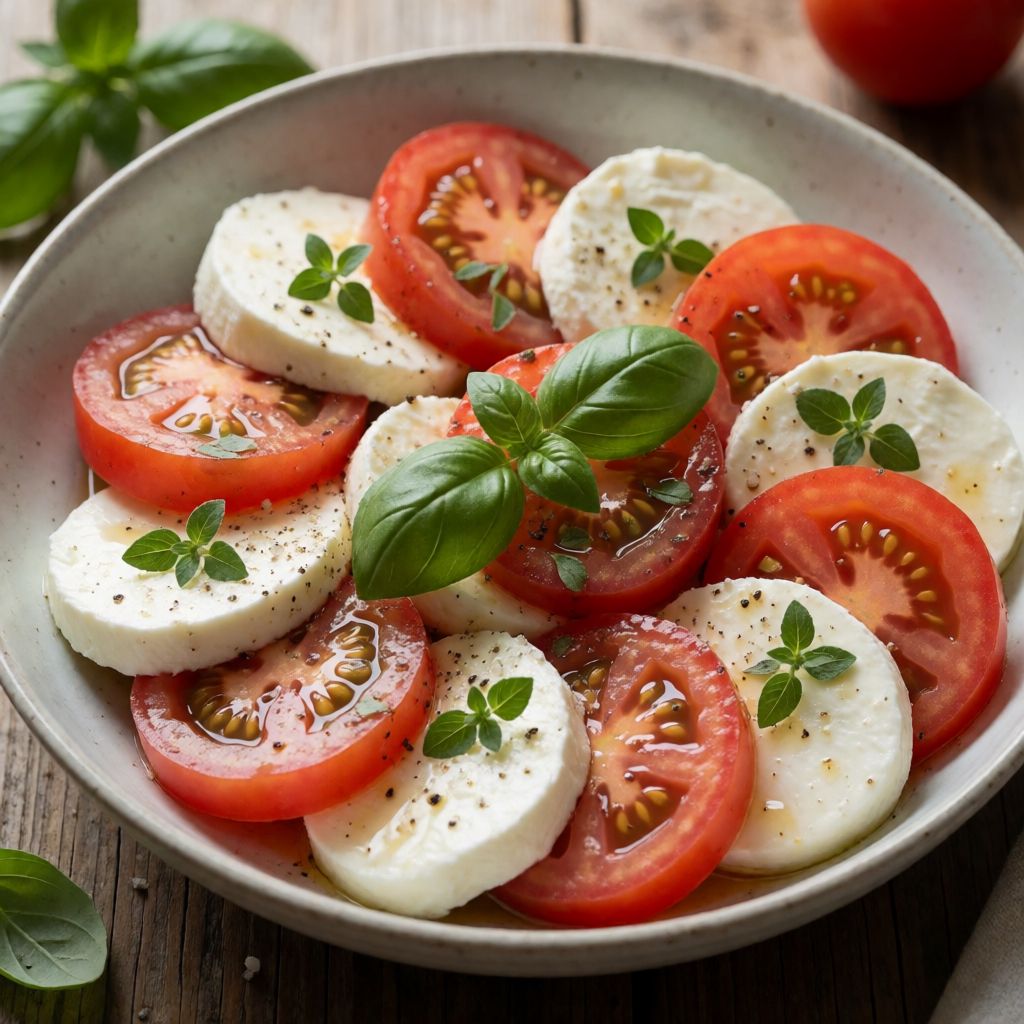
 AI photo
Caprese Salad with Mozzarella and Tomatoes
A fresh Italian salad of buffalo mozzarella and ripe tomatoes, finished with basil, oregano and olive oil.
Labels are worked out automatically from the ingredients and can be wrong. Check the packaging if it matters to you.
Ingredients
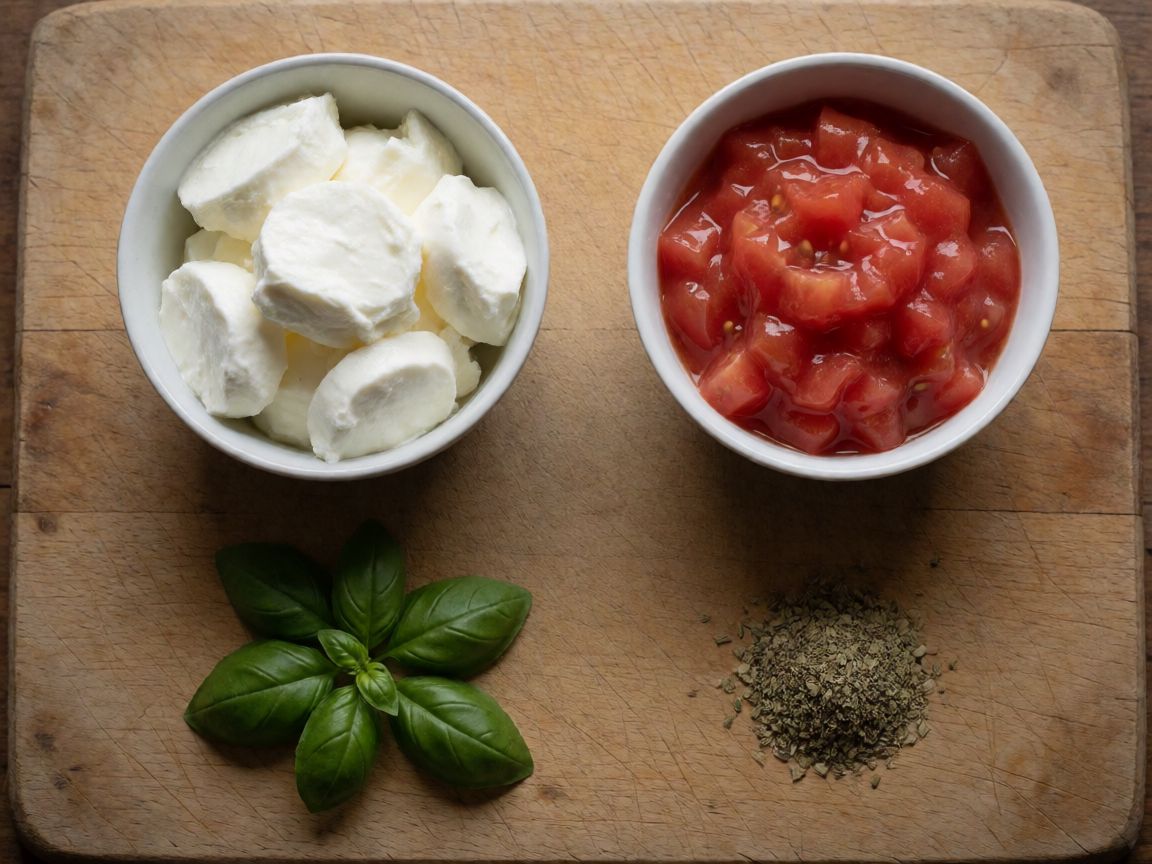
- 500 g Buffalo Mozzarella
- 400 g Tomatoes
- 1 bunch Basil leaves
- 1 pinch Oregano to taste
- 1 pinch Salt to taste
- 1 pinch Black Pepper to taste, optional
- 2 tbsp Olive Oil for drizzling







Steps
Remove the stalks from the tomatoes, rinse them under cold running water and place them in a colander.
Rinse the basil leaves, taking care not to crush or tear them, and place them in a colander to dry.
In a wide bowl, slice the mozzarella into slices about one centimetre thick.
Pat the tomatoes dry with a paper kitchen towel and cut them into rounds.
On a large round or oval platter, arrange alternating slices of mozzarella and tomato in a circle.
On each slice of mozzarella, place a whole basil leaf, well dried with a paper towel.
Season with salt to taste, add oregano and black pepper if desired.
Drizzle the dish with a thin stream of olive oil.
Serve at room temperature, never chilled straight from the fridge.
This dish has zero cook time listed, and that's honest — but don't mistake "nothing cooked" for "nothing to get wrong". The whole salad is held up by two things only: how ripe the tomato was before it ever met your knife, and what temperature everything is on the plate. There's no sauce, no heat, no technique to hide behind. If the mozzarella is bad or the tomato was picked green, salt and basil won't rescue it — they'll just season the disappointment.
The single rule that actually decides success here is the one in step 9: serve at room temperature. Some say a salad should come straight from the fridge, cold and "refreshing" — no, because cold does two things wrong at once. The fat in mozzarella sets firm when chilled, so instead of that soft give on the tongue you get something closer to rubber. And tomato flavour lives in aromatic compounds that are volatile — they need a bit of warmth to lift off the flesh and reach your nose. A cold tomato tastes of almost nothing but acid and water. Pull both out of the fridge well before you plate, and let them warm on the counter, not in a hurry.
Salt timing matters for a less obvious reason than taste: it's osmosis. Salt pulls water out of a cut tomato the moment it touches it. Salt early and your platter fills with pink juice while the slices go slack. Salt at the very end, as the recipe says, and the tomato keeps its structure until it's in someone's mouth, not on the plate.
This feeds four as a starter, or two if nobody's cooking anything after it — which, with good tomatoes, is a reasonable way to spend a summer evening.
Buffalo mozzarella is the real thing: made from water-buffalo milk, higher in fat than cow's milk, with that faint tang and the softness that lets you cut it with a spoon if you wanted to. The fat is what carries flavour and gives the slice its weight on the tongue — this is not a cheese chosen for melting, it's chosen for eating raw, so buy it packed in its own whey and use it within a day or two of opening, because once it's out of liquid it dries and toughens fast. If you can't get buffalo, fior di latte — the cow's-milk version — is the honest substitute, same shape, slightly milder. What you should not reach for is the dense, low-moisture block mozzarella sold for pizza: it's a different product, built to survive an oven, and it has none of the give this salad depends on.
Tomatoes are where a UK kitchen runs into an economic fact, not a cooking mistake. Most supermarket tomatoes are bred and picked for transport, not ripeness — they're picked firmer and greener than an Italian August tomato ever would be, because a soft ripe tomato doesn't survive a lorry. That's not a flaw in your shopping, it's the logistics of selling tomatoes 500 miles from where they grew. The fix isn't a trick, it's timing: look for ones that give slightly under your thumb, buy them a day or two before you need them and let them finish ripening on the counter, out of the fridge, where the enzymes that soften and sweeten them can still work. Cold storage halts that process — another reason the fridge is the enemy here, not just for serving temperature but for ripening itself.
Basil gets torn, and that's worth doing deliberately. The leaf has oil glands just under the surface, and the moment you cut or crush them hard, enzymes meet oxygen and the edge goes brown and slightly bitter within minutes. The recipe's instruction to keep leaves whole and pat them properly dry isn't fussiness — a wet leaf also means a watery plate, and a bruised one means off flavour before you've even eaten it.
Olive oil in this dish is not a cooking medium, it's the one place its own taste is meant to be noticed undiluted, so this is the wrong dish to use a neutral oil in — the usual advice of "any oil with no smell of its own" is for frying, where you don't want the oil to argue with the food. Here you want the opposite: an oil you'd happily taste off a spoon, something with its own bitterness or grassiness, because that's exactly what the thin stream on top is for.
And the one ingredient not listed: time to let things sit at room temperature before you plate. That's not effort, it's patience, and it's the part people skip because it feels like doing nothing. It's the only step in this recipe that can't be rushed or substituted.