
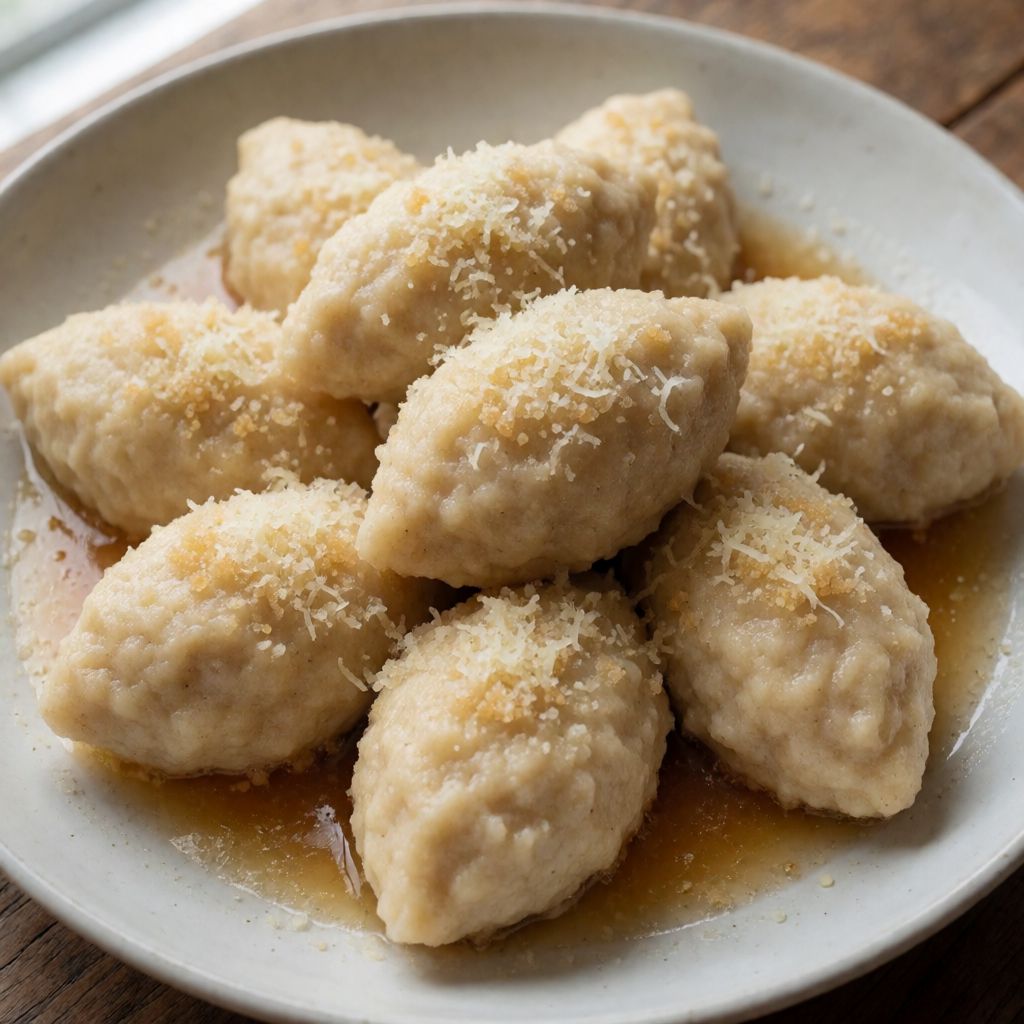
 AI photo
Mantuan Capunsei – Simple Bread Dumplings
A simple, traditional recipe for capunsei – Mantuan bread dumplings.
Labels are worked out automatically from the ingredients and can be wrong. Check the packaging if it matters to you.
Ingredients
- 200 g Breadcrumbs dried
- 200 ml Vegetable stock
- 1 pcs Eggs
- 25 g Butter
- 15 g Parmesan
- Salt to taste
- Black pepper to taste
- Nutmeg to taste
- 50 g Butter
- 1 bunch Sage a few leaves
- Parmesan to taste









Steps
Tip the breadcrumbs into a large bowl, add salt, black pepper and nutmeg to taste.
Melt 25 g of butter and add to the breadcrumbs, mix well.
Add the hot vegetable stock, mix until smooth and let the mixture cool.
Add the Parmesan and egg, mix well until you have a smooth dough.
Shape into a ball on the work surface, cover and let it rest.
Bring a large pot of salted water to the boil.
Roll the dough into thin ropes and cut into pieces of 3-4 cm, tapering the ends slightly with your hands.
Boil the capunsei and remove with a slotted spoon once they float to the surface.
Transfer the capunsei to a pan where you have melted 50 g of butter with the sage leaves, and warm through for a few minutes.
Sprinkle with Parmesan to taste and serve immediately.
Capunsei are what you make when bread has gone past its best and you refuse to throw it away. This is Mantuan thinking before it's a recipe: Lombardy's old rule that stale bread earns its keep one more time. Breadcrumbs, stock, egg and butter get worked into a dough, rolled into fat little ropes, and poached. They are, in effect, gnocchi's cousin from the bread side of the family rather than the potato side.
What decides whether they hold together or dissolve into soup is the breadcrumb-to-liquid ratio and one unglamorous step: letting the dough cool before you add the egg. Pour hot stock into dried crumbs and you get a paste that's too loose, too hot, and ready to scramble the egg the second it goes in — that's the defect this recipe is quietly built to avoid. Cool dough, raw egg added last, binds without cooking prematurely and gives you a dough firm enough to roll, not a batter that spreads out flat in the pot.
The other tell is the float. Some say watch the clock — no, because dumpling size, crumb texture and how tightly you rolled them all change the timing more than any stopwatch will admit. When they rise and sit on the surface, the starch structure inside has set enough to hold its shape; before that, they're still raw dough and will fall apart on the spoon. Time is only there as a floor, not a verdict.
Don't expect kazan drama here — this is a pot of salted water on your hob and a frying pan standing by, nothing more exotic than a Sunday gravy needs. The whole thing is small, domestic, and forgiving once you understand what each stage is actually doing.
The breadcrumbs are the whole point, so don't reach for fresh soft bread thinking it's an upgrade — it isn't. You need them dried out, because dried crumb absorbs stock evenly and holds its structure; fresh crumb turns gluey and limp, and the dough won't roll, it'll just smear. If you haven't got packaged dried breadcrumbs, stale bread grated or blitzed and left on a tray overnight does the same job for free — which, in a Lombard kitchen built on not wasting bread, is rather the original idea.
The stock matters more than its small role in the ingredient list suggests. It's not there for flavour alone — it's the moisture that turns dry crumb into dough, so it needs to be hot going in, to soften the crumb fast and evenly, but the whole mix then needs to cool before the egg joins it, for the reason already given: a raw egg in a hot mix starts cooking on contact, and you end up with scrambled fleck instead of binding protein. Any plain stock works — vegetable, chicken, whatever you'd happily drink a spoonful of on its own, because the dumplings will taste like it.
The butter inside the dough (25 g) is for richness and a slightly less dense bite; the butter in the pan (50 g) with sage is a different job entirely — it's not cooking anything, it's coating. The capunsei are already cooked once they've floated; the pan step is to warm and dress them. Sage in melted butter is standard northern Italian shorthand for "simple fat, simple herb, let the dish speak" — no deeper mystery than that, and if you've no fresh sage, a few dried leaves warmed gently in the butter will get you close, though the aroma won't be quite as sharp.
Parmesan appears twice — once worked into the dough, once scattered at the end — and the two jobs aren't interchangeable. Inside, it's seasoning and a little extra bind; on top, it's there to melt slightly against the hot butter and salt the last mouthful. Use a hard, well-aged cheese with actual bite to it; a soft bland "parmesan-style" block from a supermarket shelf won't give you the same savoury punch, though it'll do in a pinch if that's what's in the fridge.
Nutmeg is the one flourish that looks decorative but isn't. It's a classic partner to butter and bread-based dumplings across northern Italy and central Europe — think of it as cutting through the richness rather than adding sweetness. A light grating is plenty; it's there to be felt, not identified.
Patience belongs on this ingredient list too, even though nobody writes it down. Letting the dough rest before rolling, letting it cool before the egg goes in — skip either and you're fighting the dough instead of shaping it. None of this needs a kazan or a professional pasta station — a bowl, a pot of salted water and a frying pan on your UK hob will get you there, the same way it would in a kitchen in Mantua, just with a kettle for the stock instead of a stockpot simmering all afternoon.