
 AI photo
Air Fryer Chiacchiere: Crisp and Delicious
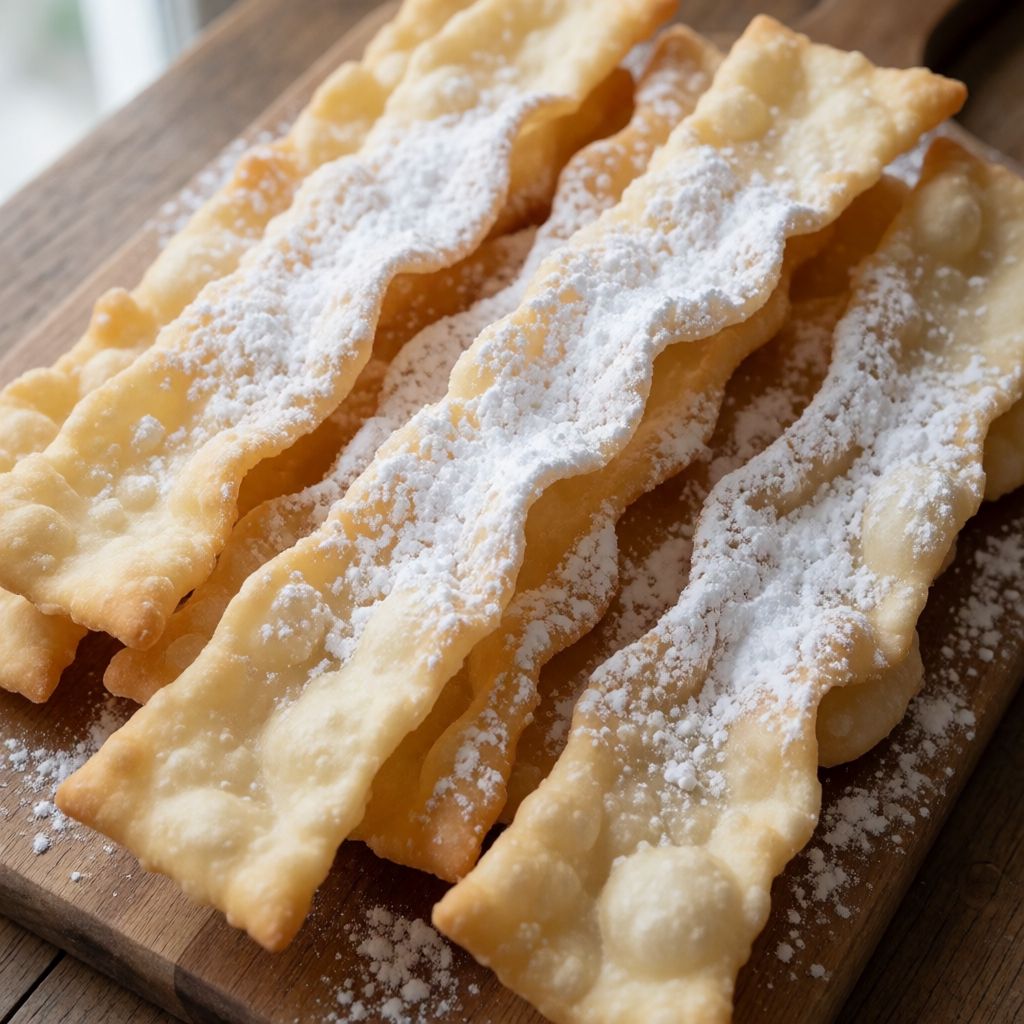
A crisp fried pastry made in the air fryer, dusted with icing sugar.
Labels are worked out automatically from the ingredients and can be wrong. Check the packaging if it matters to you.
Ingredients
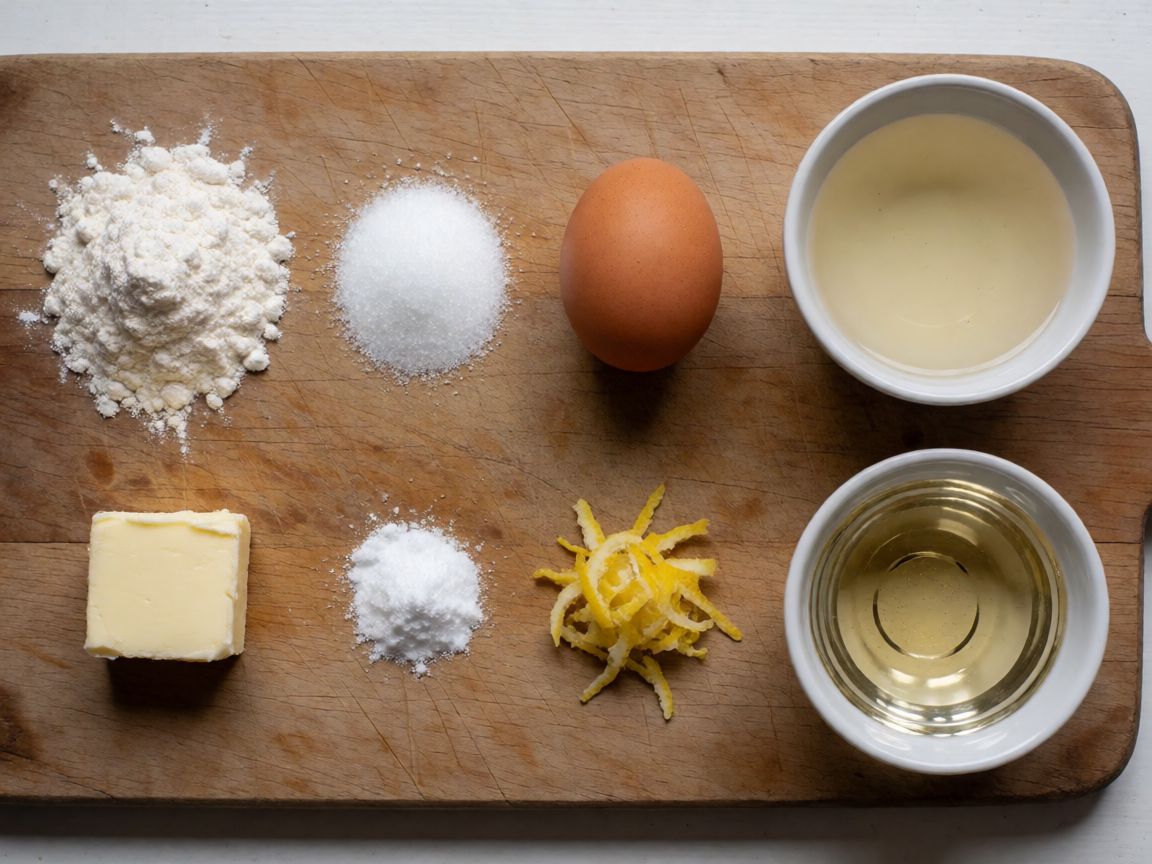
- 300 g Plain flour
- 15 g Caster sugar
- 1 pcs Egg
- 30 g Butter
- 0.5 package Baking powder
- 0.5 pcs Lemon zest
- 10 g Rum
- 60 g White wine
- Icing sugar to taste
- Butter for brushing
- Vegetable oil for frying, to taste










Steps
Sift the flour and pile it onto the work surface, making a well in the centre. Add the sugar, egg, half the baking powder, lemon zest and butter.
Gently mix the ingredients, then add the rum and white wine.
Knead by hand into a smooth ball, cover with cling film and leave in the fridge.
20 minRoll the dough out evenly with a pasta machine or rolling pin to a thickness of 2-3 millimetres.
Using a pastry wheel, cut long rectangular strips; you can also shape knots or notched rectangles.
Line the bottom of the air fryer basket with baking paper and carefully arrange 3-4 chiacchiere.
Brush with oil and cook at 190°C, checking after 3 minutes.
3 minTurn the chiacchiere over and cook for a further 3 minutes at 190°C.
3 minLet cool slightly and dust with icing sugar.
Chiacchiere are Carnival fritters from Italy — the name means "chit-chat", because that's what you do while they fry one tray at a time, standing around the pan. Venice calls them galani, Emilia-Romagna calls them sfrappole, Rome calls them frappe — same dough, different town, different wedding of regional pride and flour. What you're making here is the air fryer version: the dough is traditional, but the frying isn't frying at all, it's hot air doing the work vegetable oil in a deep pot used to do.
What decides whether these work is the dough's gluten, and specifically how little of it you want. Plain flour has gluten, and gluten is what makes bread chewy and elastic — exactly what you don't want in a biscuit that's meant to shatter. The wine and rum aren't there for flavour alone: alcohol toughens gluten strands less than water does, and it evaporates in the heat, pushing the dough to crisp rather than steam-soften. That's also why you knead to a smooth ball and stop — overworking develops the very structure you spent two liquids trying to avoid.
The other half of the mechanism is thinness. Two to three millimetres isn't a style choice, it's the whole point: at that thickness the fat and heat can get all the way through before the surface burns, so the strip puffs, blisters, and sets hard with no soft middle layer left. Roll it thicker and you get a biscuit with a chewy spine — not wrong, just not chiacchiere.
The fridge rest — twenty minutes under cling film — isn't about flavour developing, it's about the gluten you did form relaxing. Dough that goes straight from kneading to rolling fights back: it shrinks, it tears, it rolls uneven. Ten minutes short of that rest and you'll know, because the strips curl at the edges when you try to cut them straight.
Flour: plain, nothing stronger. Bread flour or anything labelled "strong" has more gluten, and more gluten here means tougher, not sturdier — the opposite of what the wine is fighting for. If you've only got self-raising, drop the baking powder and expect a slightly softer crumb; it's not a disaster, just a different lift.
The egg and butter are richness and a little binding — don't swap the butter for oil in the dough itself, it changes how the dough handles on the rolling pin, makes it slacker. Butter has structure at room temperature that oil doesn't; that structure is what lets you roll this thin without it tearing.
Baking powder, half a package — this is a biscuit that wants crispness, not rise. Too much lift and you get air pockets that go soft and chewy instead of fine blisters that stay crisp. If your sachets are the standard 7g, you're using roughly 3-4g here — eyeball it, this isn't a cake where leavening has to be exact to the gram.
Lemon zest is there to cut the richness of butter and egg, nothing more — a bit of orange zest does the same job if that's what's in the fridge. Rum and white wine: any dry white wine works, the sugar in a sweet one will catch and darken faster than you want at 190°C. No rum in the house — brandy works, or skip it and add an extra splash of wine; you lose a little depth, not the mechanism.
Icing sugar goes on after cooling, not before — dust it hot and it melts into a wet film instead of sitting as powder, and you lose the contrast that makes these worth eating. Vegetable oil for brushing: anything with no smell of its own — sunflower, a neutral rapeseed, not olive oil, which will fight the lemon and butter rather than carry heat for you.
On the basket: 3-4 strips at a time isn't caution for its own sake, it's airflow. Crowd the basket and the hot air can't circulate around each piece, so you get soft spots where strips touch — the same reason you don't crowd a roasting tray on a Sunday and expect even browning. Checking at 3 minutes rather than setting a timer and walking off is the honest bit here: ovens and air fryers vary basket to basket, and "3 minutes" is a floor, not a guarantee — you're watching for gold, blistered, firm to a light press, not counting down a clock.