
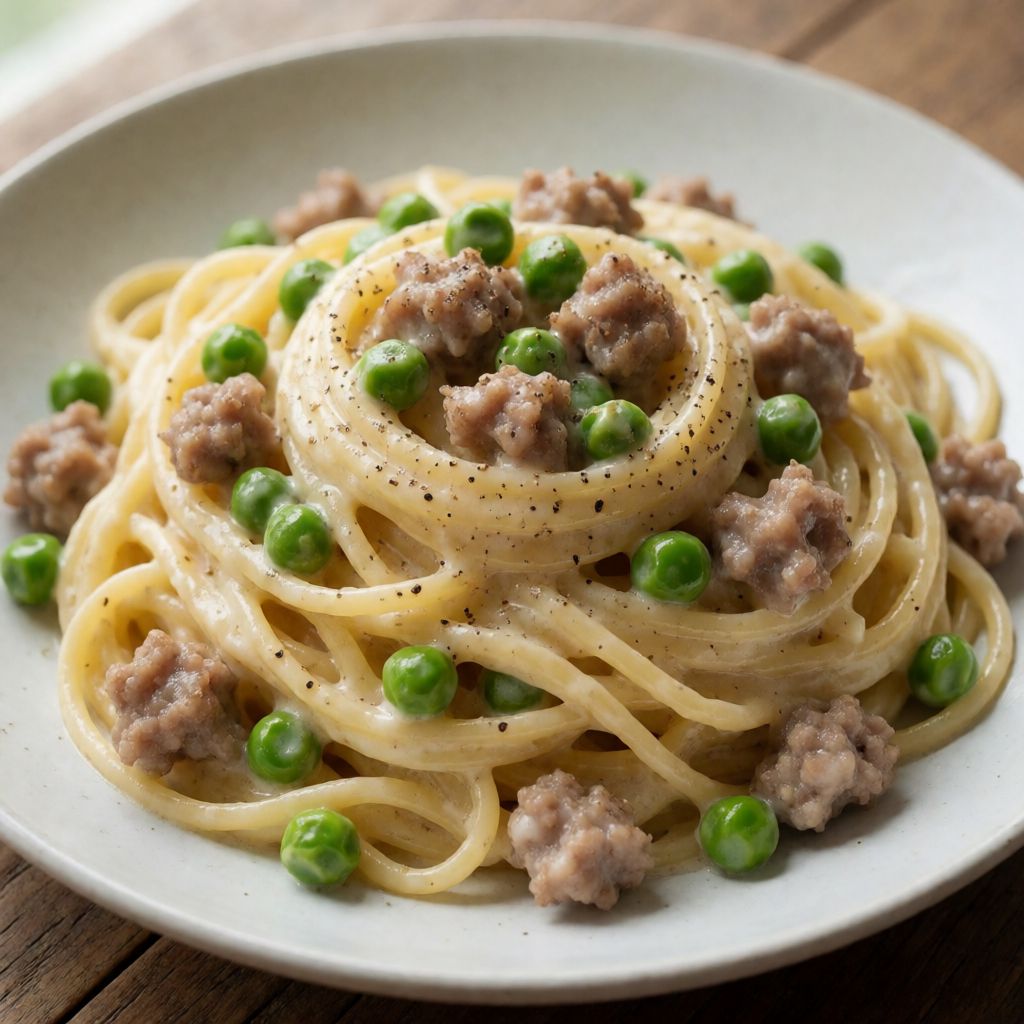
 AI photo
Carbonara with Sausage and Peas
A twist on carbonara with sausage and peas, finished with pecorino romano.
Labels are worked out automatically from the ingredients and can be wrong. Check the packaging if it matters to you.
Ingredients
- 200 g Sausage
- 240 g Peas
- 120 ml Vegetable stock
- 4 pcs Egg yolks
- Salt to taste
- Black pepper to taste
- 2 tbsp Olive oil
- 1 pcs Shallot
- Parsley to taste
- 50 g Pecorino Romano
- 350 g Rigatoni or penne, farfalle, spaghetti






Steps
Thinly slice the shallot and fry it in the olive oil.
Add the sausage and fry well until golden brown. Done when the inside reaches 70°C.
Add the peas, cook for a few minutes, then pour in the vegetable stock and cover with a lid.
Meanwhile, cook the rigatoni in plenty of salted water until al dente.
Beat the egg yolks with the pecorino romano, parsley and a pinch of black pepper.
Drain the pasta and tip it into the pan with the sauce, stirring for a few minutes.
Pour in the egg mixture, mix well and serve sprinkled with grated pecorino romano.
What was changed
Row Rigatoni was corrected: it named bacon but listed pasta shapes as alternatives, and the method never cooks bacon.
Let's be honest from the start: this is not carbonara. Carbonara is guanciale, pecorino, egg, pepper, pasta — five things, no cream, no onion, no peas. This is a carbonara-style sauce used as a method, borrowed to dress up sausage and peas, and there's no shame in that. What decides whether it works is the same thing that decides real carbonara: whether the egg yolk turns into a sauce or into scrambled egg stuck to rigatoni.
The mechanism is simple and unforgiving. Egg yolk sets somewhere around 65°C. Below that it's raw, above it it's curd. Your job is to melt the pecorino into the yolk and coat the pasta with residual heat alone — the heat sitting in the pasta and in the pan after you take it off the flame — not with a flame still under the pan. Off the heat, stir, let the pasta's own warmth and the starchy water you held back do the cooking. On the heat, you get sausage-and-pea scrambled eggs, which is a different, lesser dish.
The sausage stands in for guanciale, and it needs the same patience: fried until properly golden, not just warmed through, because that colour is where the fat renders and the flavour that's going to carry the whole sauce gets released. Some say sausage can go in raw-ish if it's "just going to cook more in the sauce" — no, because the sauce never gets hot enough again once the egg goes in; whatever colour the sausage has when it leaves the pan is the colour it keeps.
Shallot first, in oil, on a heat gentle enough that it goes translucent and slightly gold, not brown — brown shallot is bitter shallot, and bitterness here has nowhere to hide once the cream-free egg sauce goes on. If you don't have shallot, a small onion does the same job, just slower and a touch sharper; shallot is prized mainly because it's milder and sweeter, not because it's magic.
The sausage: use one with enough fat in it to render, because that fat is doing the work guanciale's fat does in the original — carrying flavour into the oil, into the peas, eventually into the sauce. A dry, lean sausage leaves you frying in nearly nothing. 70°C inside is the point where pork is safely cooked through; check it if you've got a thermometer, or cut one open — no pink, juices running clear, that's your cue, not a stopwatch.
Peas and stock: frozen peas are completely fine, better even, since fresh peas lose sugar to starch within hours of picking and most "fresh" ones in a shop have been sitting for days. The stock isn't there to make a soup — it's there to keep the pan from going dry while the peas soften and to build a thin savoury liquid that the pasta will drink in when it joins the pan. Any decent vegetable stock works; water with a pinch of salt is the fallback, it just carries less.
Egg yolks and pecorino: yolks give you fat, protein and colour — the thing that turns liquid into sauce once it meets starchy warmth. Whole eggs would work but dilute it with watery white, which is why carbonara disciplines itself to yolks only. Pecorino Romano is sharp and salty because it's a hard ewe's-milk cheese, built to be grated, not melted on its own — it needs the yolk's fat to turn creamy instead of stringy. Parmesan is the standard swap if pecorino isn't on the shelf, just milder, so taste before you add more salt.
Pasta: rigatoni's ridges and tube hold sauce in a way a smooth noodle can't, which is the actual reason tube shapes get recommended for sauces like this — not tradition for its own sake, just surface area. Keep back a cupful of the pasta water before you drain; that starchy water, not more stock, is your adjustment if the sauce turns stiff or grainy once it's off the heat.
Patience is the real ingredient missing from most bad versions of this dish: patience to let the shallot colour slowly, the sausage brown properly, and — above all — to pull the pan off the heat before the eggs go in, and keep it off. Everything else here is forgiving. That one step is not.