
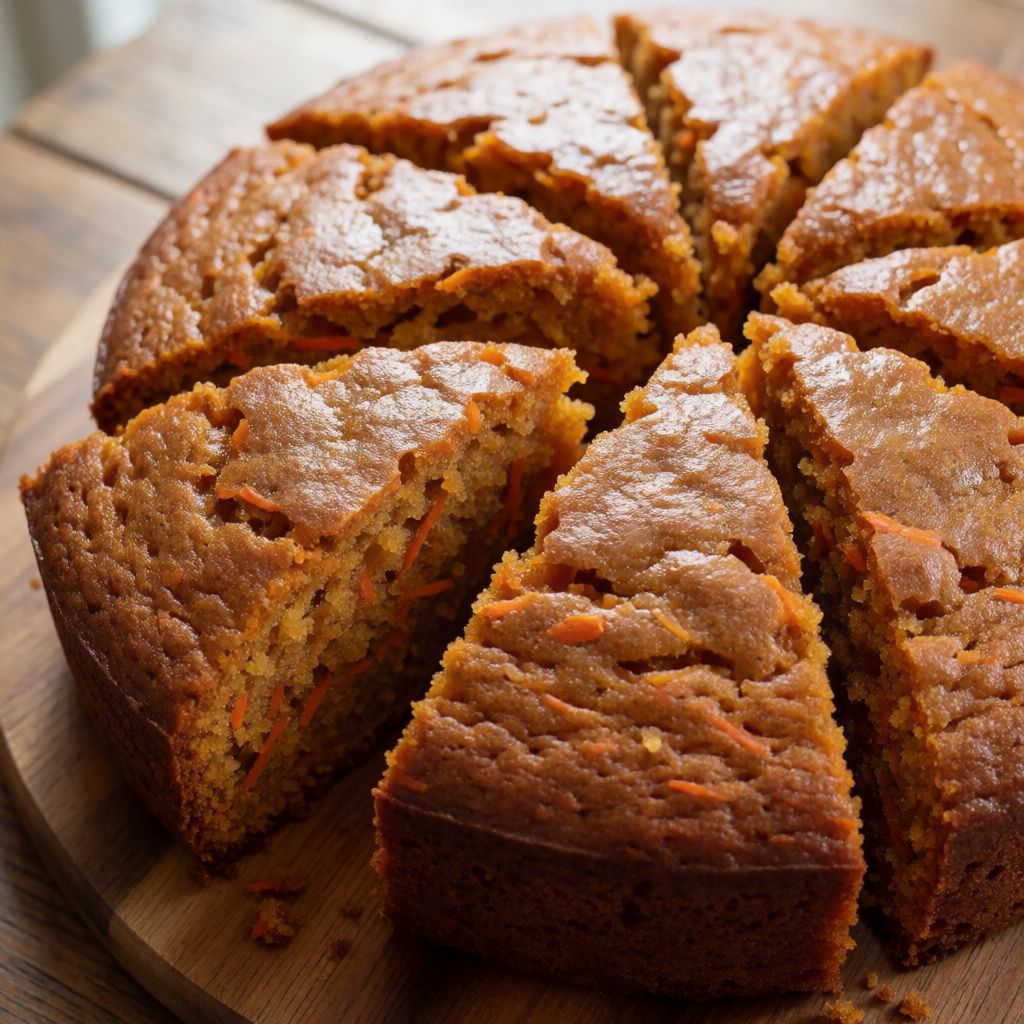
 AI photo
Carrot Cakes
Small carrot and orange cakes with almond flour, baked in half-sphere moulds.
Labels are worked out automatically from the ingredients and can be wrong. Check the packaging if it matters to you.
Ingredients
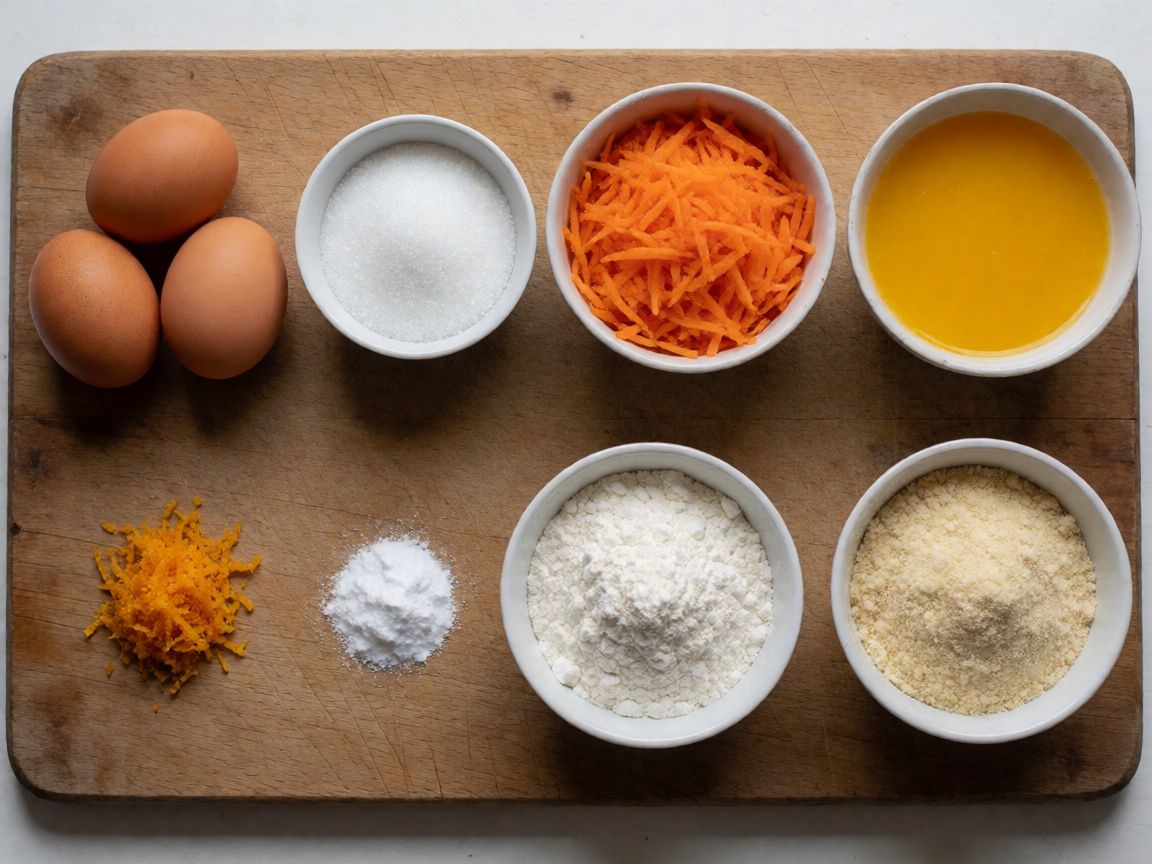
- 3 pcs Eggs
- 200 g Sugar
- 250 g Carrot
- 150 g Vegetable Oil
- 100 ml Orange Juice
- 1 pcs Orange Zest
- 200 g Flour
- 100 g Almond Flour
- 16 g Baking Powder








Steps
Crack the eggs into a bowl, add the sugar and beat with a mixer until light and fluffy.
Wash and peel the carrots, weigh them, cut into pieces and blend until finely chopped.
Pour the vegetable oil straight into the blender jug and blend again together with the carrot.
Add the chopped carrot and oil to the egg and sugar mixture and stir together.
Flavour the batter with the orange zest and 100 ml of orange juice.
Sieve in the flour and baking powder, add to the batter and mix until smooth.
Fold in the almond flour or finely chopped blanched almonds.
Spoon the batter into a silicone half-sphere mould 8 cm in diameter, not quite filling to the edges.
Bake in a preheated fan oven at 170°C for 15 minutes, or in a conventional oven at 180°C for 15-20 minutes.
18 minCheck with a wooden skewer: it should come out dry.
Bake two cakes first as a test, to work out the exact baking time needed.
Let the cakes cool completely, remove from the mould and serve in paper cases.
A carrot cake is not a vegetable pretending to be a dessert — it's an engineering trick. Carrot is mostly water held in cell walls, and once you blitz it into the batter, it releases that water slowly as it bakes, so the crumb stays damp long after a plain sponge would have gone dry and sad. That's the whole point of the carrot here: not flavour, not virtue, moisture insurance. Grate it by hand if you must, but a blender pulls it fine enough that you don't get stringy threads sitting raw in the middle of a bite.
What decides whether this works is the egg-and-sugar whisk at the start and nothing else gets to undo it. You're not just dissolving sugar — you're trapping air in a web of egg protein, and that air is your only rising agent besides the baking powder. Beat until the mixture holds a ribbon off the whisk and goes pale; if you rush this and the batter stays wet and yellow, no amount of baking powder will save the rise, because baking powder only holds air already there, it doesn't make it from scratch.
Some say you should add the oil last, drop by drop, like a mayonnaise. No — this isn't an emulsion of egg yolk and oil fighting for stability, it's a cake batter with plenty of flour to hold everything together. Blitz the oil with the carrot and dump it in. The carrot pulp and the small amount of water in it anchor the oil so it doesn't pool and grease the bottom of your tin — that's the actual job carrot and oil blended together are doing.
On the oven: a British fan oven at 170°C and a conventional one at 180°C aren't two options for the same result — a fan oven moves hot air past the cake constantly, so it cooks faster and more evenly at a lower set temperature, while a still-air oven needs the extra 10°C just to push the same amount of heat through by convection currents alone. Don't treat the ten-degree gap as rounding error; treat it as the difference between two different machines. And don't trust 15 minutes as gospel — every domestic oven lies about its own number by five or ten degrees in either direction, hence the test bake of two cakes before you commit the whole tray. That's not fussiness, that's just how you find out what your particular oven actually does, once, so you're not guessing every time after.
Doneness is the skewer, not the clock, because a half-sphere mould is deceptive — the outside sets and browns while the centre is still batter, and the time given is a floor, not a verdict. Push the skewer to the middle; if it drags out wet, give it more heat, not more faith.
Eggs: three, room temperature if you can manage it, because cold egg resists whisking into volume — the proteins unwind and trap air better when they're not fighting the cold. If your eggs came straight from the fridge, a few minutes in a bowl of warm water fixes that; no need to plan ahead for it.
Sugar: 200g, ordinary white. It's not only sweetness — it's also what keeps the crumb moist, since sugar holds onto water in baking the way honey does, so don't treat it as an amount you can casually halve without the texture paying for it.
Carrot: 250g after peeling, weighed, because carrots vary wildly in water content by season and by how long they sat in your fridge drawer — weighing after prep, not before, is the only way the proportion means anything.
Vegetable oil: 150g of anything with no smell and no strong colour of its own — sunflower, rapeseed, grapeseed. Olive oil fights the orange and the almond for attention; butter would set solid when the cake cools and dry the crumb out, because butter is roughly 80% fat and the rest water, while oil is pure fat and stays liquid, keeping the cake soft days later. This is the real reason oil-based cakes keep better than butter ones, not folklore.
Orange: zest of one, juice to 100ml — supermarket oranges vary in juiciness, so measure the juice, don't assume one orange gives you exactly that; top up with a second if you're short.
Flour and almond flour: 200g plain flour gives structure through gluten, 100g almond flour (or finely chopped blanched almonds, which is the older, cheaper version before packaged almond flour existed on every shelf) breaks up some of that gluten network, giving a shorter, more tender crumb and a faint nuttiness that plays well against the orange. If you've no almond flour, ground hazelnuts or even more plain flour will do, but expect a slightly firmer bite without the almond.
Baking powder: 16g sounds like a lot against 200g flour, but with wet carrot pulp dragging the batter down, it needs the extra lift — don't halve it thinking you're being careful, you'll just get a dense little puck instead of a cake.
Letting them cool completely before unmoulding isn't optional patience for its own sake — a warm cake is structurally half-finished, the starches are still setting, and pulling it from a silicone mould too early means it tears or collapses in your hand. Patience here is an ingredient, same as the eggs.