
 AI photo
Easter Carrot Muffins with Lemon Cream Cheese Frosting
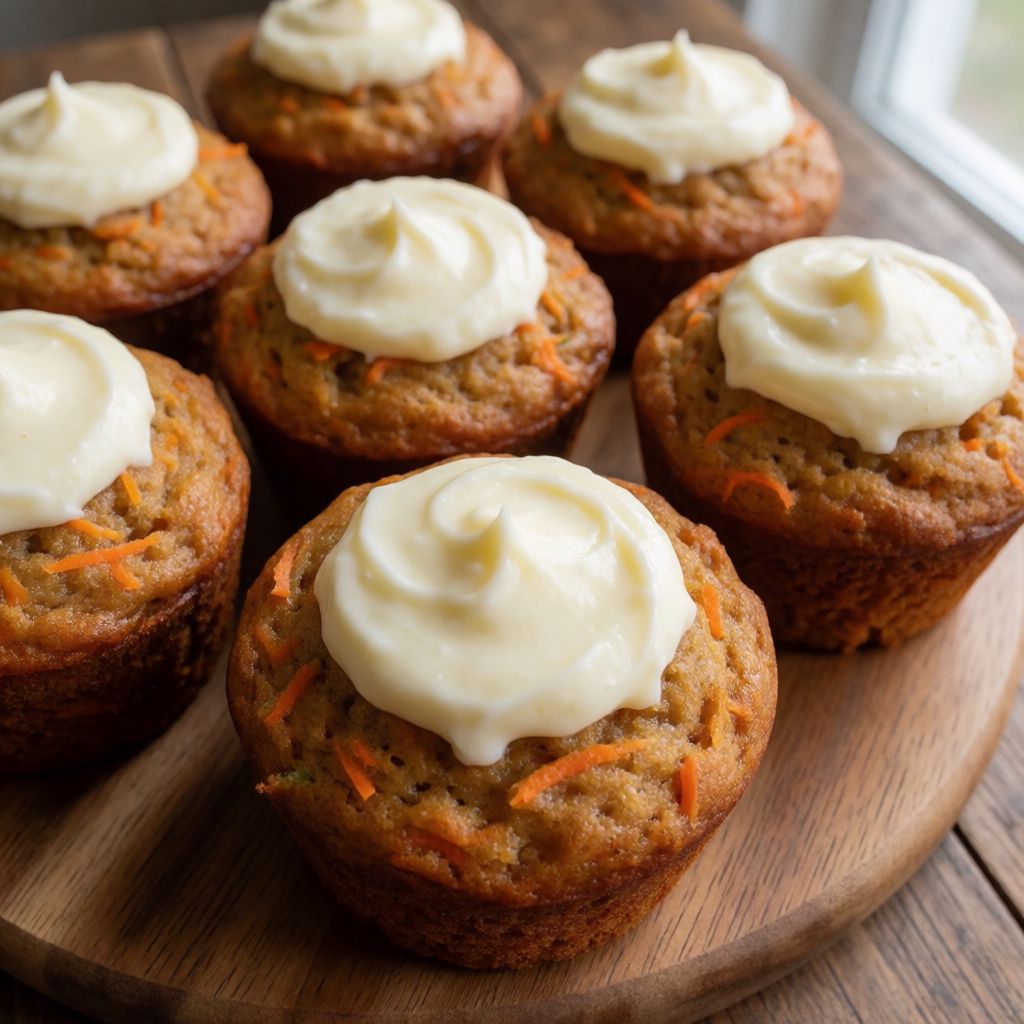
Easter carrot muffins topped with a lemon cream cheese frosting, decorated like little sweet Easter nests with mini eggs.
Labels are worked out automatically from the ingredients and can be wrong. Check the packaging if it matters to you.
Ingredients
- 150 g Butter softened
- 200 g Caster sugar
- 4 pcs Eggs
- 250 g Carrot coarsely grated
- 225 g Plain flour
- 25 g Rolled oats coarse
- 2 tsp Baking powder
- 1.5 tsp Cardamom ground
- 0.5 tsp Salt
- 36 pcs Mini chocolate eggs for decoration, any kind









Frosting
- 150 g Butter softened
- 100 g Icing sugar
- 1 tbsp Lemon juice
- 0.5 pcs Lemon unwaxed, finely grated zest
- 0.5 tsp Vanilla sugar
- 150 g Full-fat cream cheese plain




Steps
Beat the sugar with the eggs until light and fluffy, then fold the carrot into the batter.
In a bowl mix the flour, rolled oats, cardamom, baking powder and salt, then add to the batter.
Melt the butter over low heat and stir into the batter.
Divide the batter among muffin cases and bake in a preheated fan oven at 175°C for 20-25 minutes.
Let the freshly baked muffins cool on a wire rack before adding the frosting.
For the frosting: beat the softened butter, then add the icing sugar, lemon zest and lemon juice.
Beat until smooth, then fold in the cream cheese.
Pipe the frosting onto the muffins and decorate with mini chocolate eggs so they look like little sweet Easter nests.
What was changed
Removed — the fresh rosemary garnish is not typical for this local kitchen.
A carrot muffin is a carrot cake that got tired of pretending to be a cake. Same wet, grated vegetable sitting inside a sweet batter, same spice, same cream cheese on top — just portioned into twelve and baked faster because there's more surface and less middle to worry about. That's the whole logic of a muffin: more crust-to-crumb ratio, less time for the centre to catch up with the edges.
What decides whether these work isn't the oven, it's the carrot. Grate it coarsely and it keeps its structure — little threads that hold moisture and release it slowly as the muffin bakes, so you get a damp, close crumb instead of a dry one. Grate it fine, almost to pulp, and you've basically added wet sugar: it'll weep water into the batter and sink, leaving you with a gummy middle. Some say carrot cake is "healthy" because of the vegetable in it — no, it's a sponge enriched with butter and sugar that happens to use carrot as its moisture-and-sweetness carrier, the way stewed apple does in some older English bakes. The carrot earns its place by what it does to texture, not by any virtue.
Cardamom here isn't decoration. At one and a half teaspoons it's doing real work against the dullness that plain flour, oats and carrot together can fall into — oats especially flatten flavour, they're bulk and chew, not taste. The cardamom cuts through that and gives the spice a lift that cinnamon, used so often out of habit, doesn't quite manage — cinnamon is warm and flat, cardamom is warm and sharp, and sharp is what a dense, sweet crumb needs.
Butter appears twice and for two different jobs, and that's worth separating in your head. In the batter it's melted — a liquid fat whose only task is to carry moisture and richness through the crumb without adding its own structure; melted butter can't trap air, so this muffin leans on the eggs and baking powder for lift, not on creaming. In the frosting it's soft and beaten cold-ish, because here its job is the opposite: trap air, build a stable base the sugar and cheese can sit inside. Same ingredient, two states, two different reasons.
Eggs do double duty: whipped with the sugar until pale and thick, they pull in air — that's the muffin's real rising power, more than the baking powder, which is there mostly as insurance for the heavier bits (the oats, the carrot) that want to weigh the crumb down. If your batter looks thin and separated rather than fluffy before you add the flour, that's usually under-beaten eggs, not a bad recipe.
Carrot: coarse grating, as said, is the whole point. No carrot in the house — or you've only got the soft, bendy ones nobody wants — grated courgette (squeezed, not drained to death) or grated apple will do a similar structural job, though the flavour shifts, obviously. This is a question of moisture and bulk, not of carrot being irreplaceable.
Flour and oats together: plain flour gives structure, oats give chew and a rustic, slightly oaty backnote that stops the muffin tasting like plain sponge with carrot in it. Use the coarse, old-fashioned rolled oats, not the instant kind that's been through a mill and basically dissolves — instant oats will vanish into the crumb and you'll lose the texture you were adding them for in the first place. No oats at all, just use more flour and accept a smoother, less textured crumb — not a failure, just a different muffin.
Cardamom, ground: buy the pods and grind them yourself if you can, because pre-ground cardamom loses its top note fast, within weeks really, and what's left is mostly bitterness with none of the citrus-eucalyptus lift that makes it worth using over cinnamon. No cardamom, use a mix of cinnamon and a little ground ginger — closer in character than cinnamon alone.
Lemon zest and juice, unwaxed specifically: wax on a lemon skin is there to make supermarket fruit look shiny and survive shipping, and it sits on the zest you're about to eat raw in the frosting — unwaxed means you're not grating a food-safe but still unpleasant coating into your butter. No unwaxed lemon, wash and scrub a waxed one hard under hot water; it helps, it's not perfect.
Cream cheese: plain, full-fat, and this matters more than it sounds — low-fat cream cheese carries more water, and that water will thin your frosting and make it slide. Beat it in last, briefly, folding rather than whisking, because the cream cheese has no air to protect but the butter-sugar base does, and you want to keep that air, not beat it flat.
Mini chocolate eggs for the nest look are exactly what they are — a seasonal joke worth playing once a year, nothing more, and any small chocolate will stand in. Twelve muffins, three eggs each, feeds twelve people or six people twice, and either way give the muffins a full cool on a wire rack before frosting — pipe onto a warm muffin and the frosting just melts and runs, patience here isn't optional, it's an ingredient like any other on this list.