
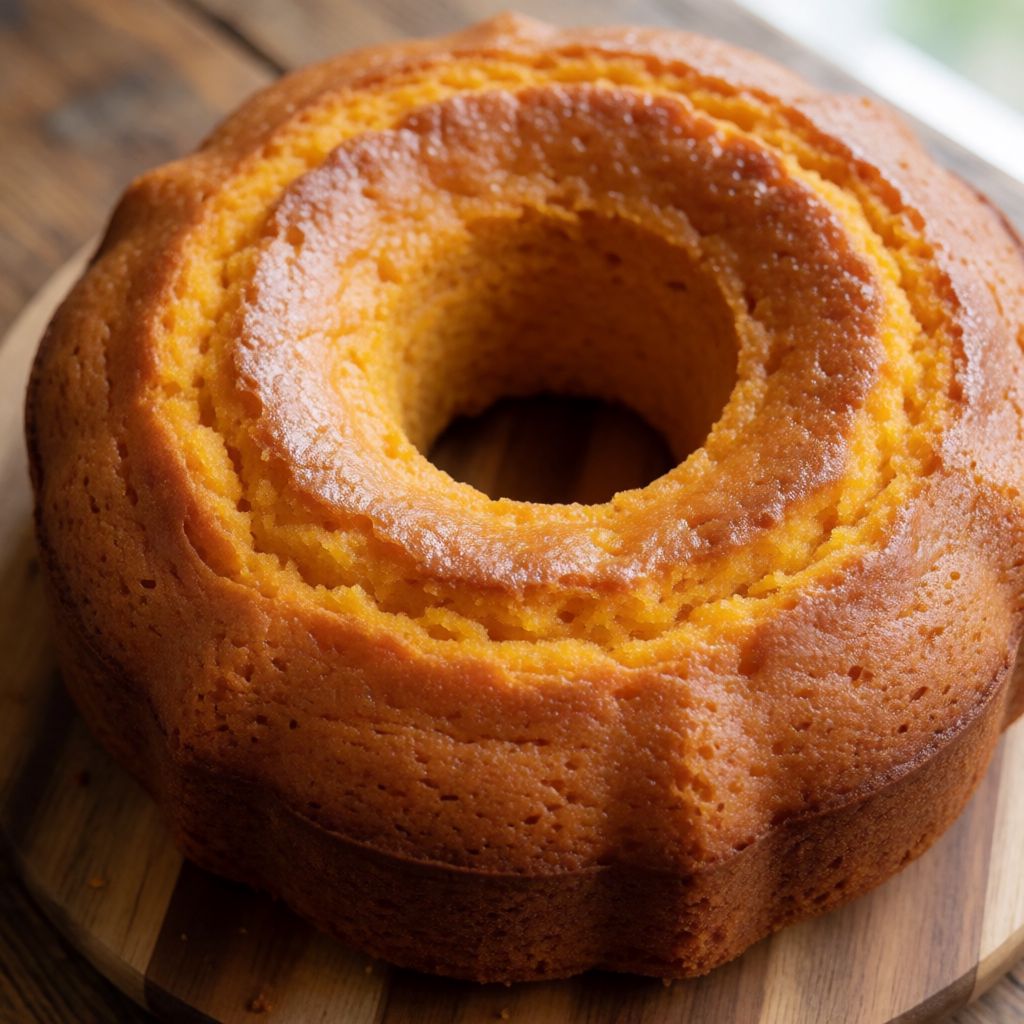
 AI photo
Carrot Bundt Cake
A light carrot bundt cake, fragrant with orange zest and finely chopped almonds.
Labels are worked out automatically from the ingredients and can be wrong. Check the packaging if it matters to you.
Ingredients
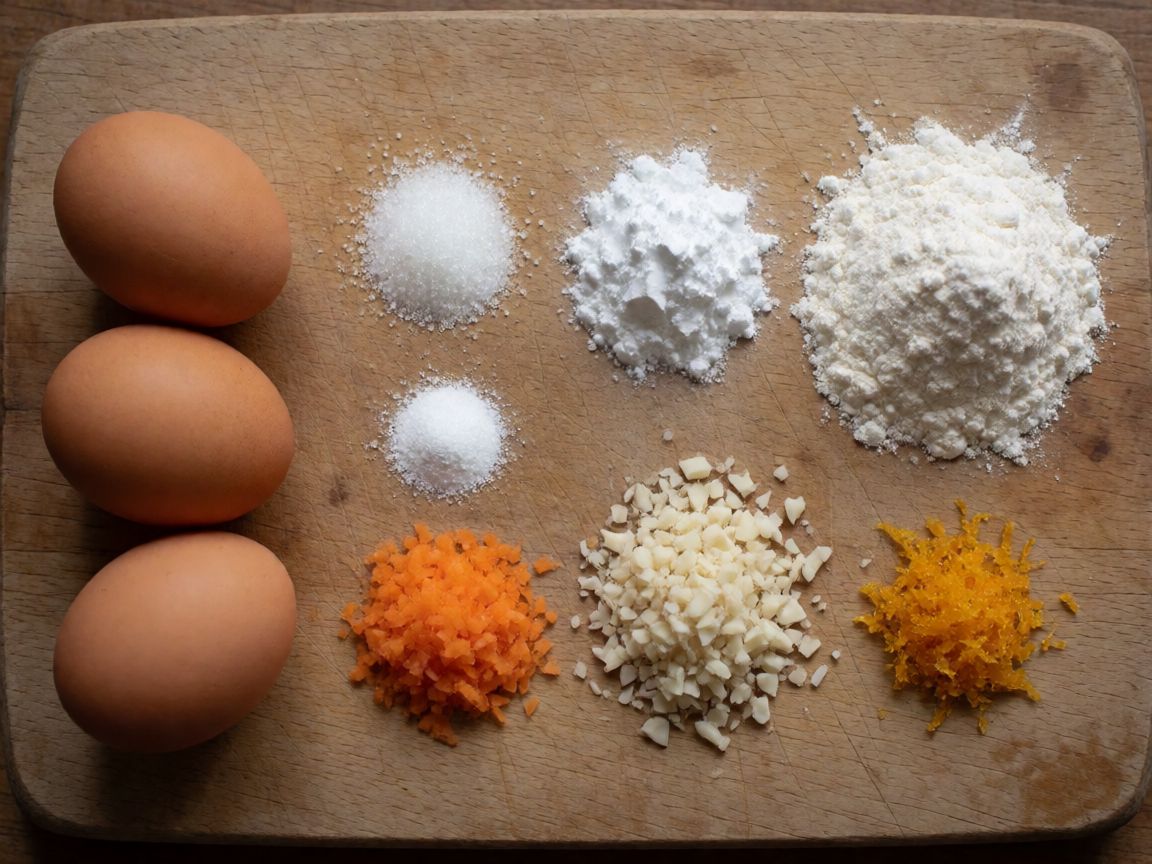
- 3 pcs Eggs
- 180 g Sugar
- 150 g Potato Starch
- 150 g Plain Flour sifted
- 75 ml Vegetable Oil
- 8 g Baking Powder
- 300 g Carrot
- 50 g Almond finely chopped
- 1 pcs Orange Zest
- 1 pinch Icing Sugar to taste








Steps
Break the eggs into a bowl and add the sugar. Beat with a mixer for at least 5 minutes, until the mixture is creamy and fluffy.
5 minAdd the potato starch and sifted flour, and mix so no lumps form.
Pour in the vegetable oil in small amounts, then add the baking powder and mix until smooth.
Blitz the carrot in a blender, press out the excess moisture with a paper towel and add it to the batter. Mix well.
Flavour the batter with orange zest, add the finely chopped almonds and mix.
Transfer the batter to a 22–24 cm bundt tin, greased with butter and dusted with flour.
Bake in a preheated fan oven at 170°C for 40–45 minutes, or in a conventional oven without fan at 180°C for 45–50 minutes.
45 minCheck it is done with a wooden skewer: if it comes out dry, the cake is ready.
Before serving, dust with icing sugar.
This is a carrot cake that has borrowed its shape from a Bundt tin and its lightness from a trick most carrot cakes don't bother with: starch instead of all flour. Potato starch has no gluten to speak of, so the crumb stays tender rather than springy. Swap that proportion and you've made a different, chewier cake — not a disaster, just not this one.
What decides whether it works is step one, not step six. Five minutes of beating eggs and sugar isn't a suggestion — it's where the rise comes from. This cake has no liquid leavening beyond baking powder, so the air you whip into the eggs now is air you'll still have in the oven. Beat it for two minutes because you're in a hurry, and you'll get a dense, flat-topped thing that still tastes fine and looks apologetic.
The carrot itself is the other quiet decision point. Blitzed, then squeezed dry in a paper towel — that squeeze matters more than it looks. Carrot is mostly water; skip the squeeze and that water goes into the batter, works against your starch-and-flour structure, and you get a gummy band at the base of the cake, the one bit that never quite bakes through. Some say a carrot cake should be moist — yes, but moist from butter and oil, not from carrot juice you forgot to deal with.
Doneness is the skewer, not the clock. Forty-five minutes is where to start checking, not where to stop. Ovens lie, especially domestic ones with an optimistic dial, so trust the skewer: wet crumb clinging to it means wait, nothing clinging means out it comes.
Eggs and sugar first, always first, because sugar dissolving into egg at the same time as you're beating in air gives you a stable foam — do it the other way and the sugar just sits there gritty, not helping lift anything. Three eggs and 180g sugar for a 22–24cm tin is a generous ratio; it's doing the leavening work that a smaller amount of baking powder alone couldn't manage on its own.
Potato starch plus plain flour, roughly half and half, is the backbone. Flour alone gives structure but also chew — carrot cake made with all flour tends toward heavy, because carrot and oil are already weighing it down. Starch lightens that without weakening it to the point of collapse. If you've no potato starch, cornflour does the same job; just don't try to replace it with more flour, or you're back to the dense version.
The oil should be any with no smell of its own — sunflower, rapeseed, whatever's in the cupboard that won't argue with orange zest and almonds. Olive oil has opinions; save it for savoury things. Oil rather than butter here is partly about moisture retention — a cake with oil stays soft a day or two longer than one with butter, which is no small thing if you're making this on a Saturday for a Sunday still to come. Butter is only in this recipe for greasing the tin, where its job is different: a thin fat layer plus a dusting of flour stops the cake gripping the tin's ridges and tearing when you turn it out. Bundt tins are unforgiving that way — all that fluting looks lovely and gives you more surface to stick to.
Carrot: 300g, blitzed fine rather than grated coarse, because a bundt tin's thin, ridged shape doesn't forgive big chunks — they create weak points where the cake can crack on release. Squeeze it dry, as above; this isn't fussiness, it's the difference between a cake that sets properly in the middle and one with a damp seam along the bottom.
Almonds, finely chopped, are there for a bit of bite against all that softness, and orange zest cuts through what would otherwise be a one-note sweetness. Neither is load-bearing — swap almonds for walnuts or pecans if that's what's in the tin, swap orange zest for lemon if you prefer it sharper. Icing sugar at the end is finishing, not decoration with pretensions; dust it after the cake's cooled, or it just melts into the surface and vanishes.
On your oven: the recipe gives you both fan and conventional temperatures for a reason — a fan oven moves hot air around the fluted tin faster, so it needs a touch less heat and time to avoid a dark crust before the centre's set. If your oven runs hot, as many small flats' ovens do, start checking at the lower end of the time rather than waiting for the top of the range. Patience here isn't about long baking — it's about not opening the door in the first twenty minutes to peek, which drops the temperature and can stop the rise mid-climb. This is a six-person cake; with tea, it won't last that long anyway.