
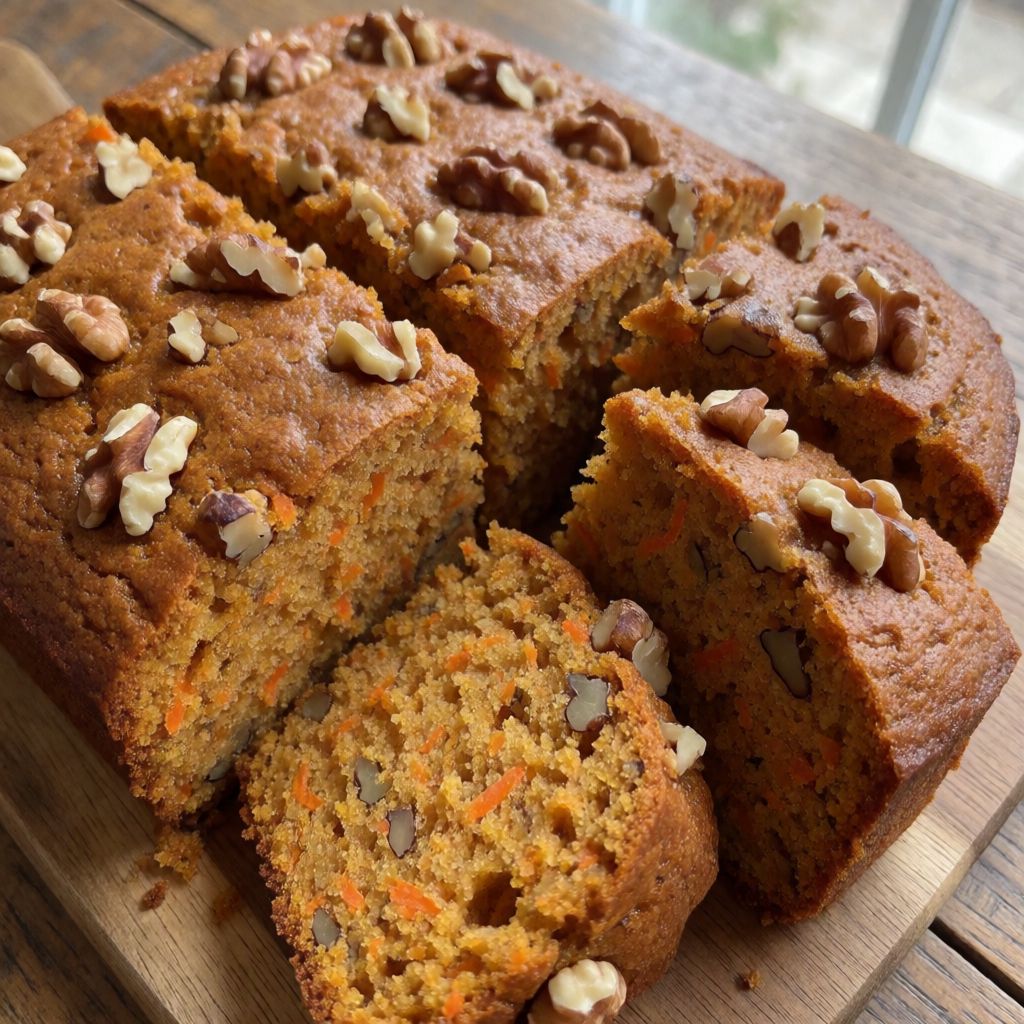
 AI photo
Carrot and Walnut Cake
A moist carrot and walnut cake flavoured with orange zest and finished with a dusting of icing sugar.
Labels are worked out automatically from the ingredients and can be wrong. Check the packaging if it matters to you.
Ingredients
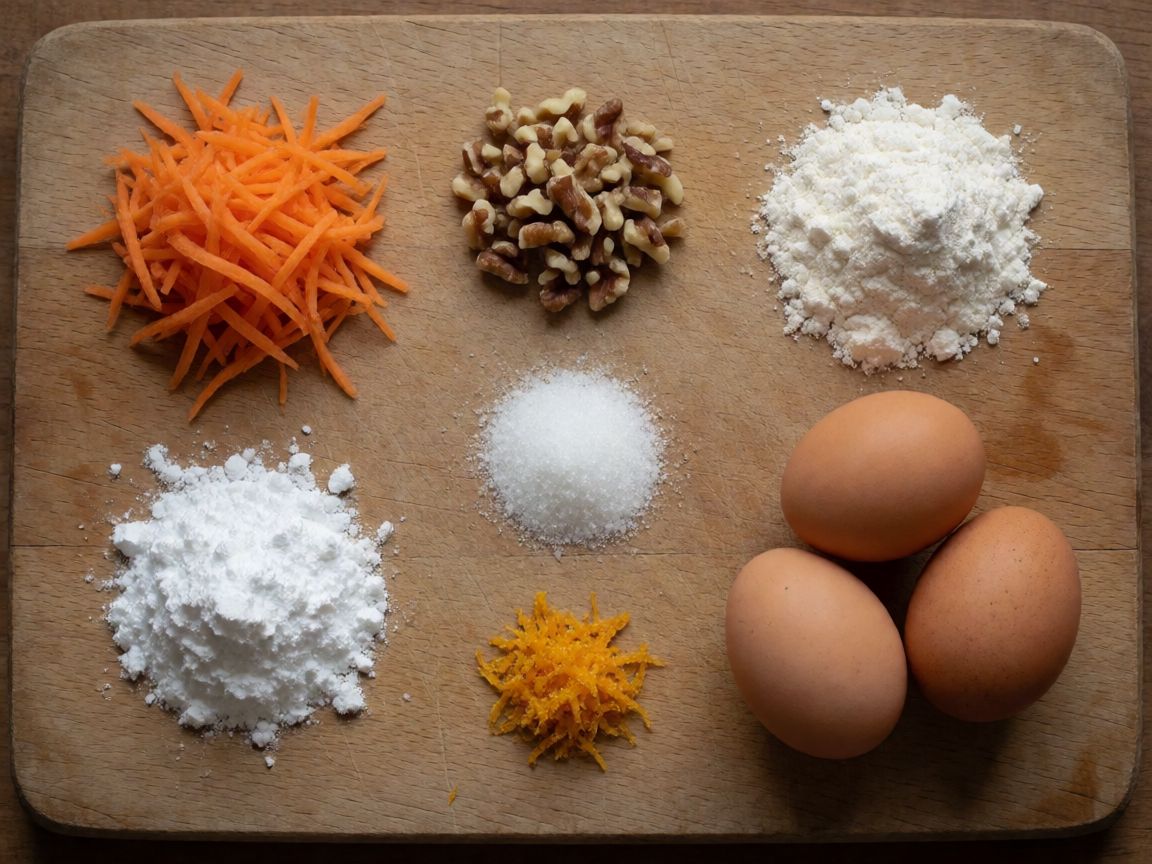
- 250 g Carrot
- 50 g Walnut
- 200 g Sugar
- 180 g Plain flour
- 50 g Potato starch
- 16 g Baking powder
- 120 g Vegetable oil
- 2 pcs Eggs
- 1 pcs Orange zest from 1 orange
- 1 pinch Salt
- 1 pinch Icing sugar to taste









Steps
Wash the carrots, peel with a vegetable peeler, cut into pieces and finely chop together with the walnuts into a smooth mixture.
Break the eggs into a bowl, add the sugar and a pinch of salt and beat with a mixer until light, fluffy and creamy.
Pour in the vegetable oil, add the sifted plain flour, potato starch and baking powder together, and mix until smooth.
Add the orange zest and the chopped carrot and walnut mixture, and stir with a spoon until the batter is even.
Grease and flour a 22 cm baking tin, pour in the batter and smooth the surface with a spoon.
Bake in a preheated oven at 180°C for about 30 minutes, until the top is lightly golden.
30 minLeave the cake to cool in the tin for about 10 minutes, then carefully remove it and transfer to a wire rack to cool completely.
10 minBefore serving, dust the top of the cake with icing sugar.
A carrot cake that skips the cream cheese entirely — no icing to hide behind, so the crumb has to do all the work itself. What decides this one is the grating: you don't shred the carrot into fine strands like for a salad, you chop it with the walnuts into something closer to a paste. That changes everything downstream. Shredded carrot stays as threads in the batter and gives you the classic damp, fibrous bite. Chopped-to-a-paste carrot more or less dissolves into the mixture, so the cake comes out finer, almost like a nut cake with orange running through it, and the walnut is there as flavour, not as crunch.
The starch is doing a quiet job most carrot cakes don't bother with. Carrot releases water as it bakes — that's unavoidable, it's 90% water by weight. Plain flour alone, with that much liquid coming from the carrot plus the oil, would give you a gummy middle even when the top looks done. Potato starch sets faster and firmer than flour under heat, so it's there to catch that extra moisture and hold the crumb together without you needing to dry the batter out by adding more flour, which would make the cake tight and sawdusty instead.
Myth worth killing here: "carrot cake is a healthy cake." It has 200 g of sugar and 120 g of oil for a 22 cm tin feeding six — that's a fifth of the batter's weight in sugar alone. The carrot adds sweetness and colour, not virtue. People reach for it instead of chocolate cake because it feels like a vegetable did them a favour. It didn't.
On the carrot itself: 250 g, peeled, and go for the dense ones — not the soft, slightly rubbery carrots that have sat in a fridge drawer for two weeks. A tired carrot has already lost water to evaporation and will give you less flavour and a drier chop. You're chopping it with the walnuts rather than grating it, so a food processor earns its keep here — pulse, don't run it continuously, or you'll end up with carrot soup instead of a rough paste.
Walnut, 50 g — toast it lightly in a dry pan first if you have a spare five minutes and a hob free; raw walnut has a faint bitterness from its skin that heat softens, and since you're chopping the nuts fine and burying them in batter, you won't get a second chance to taste that bitterness separately and decide you don't like it. No walnut on hand, use pecan — same oil content, same job of adding fat and texture into the paste. Don't swap in almonds; they're drier and won't blend into the carrot the same way.
The oil, 120 g, wants to be flavourless — sunflower, rapeseed, anything that doesn't compete with orange zest and carrot. Olive oil is the wrong choice here, not because of some rule, but because its own taste fights the zest instead of carrying it. Oil rather than butter is also the reason this cake stays soft a day or two later without going dry: oil stays liquid at room temperature, butter solidifies and stiffens the crumb as it cools.
Flour and potato starch together, 180 g and 50 g: if potato starch isn't in your cupboard, cornflour does the same structural job — same principle, bind the extra water, set it firm. Don't replace it with more plain flour; you lose the reason it's there.
Baking powder at 16 g looks like a lot next to 180 g of flour, and it is — more than a standard cake ratio, because it has to lift a batter that's heavier than plain flour and eggs alone, weighed down by carrot pulp and oil. Don't halve it because it looks like too much; this batter needs the push.
The orange zest is for lift in flavour, not literal lift — it cuts the flatness that oil-based cakes can have, where everything tastes like "sweet" and nothing tastes like anything specific. Zest the orange before you juice it for anything else, obviously, and only the coloured skin — the white pith underneath is bitter and will sit in your cake like a complaint.
On doneness: 30 minutes is your lower bound, not your answer. Ovens lie, especially domestic ones where the thermostat cycles a few degrees either side of what the dial says. Push a skewer or a clean knife into the centre — it should come out with moist crumbs clinging, not wet batter, and not bone dry either. The "lightly golden top" the recipe mentions is a real cue, but it's checking the top, not the middle, so use both.
Ten minutes in the tin before turning out isn't laziness — a cake this moist is structurally soft straight from the oven, and the sides haven't firmed up yet. Turn it out immediately and you risk it collapsing at the edges where it meets the tin. That ten minutes is the cake finishing a job the oven started. Patience here isn't optional — it's the last ingredient on the list, even though nobody weighs it in grams.