
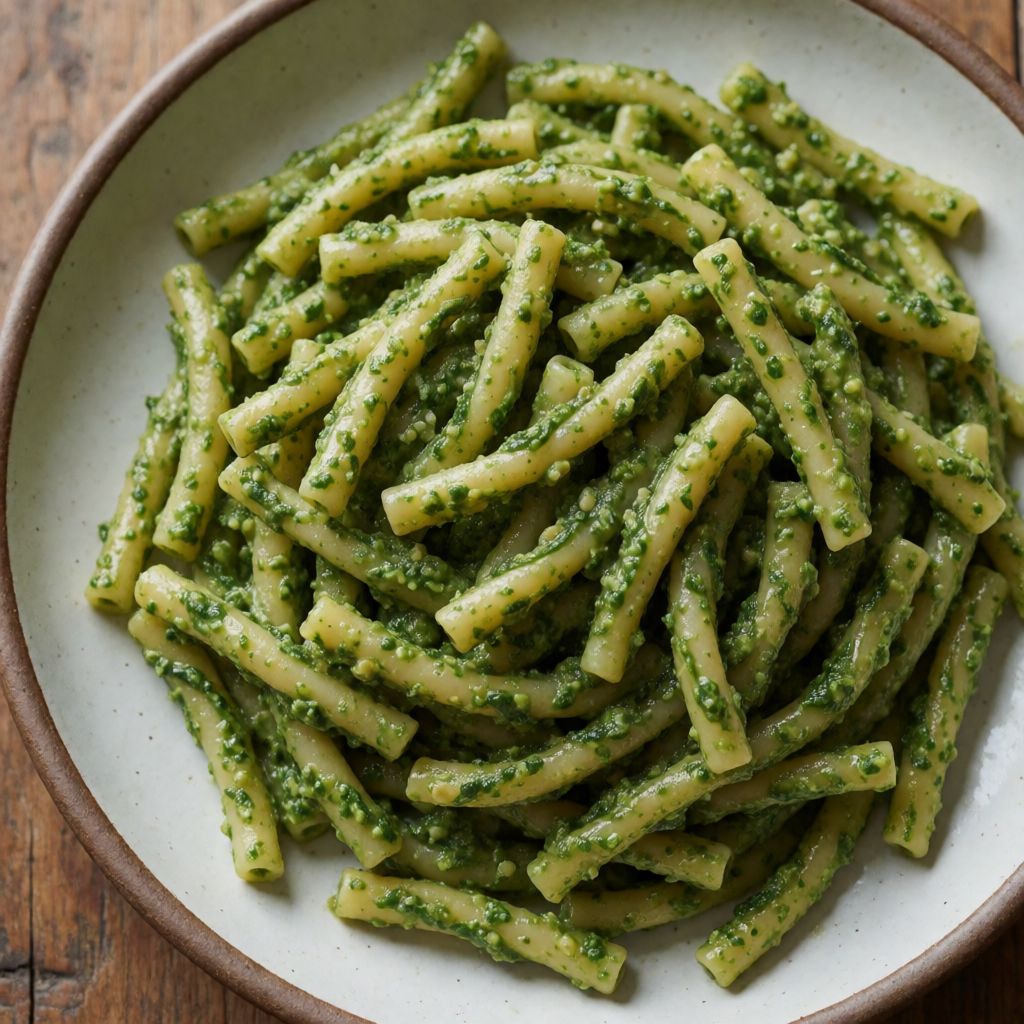
 AI photo
Casarecce Pasta with Rocket and Walnut Pesto
A quick pasta dish tossed with a fresh pesto of rocket, walnuts and pecorino.
Labels are worked out automatically from the ingredients and can be wrong. Check the packaging if it matters to you.
Ingredients







Steps
Dip the walnuts in boiling water for a few seconds, then peel off the skins and pat dry.
2 minIn a blender, blitz the rocket with a pinch of coarse salt.
1 minAdd the walnuts, garlic, pecorino and olive oil, and blend until you have a smooth, light pesto.
2 minCook the casarecce in plenty of salted water until al dente, then drain.
10 minIn a bowl, toss the hot pasta with the pesto.
2 minServe sprinkled with extra pecorino on top.
This is a raw sauce built to meet hot pasta, not a cooked one — the old Genoese logic of pestare, to crush, applied with rocket standing in for basil and walnuts standing in for pine nuts. Rocket brings pepper where basil brings sweet aniseed, and it's tough enough to survive the blade without collapsing into green mush the second it's touched, which basil can do if you're not careful.
What decides whether this works is heat, or rather the complete absence of it on the sauce itself. Some say you can warm pesto gently in the pan with the drained pasta to "help it come together" — no, because the moment that oil hits a hot surface the chlorophyll in the rocket breaks down and the sauce slides from bright peppery green to a tired khaki, and the walnut oil starts to smell flat and nutty in the wrong way. The only heat this dish gets is the residual heat of the pasta itself, carried straight from the pot to the bowl, and that's enough to loosen the oil and wake the aroma without cooking anything.
The second thing that decides it is what you do to the walnuts before they go anywhere near the blender. Their skin carries tannin, the same bitter family you taste in an oversteeped mug of tea, and left on, it turns a pale, delicate sauce slightly grey and slightly harsh. A few seconds in boiling water loosens it enough to rub off with your thumbs — small job, big difference, and it's the one step people are tempted to skip because walnuts "are fine as they are." They're fine for snacking. Not for a pesto this pale.
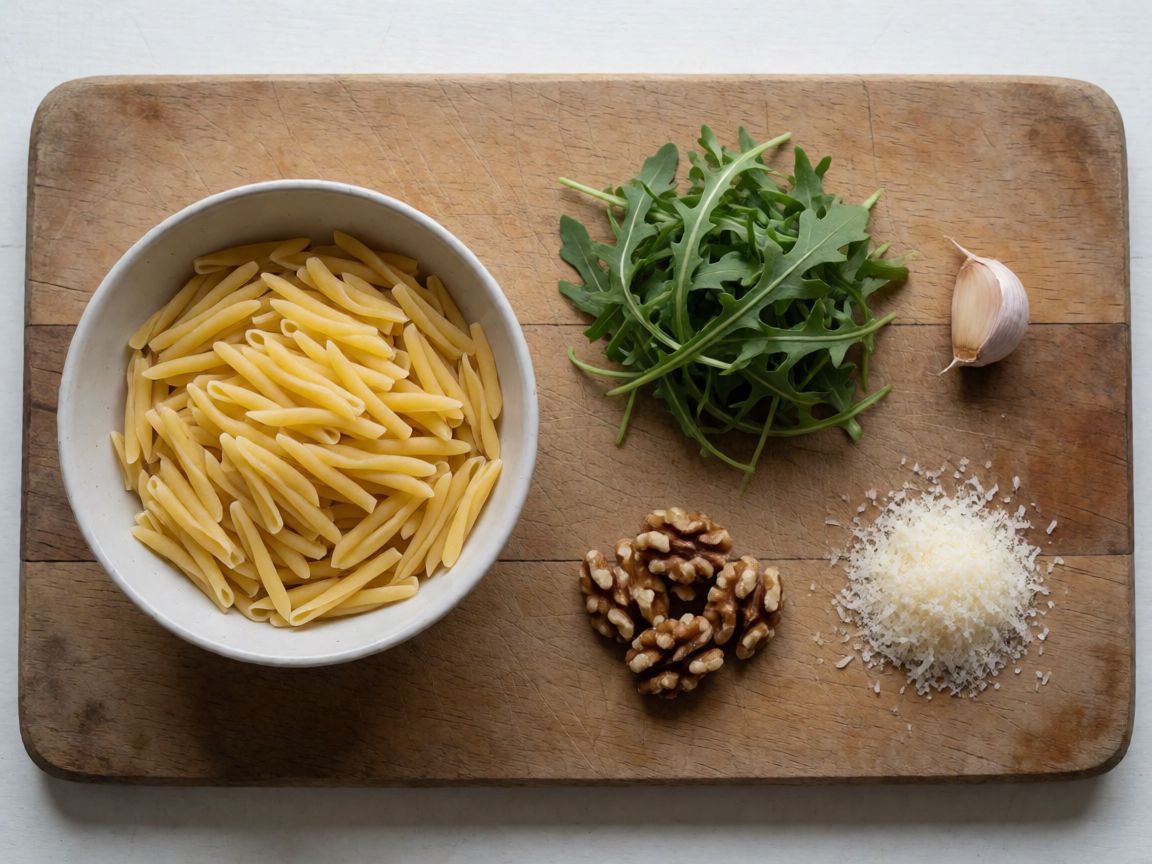
Rocket: buy it young if you can tell — older, more mature bunches run hotter and more bitter, which is fine if that's what you're after but will fight the walnut rather than sit alongside it. One bunch, loosely enough to fill two cupped hands, is the right scale here. It goes into the blender first, alone, with the salt — not because order is sacred, but because salt starts breaking the leaf's cell walls mechanically, giving the blade something to bite into before oil arrives and coats everything, leaf and blade both, making the greens slip past the knife instead of shredding under it.
Walnuts: blanch, peel, dry — a damp nut makes a wet, loose paste that won't bind to the pasta, it'll just pool in the bottom of the bowl, so pat them properly dry before they go in. If walnuts aren't to hand, any oily, not-too-sweet nut will stand in — pine nuts are the obvious classic, but worth saying plainly: pine nuts became pesto's "correct" nut mostly because they got cheap and available in Liguria later; walnuts came first, because they were what grew on the hillside and cost nothing. Using them here isn't a compromise, it's older than the version you've been told is traditional.
Garlic: one clove, no more, because raw garlic blended cold is far sharper than garlic that's seen a pan — there's no cooking here to mellow it. If you find raw garlic too aggressive, cut the clove and remove the thin green germ running through its centre; that's where most of the harsh bitterness sits, more than in the flesh itself.
Pecorino: a hard, salty, sheep's-milk cheese that grates to a fine powder rather than melting into strings — that's the only real criterion, and pecorino meets it with more bite than parmesan does, which matters when it's standing next to something as sharp as rocket. Parmesan works as a substitute, just add it knowing you may need a touch more salt to compensate for the milder cheese. Keep it cool going into the blender; cheese warmed too fast by a hot blade can seize into little clumps rather than blending smooth, and that's a texture fault that's hard to undo once it's happened.
Oil: here you don't want "any neutral oil," because the oil is doing flavour work, not just carrying the sauce — but you do want one that isn't shouting over the rocket, which is already peppery enough on its own. A rounder, less bitter olive oil balances better than an aggressively grassy one. Eight tablespoons against fifty grams of nuts and cheese is a generous ratio, and that's deliberate — it's the oil, not borrowed pasta water, that loosens this sauce onto four hundred grams of hot pasta, so there's no need to rescue it with a splash from the pot the way you might with a drier sauce.
If you don't have casarecce, reach for anything with a ridge or a twist — fusilli, penne rigate, conchiglie — the shape's job is to hold grit in its folds, not look authentic. And give yourself the small patience of letting the blender rest between bursts rather than running it continuously: a food processor blade heats up fast, and heat here is the enemy of colour and of taste, the same reason the pesto itself never sees a flame.