
 AI photo
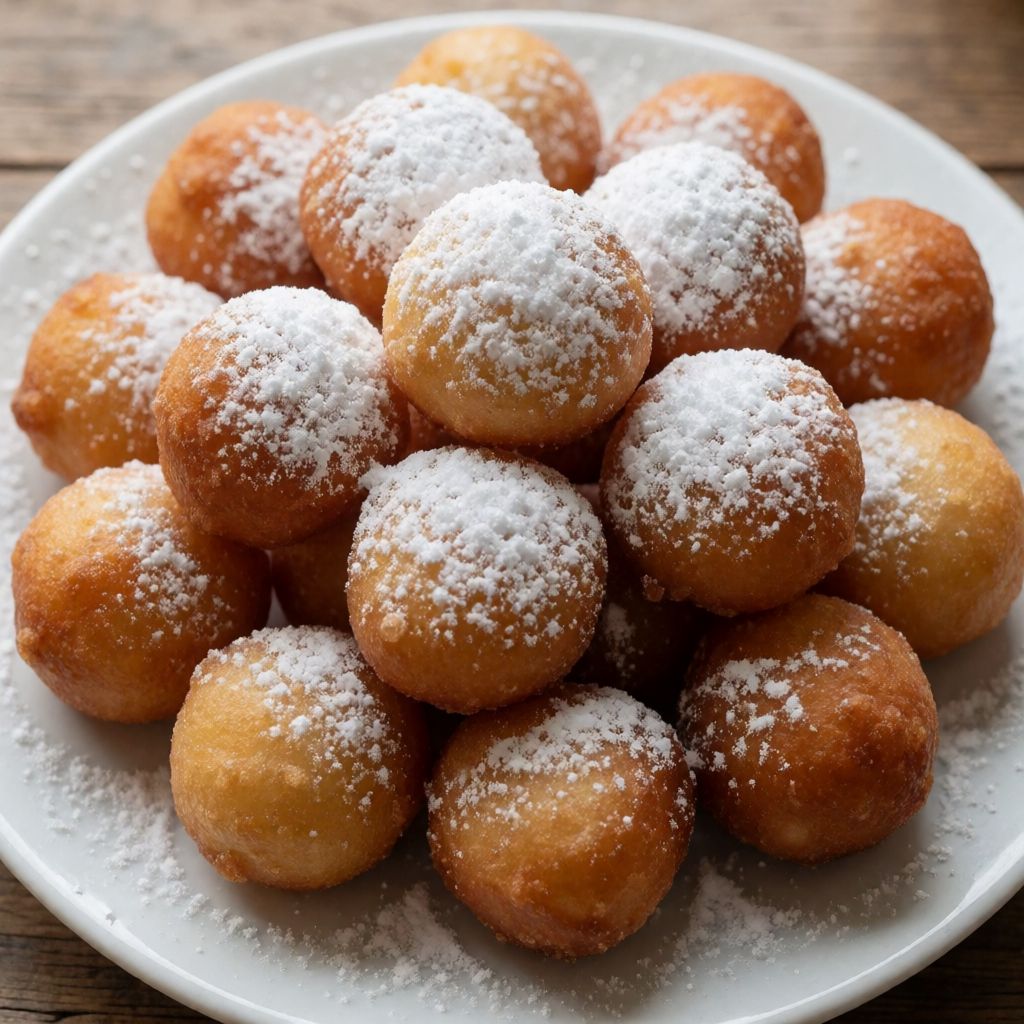
Carnival Castagnole
Small fried Italian carnival dough balls, dusted with icing sugar.
Labels are worked out automatically from the ingredients and can be wrong. Check the packaging if it matters to you.
Ingredients
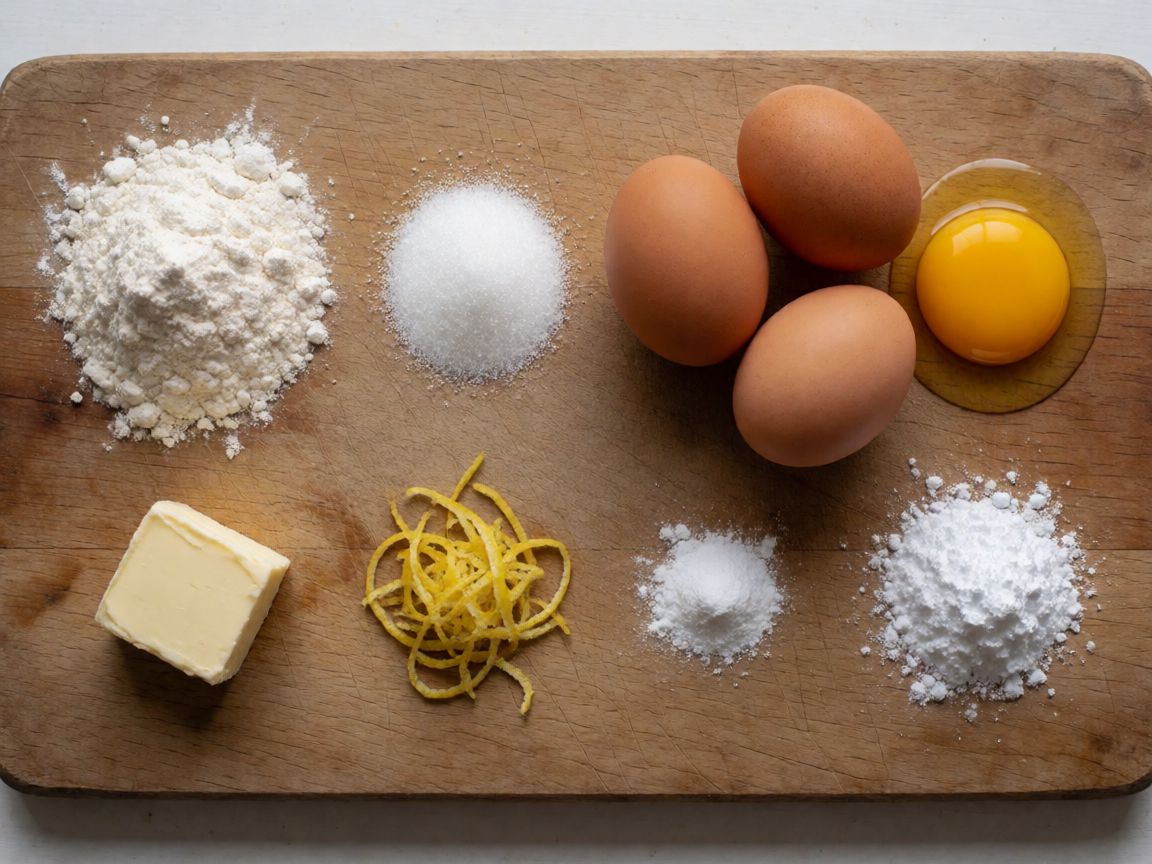
- 400 g Plain flour
- 100 g Caster sugar
- 3 pcs Eggs
- 1 pcs Egg yolk
- 70 g Butter
- 1 pinch Salt
- 1 pcs Lemon zest
- 15 g Baking powder
- Icing sugar to taste
- Groundnut oil to taste










Steps
Tip the flour, sugar, a pinch of salt and baking powder into the bowl of a mixer, then add the butter, eggs, egg yolk and lemon zest.
Mix at a moderate speed until the ingredients come together into a smooth dough.
8 minTransfer the dough to a work surface and knead by hand for a few more minutes, then shape into a ball.
Let the dough rest.
7 minCut off a portion of the dough, roll it into a cylinder, then divide into small balls.
Pour the groundnut oil into a frying pan and heat to about 170°C.
Fry the castagnole until golden, making sure the dough is cooked through inside.
4 minPlace the finished castagnole on a plate lined with paper towel.
Once cooled, dust with icing sugar or sugar.
Castagnole are what Italy fries during Carnevale instead of answering the question "why aren't you giving anything up for Lent yet" — small, eggy, slightly sweet dough balls, fried then dusted with icing sugar. Think of them as a cousin of the doughnut that never bothered with yeast. No proving, no waiting for bubbles — the lift comes from baking powder and the eggs, so the whole thing moves from bowl to plate inside an evening.
What decides whether they work is the dough's texture before it ever sees oil: soft, slightly tacky, but holding its shape when you roll it into a ball. Too wet and the ball spreads flat in the oil and drinks fat; too dry and you get a tight little bullet that's cooked on the outside and chalky in the middle. Butter and egg yolk are there to keep it tender without turning it into a batter — this is a dough you knead by hand, briefly, the way you'd finish a shortcrust, not a bread.
The second thing that decides it is the oil temperature, and this is where most home attempts go wrong. Some say any hot oil will do — no, because castagnole are dense little spheres with no steam vent, and if the oil is too fierce the outside sets and browns before the inside has had time to cook through; you get a crust around raw dough. Too cool, and they sit there soaking up oil like a sponge, heavy and greasy rather than light. 170°C is the number, but the number isn't the proof — colour and time together are: a gold, even all over, achieved in around four minutes.
Flour is just the structure here — plain flour, not strong bread flour, because you don't want gluten fighting you; you're not stretching this dough, you're rolling it into balls, and a looser gluten network means a softer bite once fried. The baking powder does the lifting job yeast would do in a doughnut, which is the whole reason this is a fifteen-minute dough rather than an overnight one — Carnevale is a feast squeezed between everyday life and Lent, and a recipe that needs no rising time fits a cook with a kitchen to run and not much patience to spare, not a sign of corner-cutting.
Eggs and the extra yolk are for richness and binding, not lift — three whole eggs plus a yolk make this a rich, almost brioche-adjacent dough without the slow fermentation brioche actually needs. Butter, 70g against 400g flour, is enough to tenderise without making the dough greasy to handle; if you're out of butter, any fat that's solid at room temperature and flavourless on its own will do roughly the same job, though you lose a little of that faint dairy sweetness in the finished crumb.
Lemon zest is doing perfume, not sourness — it cuts the richness of butter and egg so the castagnole don't taste flat and eggy. If you've only got an unwaxed orange, use that; the point is bright citrus oil in the dough, not lemon specifically. Caster sugar inside the dough is a background sweetness, deliberately modest, because the real sugar hit comes after frying, from the icing sugar dusted on top — layering sweetness this way means the dough itself can carry a bit of salt and lemon without the whole thing tasting one-note.
Groundnut oil is the right call for frying because it has a high smoke point and almost no flavour of its own — you're not trying to taste the oil, you're trying not to taste it. Any neutral oil with a smoke point comfortably above 170°C does the same job: sunflower, a light vegetable oil. Olive oil is the wrong substitution here, not because of tradition but because its own flavour would compete with the lemon and butter, and extra virgin starts breaking down well before 170°C.
On a British hob, a deep pan rather than a proper fryer means your oil temperature will drift the moment you drop in a batch of dough — the oil cools as the cold dough balls hit it, so fry in small batches, not all at once, and let the oil recover its heat between batches. A sugar thermometer clipped to the pan is worth it here, because "medium-high heat" tells you nothing useful about 170°C, and guessing with no gauge is how you end up with the raw-middle problem.
Letting the dough rest for those few minutes isn't optional stalling — it lets the gluten that did form during kneading relax, so when you roll portions into balls they don't spring back and tear or go lopsided. And once they're out of the oil, resist dusting them with icing sugar while they're still hot — the sugar melts into the surface instead of sitting on it, and you lose the dusty white coat that makes them look like Carnevale rather than a plate of fritters. Let them cool properly first; the patience here is short, but it's still the thing that separates a snowy castagnola from a sticky one.