
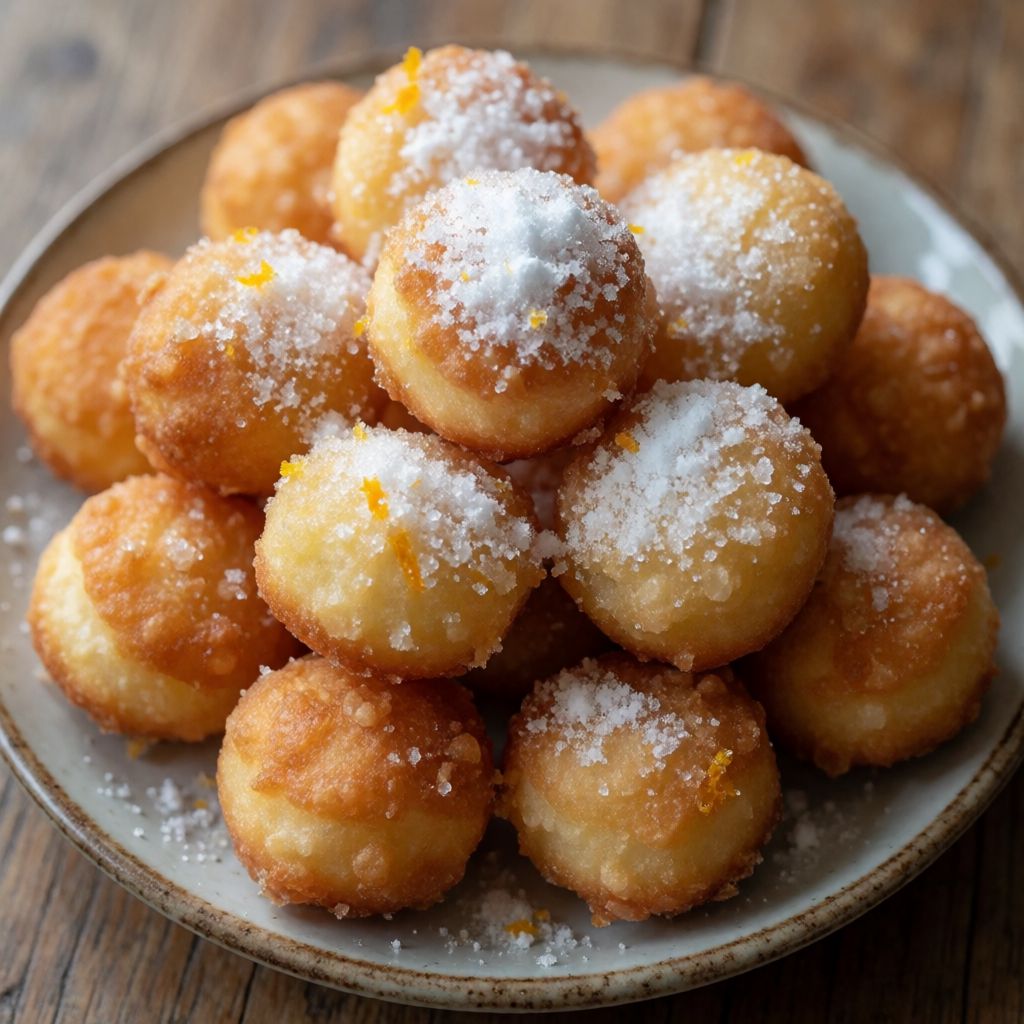
 AI photo
Castagnole with Ricotta and Orange
Soft Italian fried dough balls made with ricotta and orange, dusted with icing sugar.
Labels are worked out automatically from the ingredients and can be wrong. Check the packaging if it matters to you.
Ingredients
- 250 g Ricotta
- 1 pcs Egg
- 150 g Caster sugar
- 260 g Plain flour
- 1 pcs Orange juice
- 2 pcs Orange zest
- 5 g Baking powder
- Vegetable oil to taste, for frying
- Icing sugar to taste








Steps
In a bowl, mash the ricotta with the caster sugar using a fork until smooth and soft.
Add the orange juice and orange zest, and mix well.
Add the flour, baking powder and egg. Knead by hand until a soft dough forms.
Shape the dough into small balls.
In a wide pan, heat the oil to 170°C.
Fry 2-3 balls at a time for a few minutes, until puffed and golden.
5 minRemove with a slotted spoon and place on paper towel to drain excess oil.
Bake the shaped balls on a tray at 180°C in fan mode.
Before serving, dust the castagnole with icing sugar.
What was changed
Peanut oil was swapped for Vegetable oil, the standard frying oil in British kitchens.
Castagnole are Carnival fritters — little "chestnuts" of dough, which is exactly what the name means, dropped into hot oil until they swell into rough golden balls. This version swaps the usual plain sugar dough for ricotta, which is the whole point: ricotta carries water and fat that the frying turns to steam, so the inside stays soft and faintly custardy instead of dense and bready. Orange zest and juice cut through that richness — without it you'd just have fried cheese dough, pleasant but flat.
What decides whether these work is the ricotta itself and the oil temperature, nothing else. Buy ricotta that's been drained properly — the watery, loose kind sold cheap in tubs will make a dough you can't shape, forcing you to add flour to compensate, and extra flour is what turns a light fritter into a doughy one. And the oil has to sit at a steady 170°C: too cool and the balls drink oil and stay pale and heavy before the inside even cooks through; too hot and they colour in seconds while the centre stays raw, batter-like. A thermometer earns its keep here — on a home hob, with no proper fryer, your eye alone will mislead you.
Some say you should boil the dough balls first, like gnocchi, before frying — no, that's a different fritter tradition entirely, and it has nothing to do with this one. These go into the oil raw and rely on the baking powder for lift, the same lift you'd get from a cake.
Ricotta is the one ingredient you can't fake with a substitution and keep the same dish — but if you're stuck, drained cottage cheese pushed through a sieve gets close, same logic: soft curd, not much free liquid. Don't reach for cream cheese; it's too fatty and will make the dough greasy rather than tender, and it won't rise the same way under the baking powder.
The egg binds the ricotta and flour into something you can roll between your palms — one is enough for this quantity; more and the dough turns elastic and chewy, less of a castagnola and more of a dumpling.
Caster sugar rather than granulated matters a little here: it dissolves into the ricotta as you mash it, so you get an even sweetness through the dough rather than gritty pockets. If all you have is granulated, give it an extra minute of mashing — no harm done, just more elbow grease.
Flour and baking powder together give structure and lift. 260g is a guide, not gospel — ricotta brands vary in how wet they are, so you may need a spoon or two more to get a dough soft enough to roll but not sticky to your hands. If it sticks like wet dough, that's the ricotta talking — more flour is the fix, but add it gradually, because overcorrecting is how you end up with the dense version everyone's disappointed by.
Orange zest and juice from two fruits versus one juice is deliberate: zest for perfume without extra liquid, juice for both flavour and a little moisture that helps the ricotta loosen into a workable dough. If oranges are out of season or thin on flavour, a lemon does the same job, just sharper — adjust the sugar up slightly if you go that way.
For the oil, anything with no smell of its own does the work — sunflower, groundnut, a neutral vegetable oil. Olive oil is the wrong choice here; its own flavour fights the orange rather than staying out of the way, and extra virgin burns and turns bitter well before 170°C anyway. In a UK kitchen, a wide, heavy-based pan with 4-5cm of oil stands in for a fryer perfectly well — you don't need a kazan-sized pot, you need enough depth that the balls float rather than sit on the base scorching.
Frying two or three at a time isn't fussiness, it's thermal reality on a domestic hob: drop in more and the oil temperature collapses, the fritters stew rather than fry, and you're back to the pale, heavy problem. Give the oil a minute to recover its heat between batches — patience here is an ingredient, not a delay.
Doneness is colour and buoyancy, not a clock: they puff, turn a proper gold — not pale blond, not dark brown — and bob rather than sit heavy in the oil. The five minutes given is a floor to work from, your eyes finish the job. Drain them on paper towel or a clean tea towel laid over a few sheets of kitchen roll — either does the same thing, pulling the surface oil off before it has time to turn the shell soggy.
Icing sugar goes on at the very end, once they've cooled a touch — dust it too early, while there's still steam coming off them, and it melts into a wet glaze instead of sitting as a soft white coat.