
 AI photo
Cauliflower Gratin
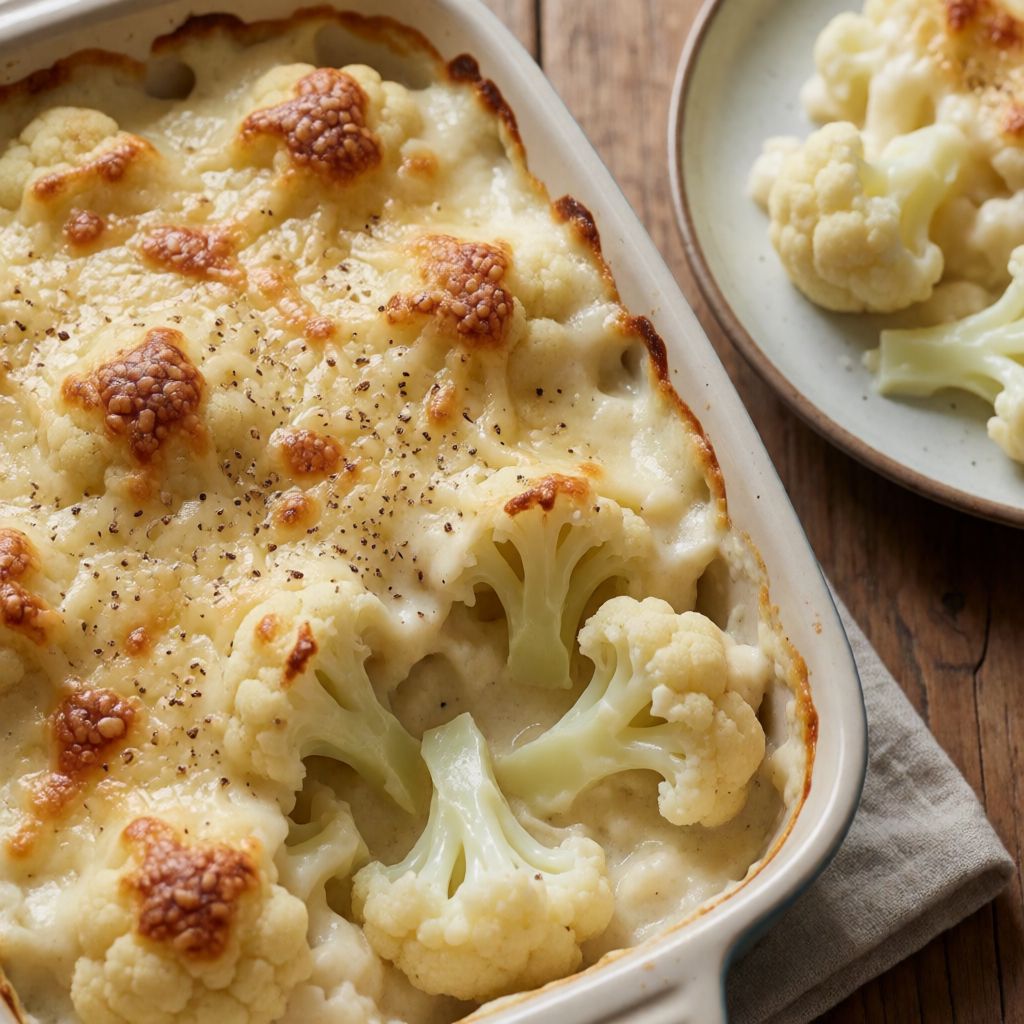
A creamy baked cauliflower gratin with a béchamel sauce, parmesan and breadcrumbs.
Labels are worked out automatically from the ingredients and can be wrong. Check the packaging if it matters to you.
Ingredients
- 30 g Butter
- 2 tbsp Plain flour
- 300 ml Milk
- 1 pinch Nutmeg finely grated
- 4 pcs Eggs
- 50 g Parmesan
- 50 ml Breadcrumbs dried
- 500 g Cauliflower broken into small florets
- Salt to taste
- Black pepper freshly ground, to taste
- 1 tbsp Butter for greasing the dish







Steps
Melt the butter in a saucepan and stir in the flour. Pour in the milk, whisking as you go, bring to the boil and simmer until thickened, then season with nutmeg, salt and pepper. Remove from the heat.
Separate the eggs into yolks and whites, stir the yolks and parmesan into the sauce. Whisk the whites to stiff peaks and gently fold them into the sauce.
Sprinkle the base of a greased ovenproof dish with breadcrumbs, spread over half the sauce, then all the cauliflower florets, and finish with the remaining sauce.
Sprinkle the remaining breadcrumbs on top and bake in a preheated fan oven at 180°C for 30-35 minutes.
33 minDo not open the oven door until 30 minutes have passed, otherwise the gratin may sink.
30 min
What was changed
The oven temperature was rounded to the nearest step for UK ovens, shown as .
Forget the French potato dish the word "gratin" usually conjures. This is cauliflower baked inside a soufflé. The béchamel is the chassis, the whipped egg whites are the engine that lifts it, and the cauliflower just rides along, cooking inside the custard instead of being boiled soft beforehand and laid in cold, the way most gratins work.
What decides whether it holds up has almost nothing to do with flavour — cauliflower, parmesan, nutmeg, you can't go far wrong there. It's structure, three places where it can fail quietly. A roux with lumps in it means a grainy sauce no amount of whipped egg white will rescue later. Whites beaten past stiff, or folded in roughly, lose the air they were whipped for before the dish ever sees the oven — you'll still get something tasty, just a flat cauliflower cheese, not the thing you set out to bake. And the florets have to be small on purpose: this cauliflower goes in raw, and it has exactly the length of the bake to cook through at the same rate the egg sets around it. Big chunks and you get a cooked custard around a raw core.
The roux — butter, then flour stirred straight into the melted fat before any milk arrives — exists for one reason: raw flour dumped into liquid clumps, because each grain of starch seals itself behind a wall of its own stickiness the moment it meets water. Coat the starch in fat first and it can't seal itself off; it disperses into the milk evenly instead of knotting. Butter here isn't decorative, it's doing a mechanical job, so if you need to swap it, the criterion is a fat with no flavour you're worried about introducing at this stage — and butter happens to also bring a nutty note the sauce keeps, which is why I wouldn't swap it unless I had to.
Milk goes in whisked, not dumped and left — the whisking is what keeps the thickening even across the pan rather than setting first at the bottom, where it's hottest. Whole milk, not skimmed: the fat in it is part of what gives the finished sauce body rather than a thin paste. Nutmeg is there to cut the flatness of a milk-and-flour sauce — this isn't a dessert spice doing something clever, it's the oldest trick in French and Dutch savoury white sauces, there before the Sunday roast ever met cauliflower cheese. A pinch is right; more and you'll taste nutmeg instead of noticing the sauce is better.
The eggs are doing two separate jobs, which is why they're split. Yolks go into the warm sauce for richness and to help it set with a silkier texture once baked — they're binding, not lifting. Whites, beaten alone, are air held inside a protein net; folded in gently so that net survives the trip into the dish, and in the oven that same net sets around the trapped air and holds the whole gratin up off the base of the dish. Whisk to stiff peaks means exactly what it sounds like: lift the whisk out and the peak stands, doesn't slump back into the bowl. If it slumps, it hasn't caught enough air yet to do its job later.
Parmesan earns its place through salt and a low moisture content that lets it melt into the sauce rather than weep oil and go stringy the way a wetter cheese would. Any hard, aged, low-moisture cheese that grates fine will do the same work — a mature Cheddar, a Gruyère, whatever's in the fridge after the roast. Breadcrumbs at top and bottom aren't there for crunch alone, though you get that too: the layer under the sauce soaks up whatever moisture the base throws off as it bakes, which is what keeps the bottom from turning soggy against the dish. Any dry crumb with no sweetness of its own does the same — crushed crackers, stale bread dried in a low oven, doesn't matter.
And the cauliflower itself, going in raw: some would tell you a gratin vegetable must always be parboiled first, softened before it ever meets the sauce. No — not here, and that's the whole point of cutting it into small florets. The custard around it is wet enough, and the bake long enough, that the cauliflower finishes cooking in the same window the egg needs to set. It's one less pan to wash, and one more reason this earns a place next to a roast as something other than plain boiled florets under cheese sauce — it's the same cost of ingredients, turned into something that holds its shape on the plate. Butter for greasing the dish is the last small mechanical detail: as the whites expand and the custard bonds to the sides of the dish on the way up, a bare dish would grip it and tear the structure as it rose. Grease breaks that grip.