
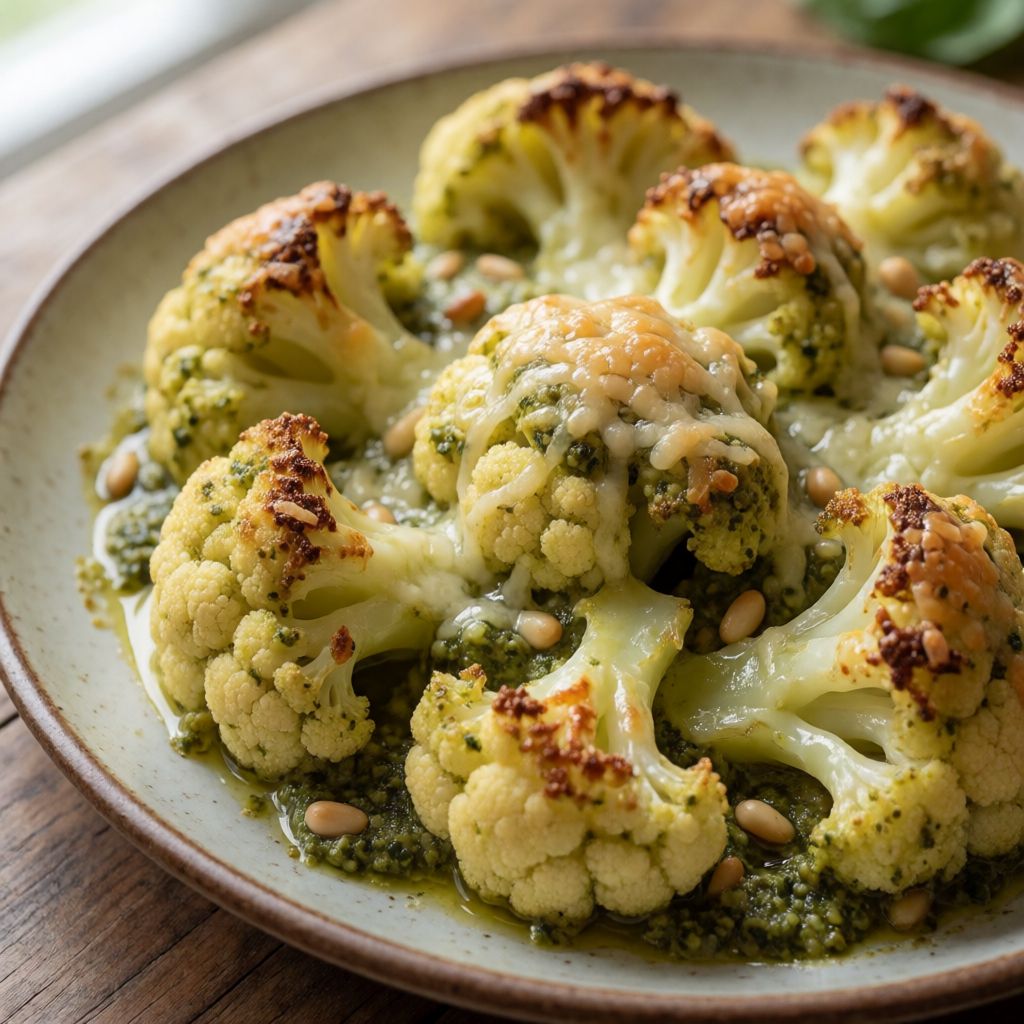
 AI photo
Pesto Cauliflower Bake
A simple side dish of tender cauliflower tossed in pesto and parmesan, then baked until golden under a cheesy crust.
Labels are worked out automatically from the ingredients and can be wrong. Check the packaging if it matters to you.
Ingredients
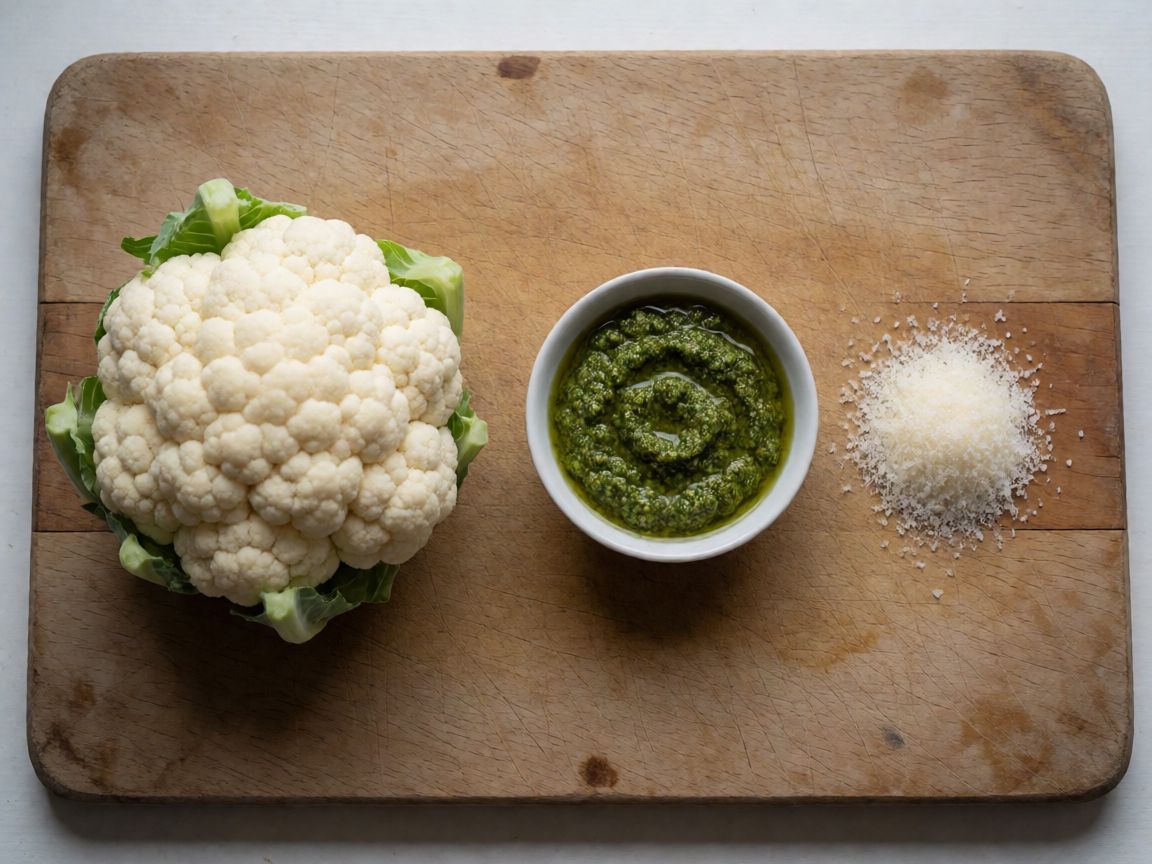
- 1 pcs Cauliflower
- 1 package Pesto jar
- Parmesan grated, to taste
- Olive oil to taste
- Salt to taste
- Black pepper to taste






Steps
Steam or boil the cauliflower until tender but still slightly crunchy.
Drain in a colander and leave to cool.
In a bowl, mix the cauliflower with the olive oil, 2 tbsp of grated parmesan, a pinch of salt and freshly ground black pepper.
Add the pesto and mix well, then transfer everything to a baking dish lightly greased with olive oil, and sprinkle with grated parmesan on top.
Bake at 200°C for 20 minutes.
20 minTurn on the grill for another 5 minutes.
5 minServe warm.
Think of this as cauliflower cheese that skipped the béchamel and went to Italy instead — same bake-until-golden instinct the British kitchen already trusts on a Sunday, but the sauce is pesto straight from a jar, and the cheese does double duty: folded in and sprinkled on top.
What decides whether this works is decided before the oven ever gets involved — at the boiling stage. The cauliflower is going to be cooked twice: once in water, once in the oven. If you take it fully soft out of the pot, by the time it's baked it's porridge. You want it stopped early — a knife tip meets slight resistance in the stalk, not none. That resistance is your insurance for everything that follows.
Some say pesto is just a sauce, so heat can't hurt it — no, because pesto is basil, oil and pine nuts beaten into an emulsion, and emulsions have a breaking point. Push it too long under high heat and the oil weeps out, the green turns dull and bitter, and what you get on the plate is oily grit, not pesto. That's why the bake is short and the real colour comes later, under the grill, not from extending the oven time.
The two-stage finish — oven, then grill — is the actual engine here. The oven's job is to warm the whole dish through and let the parmesan on top start to melt into the surface. The grill's job is purely cosmetic and textural: it browns what's already melted, turning flat cheese into something blistered and a little crisp. Confusing the two, or trying to get both from one, is how you end up with a dish that's either pale and wet on top or scorched before the middle's warm.
Cauliflower: pick one that feels heavy for its size and is tightly closed — no yellowing, no gaps between florets starting to open, because that's the sign it's already on its way past its best and will fall apart faster than you want when boiled. One head, roughly a kilo, feeds four as a side, which is the size this dish is built for — it isn't meant to carry a meal on its own.
Boiling or steaming is just there to get the raw edge off, nothing more — steaming is gentler and keeps more flavour, but either way the test is the same: knife tip, slight give, stop. Then drain properly and let it sit until it stops steaming. This isn't fussiness — a cauliflower still giving off heat and moisture will sweat into the pesto and melt the parmesan unevenly into strings instead of coating it, and that wet cauliflower is exactly what stops the top from crisping later, because steam escaping through the dish fights the grill instead of helping it.
Parmesan here has two separate jobs, which is why it appears twice. The two tablespoons mixed through the cauliflower season it from the inside and help bind the pesto to the florets. What goes on top is there purely to form a crust — that's the part the grill is aimed at. Any hard, aged cheese that shatters rather than stretches will do the same job: Grana Padano, a mature Cheddar if that's what's in the fridge, Pecorino if you don't mind more salt, since it carries more of its own.
Pesto from a jar is a fair shortcut, not a lesser version — it exists because making a proper basil pesto by hand, with a mortar, is slow work, and a jar gives you the same oil-garlic-basil-nut balance without the labour. If you want to make your own or need to substitute, the only real rule is: an oil-bound paste with something green and sharp, something nutty, something salty-sharp like a hard cheese, and garlic. Basil can give way to rocket or even watercress, pine nuts to walnuts or cashews, and the balance still holds.
Olive oil in the mixing bowl, before the pesto even goes in, is there so the cauliflower doesn't drink up all the pesto's oil later and leave the sauce looking dry and broken on the plate. Use any oil with no smell of its own strong enough to compete with basil — a light olive oil, not an aggressive cold-pressed one you'd save for dressing a salad.
On the oven itself: if yours is fan-assisted, 200°C fan runs hotter in practice than a conventional 200°C, so the top may colour faster than the recipe's twenty minutes suggests — this is where you watch instead of trusting the clock. And the grill element in most UK ovens is close and fierce, nothing like a restaurant salamander's even heat, so five minutes under it is a starting guess, not a guarantee — stand by it, watch for gold speckling with the odd darker spot, and pull it before gold turns to black. That bit of standing and watching, more than any ingredient on the list, is what actually makes the dish.