
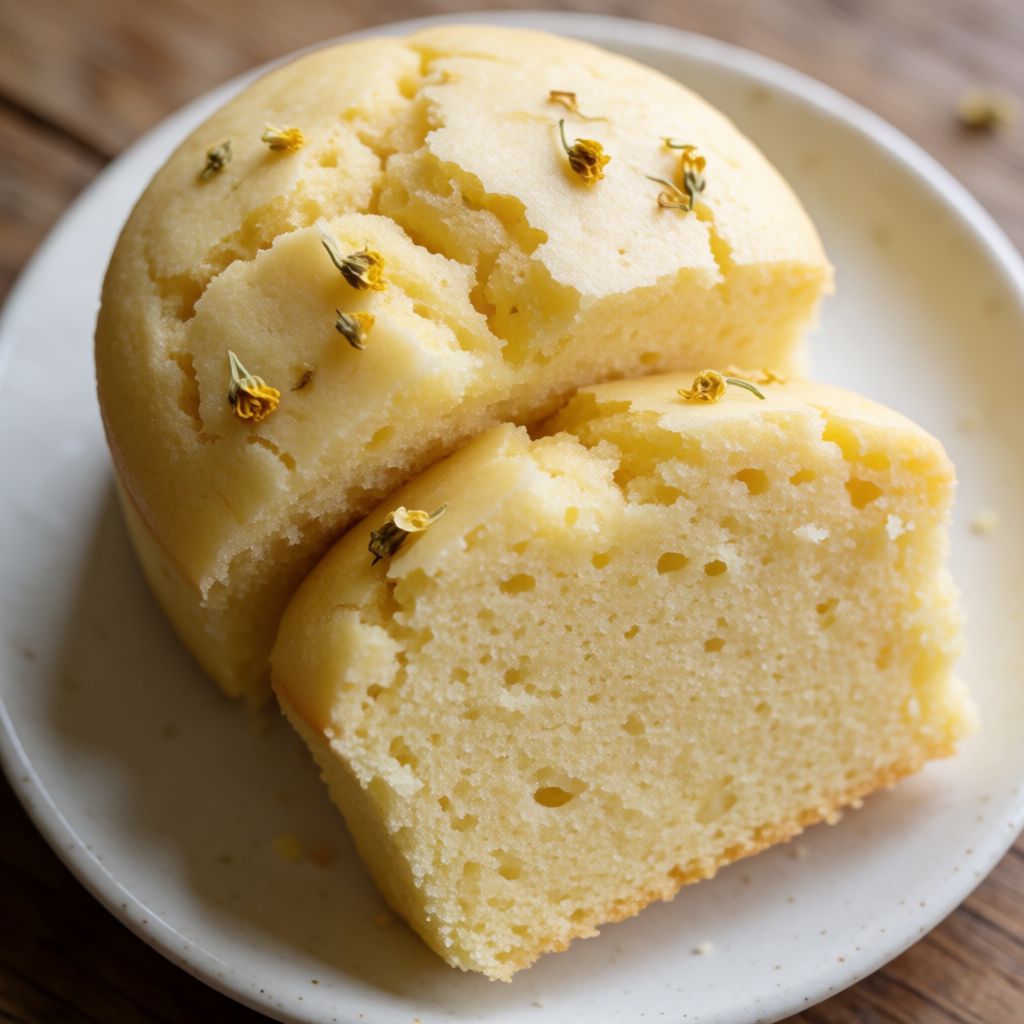
 AI photo
Chamomile Tea Cake
A soft sponge cake delicately flavoured with a chamomile tea infusion.
Labels are worked out automatically from the ingredients and can be wrong. Check the packaging if it matters to you.
Ingredients
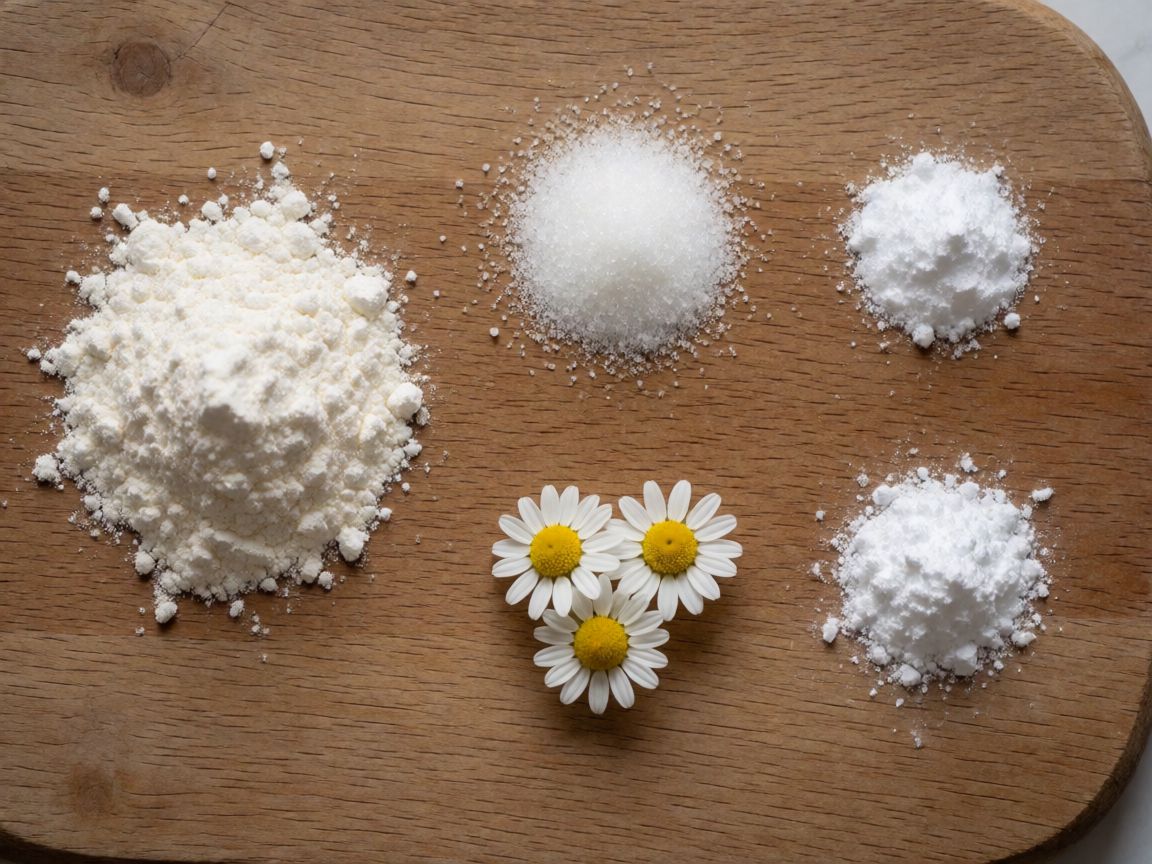
- 300 g Plain Flour
- 170 g Caster Sugar
- 50 g Vegetable Oil
- 15 g Baking Powder
- 200 ml Water
- 3 pcs Chamomile Tea Bags
- Icing Sugar to taste







Steps
Bring the water to the boil in a small saucepan, add the chamomile tea bags and leave to infuse for at least 10 minutes.
10 minIn a bowl, combine all the dry ingredients — sifted flour, baking powder and sugar — and mix together.
Gradually stir in the vegetable oil and the cooled chamomile tea infusion, mixing vigorously until you have a smooth, even batter.
Line a baking tin with parchment paper, or grease it with butter and dust with flour, then pour in the batter.
Bake at 180°C for about 40-45 minutes, checking it's done with a skewer.
42 minRemove the cake from the tin and generously dust with icing sugar.
This is a cake that gets its lift from a chemical reaction, not from eggs beaten to a ribbon and not from butter creamed with sugar. Flour, sugar, oil, water, baking powder — that's the whole engine. Some say a cake can't rise properly without eggs. No — eggs give structure through protein, but baking powder gives structure through gas, and if the batter is wet enough and not weighed down with fat, the gas alone will carry it. That's exactly what happens here: 15 g of baking powder against 300 g of flour is a generous dose, because there's no egg white to help trap the bubbles — the powder is doing a job normally split two ways.
What decides whether it works is mostly about timing and temperature you can't see on a dial. The tea has to steep at least ten minutes — that's not a suggestion, it's how long it takes for the chamomile's flavour compounds to actually leave the dried flower and get into the water. Rush it and you get warm flour-water with a whisper of hay; let it sit properly and you get an actual cake, not a flour biscuit that smells faintly of a herbal teabag. Then the infusion has to cool before it meets the dry mix. Pour it in hot and you start two things too early: the baking powder begins fizzing before the oven is even on, and hot liquid starts cooking the flour's starch on contact, which thickens the batter unevenly before it's had a chance to combine.
On the flour: plain flour, nothing stronger. Bread flour has more gluten, and more gluten means more chew and less rise per gram of baking powder — the structure fights the gas instead of letting it through. If all you have is self-raising flour, fine, but cut the baking powder back hard, otherwise you'll get a cake that rises fast in the oven and then collapses as it cools, because too much gas escapes before the crumb has set enough to hold its own shape.
The oil is the quiet hero and the reason this cake stays soft a day later, longer than most butter cakes do. Butter is solid at room temperature; as a cake cools, that fat re-solidifies and the crumb firms up with it, which is why butter cakes go stale faster. Oil stays liquid at any kitchen temperature, so it keeps coating the flour's starch and keeps the texture tender well after baking. The only rule for choosing one: it must have no smell of its own. Sunflower oil, rapeseed oil — both work because they get out of the way and let the chamomile be the flavour in the room. Olive oil will fight it; its own taste is too loud for something this delicate.
Chamomile bags are a shortcut, and a sensible one — they're already cut fine, which is exactly what speeds up extraction. If you only have loose dried chamomile flowers, use them, just strain the water afterwards, and expect to steep a touch longer since whole flowers give up their flavour more slowly than torn, bagged leaf.
Baking powder is the single point of failure most people overlook. It loses potency sitting in a cupboard for months, and a tired tin will give you a cake that looks fine going into the oven and comes out flat and dense — not because you did anything wrong, but because the lifting agent had already half-given-up before you started. Test it if you're unsure: a spoonful in warm water should fizz hard and fast. If it barely stirs, the cake won't rise properly no matter how carefully you follow everything else.
Lining the tin, or greasing and flouring it, isn't fussiness — it's insurance against the fact that this batter has no egg protein to help it release cleanly. An oil-based batter without lining can weld itself to a bare tin, and you'll find that out the moment you try to turn it out and half the base stays behind.
The icing sugar at the end isn't decoration so much as correction. 170 g sugar against 300 g flour is a modest, almost restrained amount for a cake — this is a tea cake meant to sit next to a cup, not stand on its own as a dessert. The dusting on top is where the final sweetness actually lands, so be generous with it; it's doing work the batter deliberately didn't do. And give the whole thing the patience the steeping asked for in the first place — a cake this plain in its ingredients has nowhere to hide if you rush any one step of it.