
 AI photo
Cheese Polenta
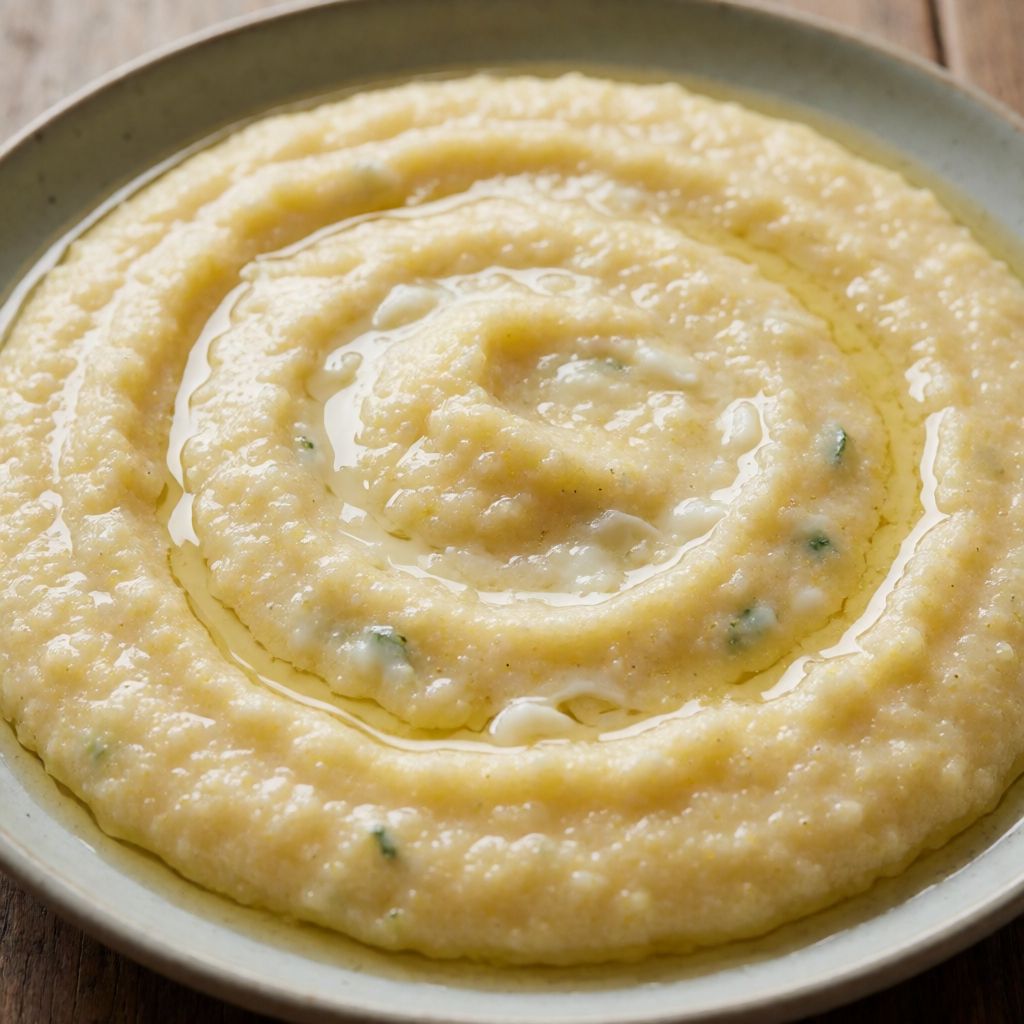
A creamy stovetop polenta with melted gorgonzola and asiago, finished with a pool of melted butter in the centre.
Labels are worked out automatically from the ingredients and can be wrong. Check the packaging if it matters to you.
Ingredients
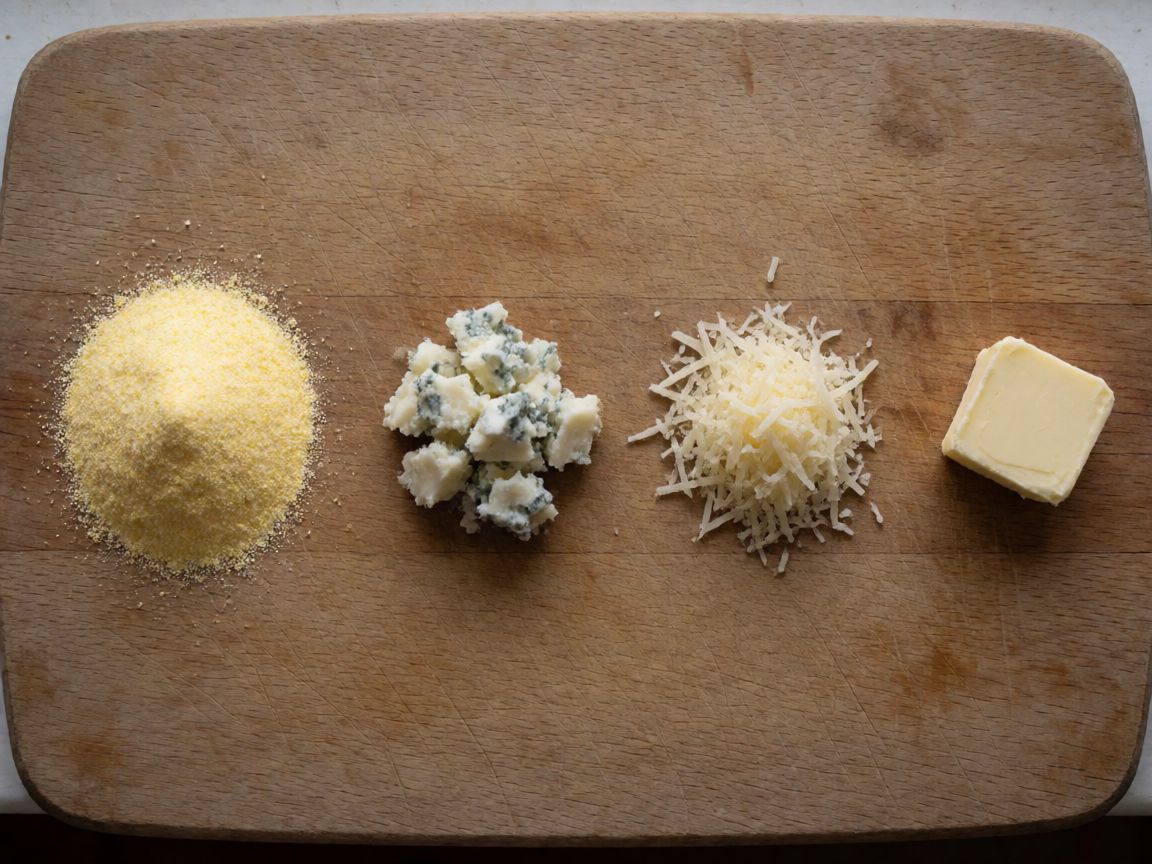
- 500 g Cornmeal
- 200 g Gorgonzola Dolce
- 200 g Asiago
- 200 g Butter
- 1 tbsp Olive Oil
- Salt to taste
- Black Pepper to taste
- 2 l Water





Steps
Pour the water into a saucepan, add the salt and olive oil, and bring to the boil.
Pour in the cornmeal in a thin stream, stirring constantly to avoid lumps.
Cook over low heat, stirring constantly, for 45–50 minutes.
47 minAdd another ladleful of water if the polenta seems too thick.
Add the gorgonzola, asiago and 100g of the butter, and stir through.
Melt the remaining 100g of butter in the microwave or in a small saucepan.
Transfer the polenta to a serving dish, make a well in the centre and pour in the melted butter.
If you like, place a slice of gorgonzola on top and let it melt.
Season with black pepper to taste and serve.
This is porridge that has given up being modest. Cornmeal and water in a four-to-one ratio is the old mountain food of northern Italy — cheap, filling, cooked because wheat was for people who could afford wheat. Add four hundred grams of two cheeses and two hundred of butter to that base and you've turned a poor man's supper into something a restaurant charges for. Nothing wrong with that. Just know what you're looking at: the bones are peasant, the flesh is bourgeois.
What decides whether it works has nothing to do with gorgonzola or asiago. It's whether you let the starch do its slow work. Cornmeal grains are little sealed packets of starch. Pour them into boiling water too fast, in a clump, and the outside of each grain swells and seals itself shut before the water can get to the middle — that's where lumps come from, not from bad luck. A thin stream, stirred in as it falls, gives every grain the same chance to open on all sides at once.
The cornmeal itself is the only ingredient you can't really substitute — it's the dish. But not all cornmeal behaves the same; coarser, stone-ground grades take longer and give more texture, finer ones cook faster and smoother. If your bag doesn't say, treat the forty-five minutes as the minimum and watch the pot, not the clock, for the rest.
The olive oil going in with the salted water at the start isn't flavour, it's a thin film on the surface of the liquid that keeps the very first grains from gluing to each other and to the pan before the stirring even gets going — a small insurance policy against the one failure that happens in the first thirty seconds, not the last forty-five minutes. Any neutral-tasting oil does the same job; you don't need good olive oil for this, you need oil that's there.
The salt goes into the water, not onto the finished polenta, because cornmeal swells as it cooks and you want the salt distributed through every grain as it opens, not sitting on the surface where it'll taste sharp in one spoonful and absent in the next.
Gorgonzola dolce and asiago aren't interchangeable, they're doing two different jobs. The gorgonzola is soft, high in moisture, and melts into the hot cornmeal almost like a sauce — that's what gives the polenta its creaminess and tang. Asiago, firmer and nuttier, doesn't fully dissolve the same way; it holds some texture and adds a savoury backbone so the dish isn't just soft and sweet-sharp. If gorgonzola dolce isn't on the shelf, any soft blue with some give — a mild Stilton, even, since you're in a country that makes very good blue cheese of its own — will melt the same way. For the asiago, a firm, nutty cheese that doesn't turn to oil when it melts: an aged cheddar or a Lancashire does the job, even if the flavour shifts English rather than Italian. Don't reach for a dry, hard grating cheese like parmesan as the whole substitute — it'll season but it won't give you the body.
The butter does two separate things and that's why it's split. The hundred grams stirred in while the polenta is still on the heat enriches the whole mass evenly, cooking into it rather than sitting on top. The second hundred, melted and poured into a well in the centre at the end, isn't really about taste — it's theatre and texture, a pool of fat that keeps the surface glossy and soft while it's carried to the table instead of skinning over and going matte the way polenta does within minutes of leaving the heat. If you want the dish without the second indulgence, skip it; the polenta won't suffer, it'll just look less generous on the plate.
On a domestic hob you don't have a kazan and don't need one here — polenta has always wanted a wide, heavy-bottomed pot rather than a deep narrow one, so for once your ordinary kitchen is better suited than a traditional one would make you think. It spits as it thickens, so rest an upturned plate half over the pan rather than a tight lid — it stops the splatter on your hob without trapping steam that would turn the surface gluey. And budget the time honestly: this is not a dish you start when the roast needs carving in twenty minutes. Patience here isn't a virtue you perform, it's the actual ingredient that turns raw grit into something you'd put cheese into in the first place.