
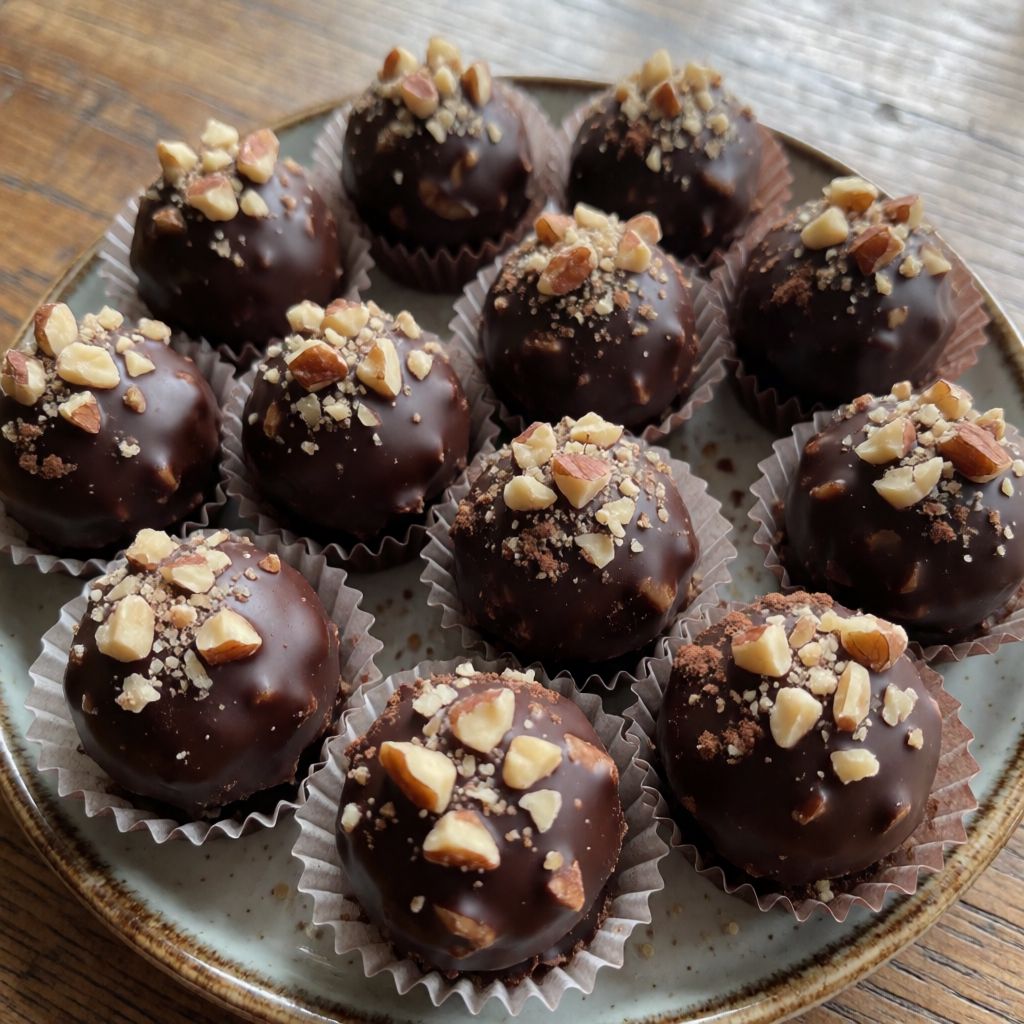
 AI photo
Chestnut Truffles
A rich dessert made from roasted chestnuts, dark chocolate and honey, rolled in crushed nuts.
Labels are worked out automatically from the ingredients and can be wrong. Check the packaging if it matters to you.
Ingredients
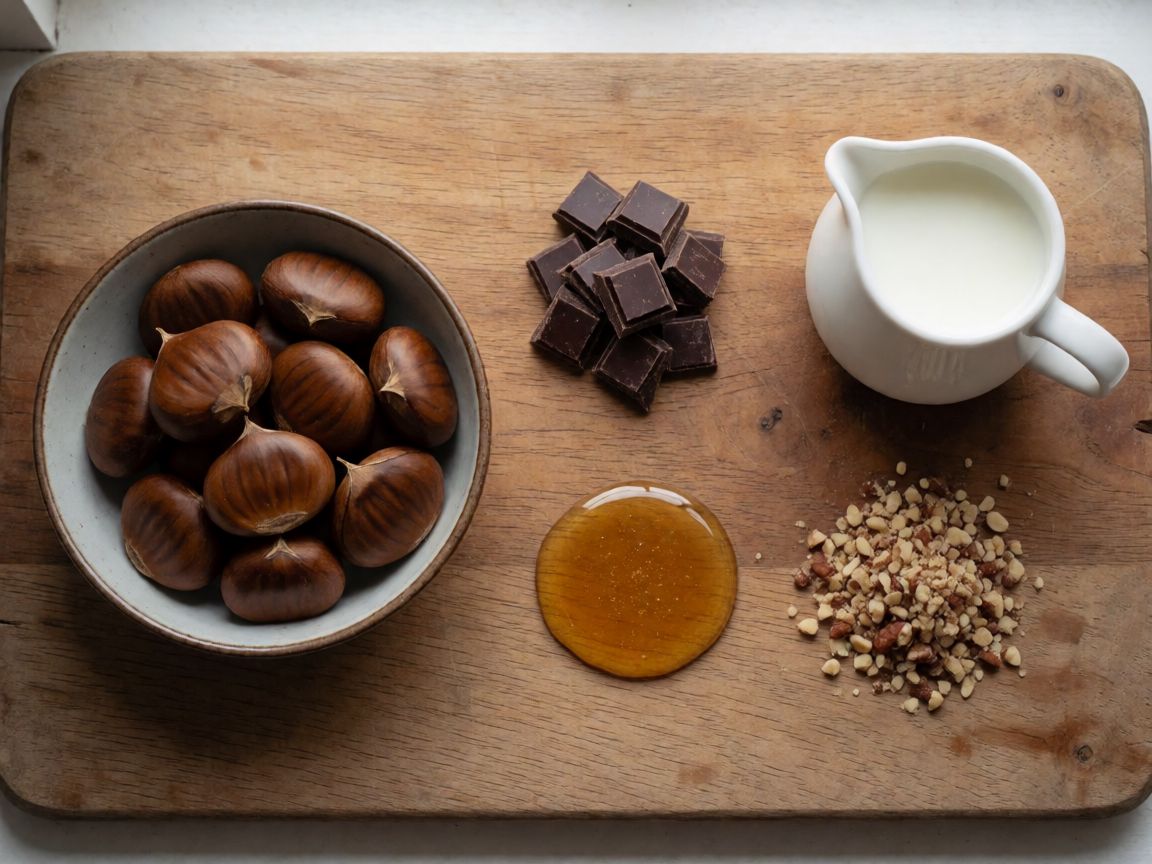
- 200 g Chestnuts fresh
- 100 g Dark chocolate
- 50 ml Milk
- 15 g Honey
- 50 g Mixed nuts crushed



Steps
Soak the fresh chestnuts in water for about 30 minutes.
30 minPat the chestnuts dry and score the skin of each one with a 1-2 cm cut.
Spread the chestnuts on a baking tray and roast in a fan oven preheated to 220°C for 30-40 minutes.
35 minLet the chestnuts cool, peel them and finely blend in a blender.
Add the dark chocolate and whisk.
Pour in the milk and honey and whisk until you get a soft, pliable mixture.
Shape into balls about the size of a walnut, roll them in the crushed nuts and place them in paper or silicone sweet cases.
Let them cool, then serve to your guests.
These aren't truffles in the chocolate-shop sense — they're a way of turning a starchy nut into something that behaves like ganache. The chestnut gives body and a dry, nutty sweetness; the chocolate and milk turn that body into paste. Nothing here is decorative. Every step either opens the chestnut up or glues it back together.
What decides whether this works is timing on two fronts: how hot the oven runs when the chestnuts go in, and how warm the chestnut flesh still is when you blend it. Roast too gently and the shell won't blister away from the flesh — you'll be fighting with it at the peeling stage, tearing good flesh off with bad skin. Blend once the flesh has gone properly cold and the starch has already set; you'll get grit instead of paste, and no amount of whisking chocolate into it will fix that later.
Scoring the skin before roasting isn't a garnish habit, it's a safety valve. A chestnut is a sealed little drum of moisture. Put it whole into a 220°C fan oven — hot enough to blister a Sunday-roast potato skin, which gives you the right mental picture — and the steam inside has nowhere to go. It will go somewhere anyway, usually with a bang and shrapnel of hot shell. The cut lets the pressure out quietly instead.
Chestnuts, 200g — about two generous handfuls, enough for six small sweets. Fresh is what the recipe wants because the soak-score-roast sequence is built around a shell and a membrane that need removing. If you can only get the vacuum-packed, already-peeled chestnuts that turn up in UK supermarkets from October, use them — skip straight to blending — but know you're trading the roasted edge of flavour for convenience. They're cooked, not roasted, so the result will be softer and plainer.
Dark chocolate, 100g — half of a standard UK bar. Its job is structural as much as flavourful: the cocoa solids and fat set as they cool and hold the paste together, the way egg yolk holds a mayonnaise. Choose one without a lot of added sugar — chestnut is already sweet on its own, and a very sweet chocolate flattens that out instead of framing it. 70% cocoa or thereabouts is the sensible range. Milk chocolate will work in a pinch, but the paste will be softer and won't hold its shape as well once rolled.
Milk, 50ml, and honey, 15g — about three tablespoons and one heaped teaspoon. These two together loosen the mix from stiff paste to something pliable enough to roll, and the honey has a second job: its fructose resists crystallising, which keeps the truffle soft in the fridge rather than setting rock-hard like a plain chocolate ganache would. If you're out of honey, a light sugar syrup does the loosening but not the softening — the texture will firm up faster, so eat these sooner rather than later.
Crushed mixed nuts, 50g — a small handful, for rolling. This isn't decoration either: raw truffle paste is sticky enough to weld itself to your fingers, and the coating gives you something to grip while it also breaks up the smoothness with a bit of bite. Any nut you have works, as long as it's dry and chopped small enough to coat rather than crack the ball apart — hazelnuts, almonds, pistachios, whatever's in the cupboard.
The one ingredient not listed is time, twice over. Once while the chestnuts cool enough to peel without scalding your fingers but not so much they go cold and starchy — judge this by touch, warm-but-handleable, not by a clock. And again at the end, in the fridge, while the chocolate fat re-sets around the chestnut paste and actually becomes a truffle instead of a warm smear in a paper case. Rushing that second wait is the single most common way people end up with something that tastes right but falls apart the moment it's picked up.