
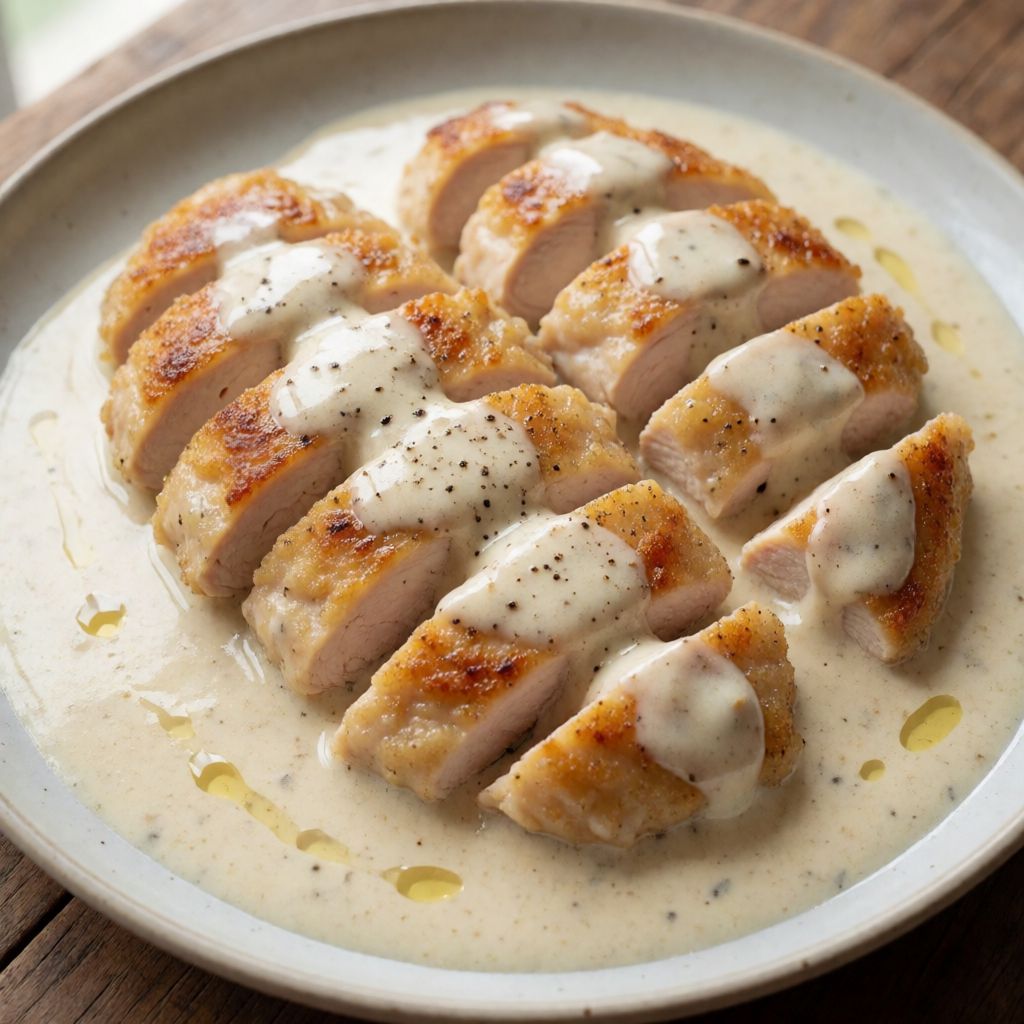
 AI photo
Chicken Breast in Milk Sauce
Tender chicken breast pan-fried until golden, then simmered in a creamy milk sauce.
Labels are worked out automatically from the ingredients and can be wrong. Check the packaging if it matters to you.
Ingredients
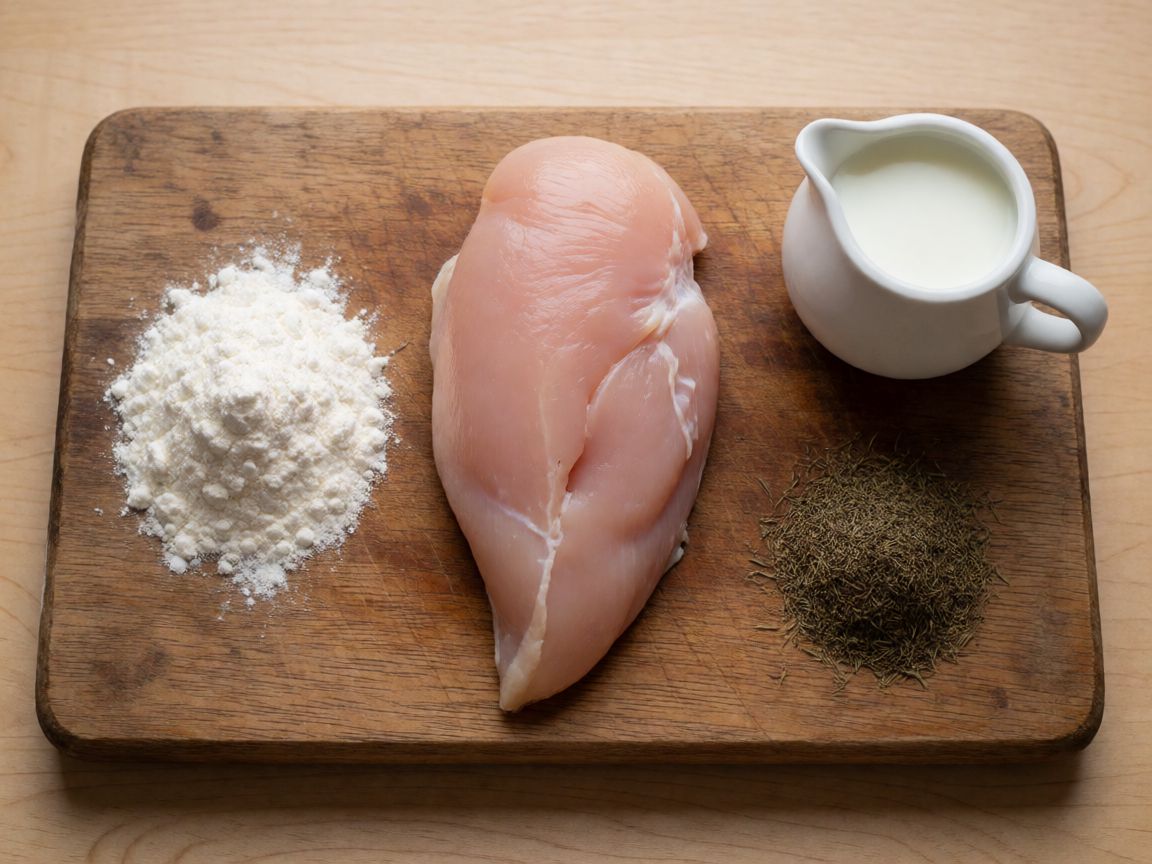
- 600 g Chicken breast
- Plain flour
- Olive oil
- 250 ml Milk
- Salt
- Black pepper
- Dill optional







Steps
Cut the chicken breast into small pieces.
Coat the pieces of chicken in flour.
Heat the olive oil in a frying pan and add the chicken.
Fry on both sides until a golden crust forms.
Add the milk, salt, black pepper and dill.
Cook until the milk forms a thick sauce.
4 minIf needed, add a little more milk if the sauce becomes too thick.
Serve the chicken breast in milk sauce immediately.
This isn't really a chicken dish with a sauce on the side — the sauce is made from the chicken itself. The flour you dust on the pieces does two jobs: it crusts them when they hit the hot oil, and whatever flour doesn't stick falls into the pan and becomes, once milk goes in, a thickener. You're building a roux by accident, out of what's left behind. That's the whole mechanism, and once you see it, the steps stop looking arbitrary.
What decides whether this works is heat control at two separate points. First, the oil has to be hot enough that the flour on the chicken browns rather than just sets — you want a crust the colour of an old penny, not pale and not scorched, because that browning (the Maillard business, if you want the long word for it) is most of your flavour. Second, once the milk goes in, the heat comes down. A hard simmer makes milk split before it thickens — the proteins seize up into little curds instead of binding smoothly into the starch from the flour. You want it moving gently, not rolling.
Some say milk always curdles in a hot pan, so you need cream to be safe. No — milk curdles when it's shocked: poured cold into a pan that's still roaring, or boiled hard. Bring the heat down before it goes in, and it behaves. Cream is a workaround for people who don't trust their own pan; it isn't a requirement.
Chicken breast is the reason the crust matters so much. It's lean — almost no fat running through it — so it has nothing to protect itself with once it's in a hot pan. Thigh forgives you; breast doesn't. Cut small, it cooks in minutes and dries out just as fast, which is exactly why you crust it first: that seal of browned flour slows how much moisture it loses while it finishes in the sauce. If you only have thigh, use it — it's more forgiving and cheaper, and nobody will complain.
The flour is doing structural work, not seasoning work, so plain flour is right: you want starch, not flavour. Pat the chicken fairly dry before you flour it — wet chicken makes the flour clump instead of coating evenly, and clumps mean patches of raw dough taste in your sauce later. If you need this gluten-free, cornflour works as the thickener, but use less of it and expect a glossier, slightly different-textured sauce — cornflour thickens cleaner but doesn't crust the same way, so you lose some of that first-stage browning.
Olive oil here is just a medium for heat, not a flavour contribution — the dish doesn't ask you to taste olive. Any oil with no smell of its own does the job: sunflower, rapeseed, vegetable oil from the cupboard. Save a good extra-virgin olive oil for dressing something cold; heating it hard is wasted money and faintly bitter.
Milk is the whole sauce, so its fat content isn't a trivial choice. Whole milk gives you body — some fat in there to carry flavour and smooth the texture. Skimmed milk works, thickens fine with the flour, but the sauce ends up thinner and a little flatter on the tongue; you're drinking tea with milk every day, so you know the difference between the two already, just translate it to a pan instead of a mug. Either way, don't tip it in stone cold straight from the fridge onto a pan that's still at frying heat — let it sit out a few minutes, or warm it slightly, so it doesn't shock and separate on contact.
Salt and pepper are only there to correct the milk, which is naturally close to flavourless, so don't be shy with them — taste the sauce near the end, not just the raw ingredients, because the chicken's crust is already salted from the flour stage and that changes the balance. Dill is listed as optional for a reason: it's a northern, fresh-herb habit, not essential chemistry. If you don't keep dill, parsley does the same job of cutting through the richness with something green and a bit sharp — it won't taste the same, but it serves the same purpose in the dish.
A wide frying pan instead of a proper sauté pan is no disadvantage here — if anything it helps, because it gives the chicken pieces more room to sit flat and actually crust instead of crowding and steaming each other. The only real patience this dish asks for is at the sauce stage: don't rush the milk by cranking the heat to speed it up. A faster boil doesn't thicken it faster, it just curdles it sooner.