
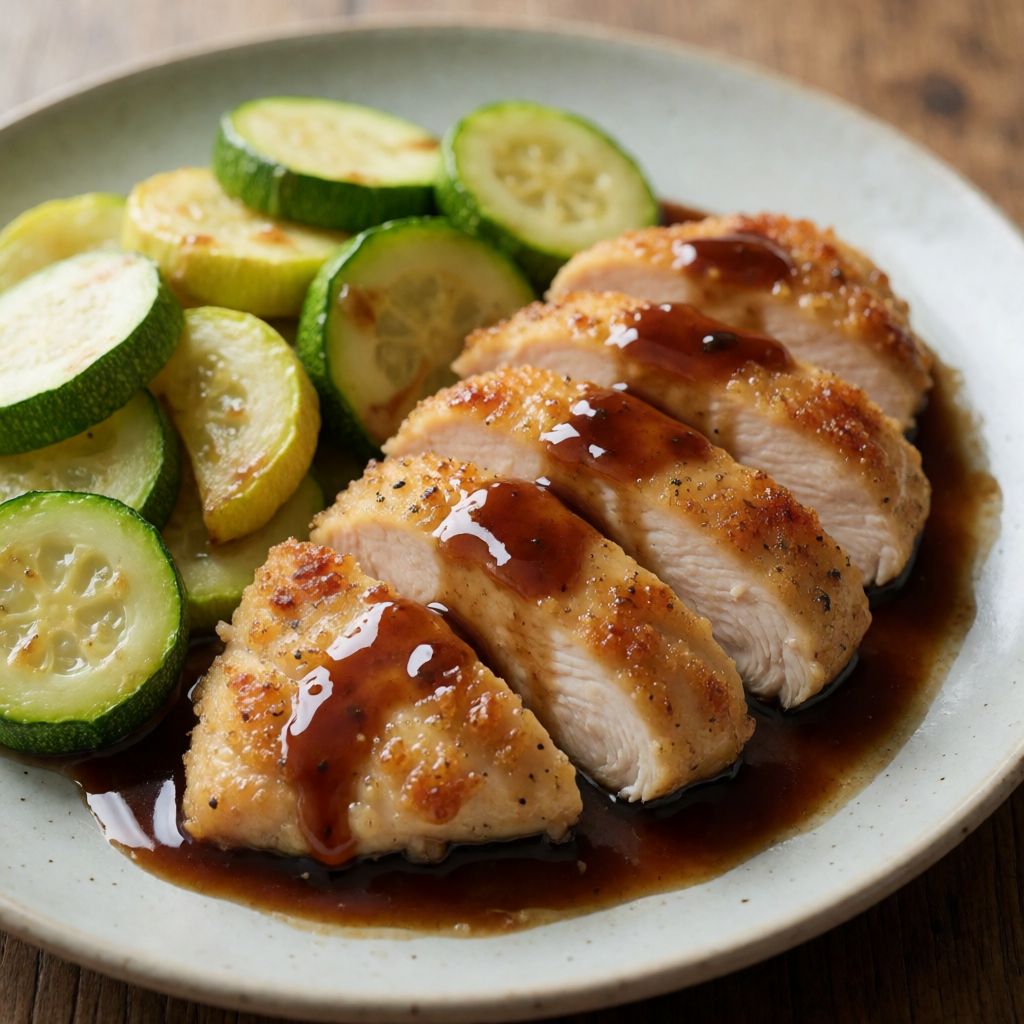
 AI photo
Chicken Breast with Courgette and Balsamic Vinegar
A quick skillet dish of chicken breast and courgette, finished with a splash of balsamic vinegar.
Labels are worked out automatically from the ingredients and can be wrong. Check the packaging if it matters to you.
Ingredients
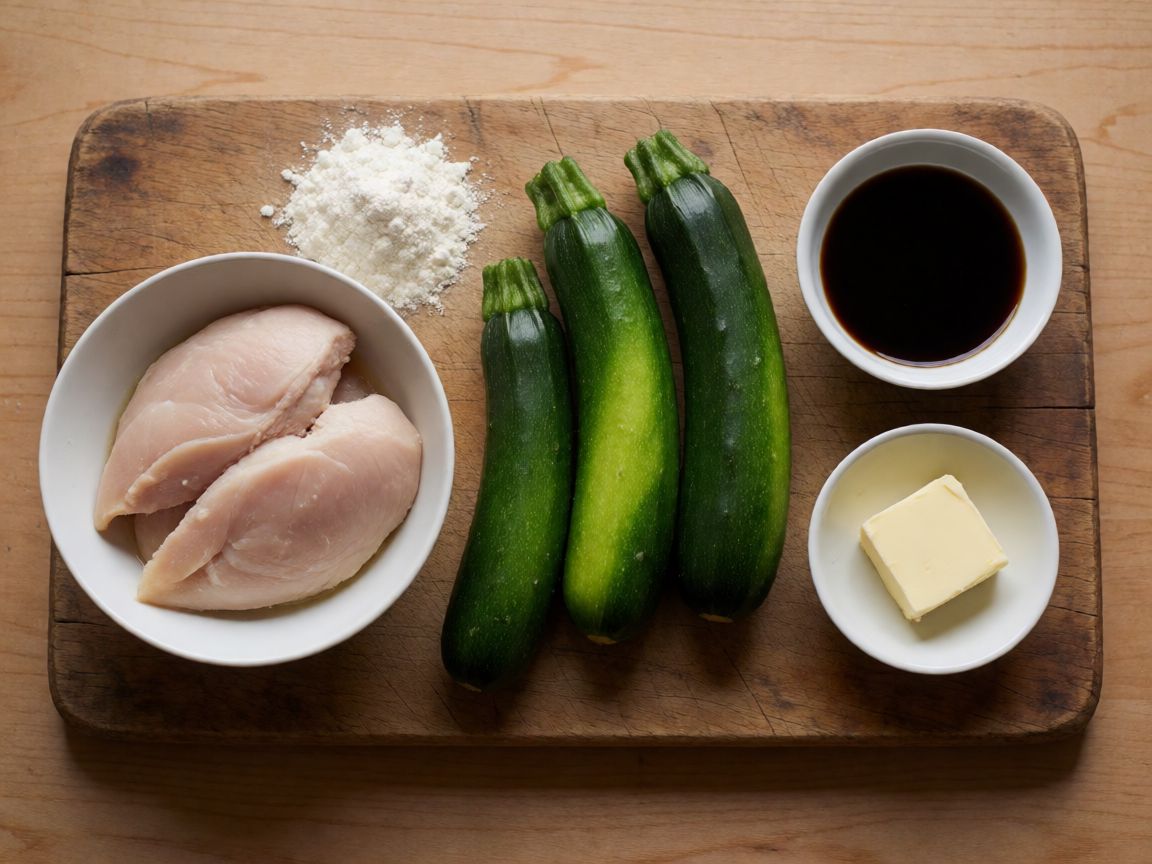
- 300 g Chicken breast
- 3 pcs Courgette
- Plain flour to taste
- Balsamic vinegar to taste
- Salt to taste
- 1 pcs Butter a knob






Steps
Cut the chicken breast into thin strips, wash the courgette and dice it finely.
5 minIn a bowl combine the chicken, courgette and flour, mixing well by hand.
2 minHeat a frying pan, melt the butter, add the chicken and courgette, shaking off any excess flour.
3 minAfter a few minutes add the salt and keep stirring so nothing sticks to the bottom of the pan; cook the chicken until done through.
7 minPour in the balsamic vinegar and finish cooking, letting it caramelise nicely.
3 minServe the chicken breast with courgette and balsamic vinegar.
This is not a stew and not quite a stir-fry, though it borrows from both — thin strips of chicken breast and finely diced courgette, dusted in flour, finished with a splash of balsamic that's meant to turn into a dark, clinging glaze rather than a puddle. What decides whether this works isn't the ingredients, it's temperature discipline on an ordinary domestic hob: if the pan isn't properly hot when the chicken and courgette go in, the water the courgette throws off has nowhere to go but the bottom of the pan, and you end up with boiled chicken dressed in flour paste instead of anything glazed.
Some say chicken breast needs a good long cook "to be sure." No — breast has almost no fat to protect it, and cut into thin strips it's done in the time it takes to say so. I've dried out more chicken breast by trusting the clock than by anything else; watch it, don't time it. The strip stops being translucent-pink, goes opaque white through, and feels springy when you press it with the spoon — not mushy, not rubbery. Keep going past that point and you're not making it safer, just drier.
Flour here isn't breading, it's a dusting, and it does two separate jobs: it pulls surface moisture off the wet chicken and courgette so the pan can brown them instead of steaming them, and it leaves just enough starch behind to catch the balsamic later and turn it into glaze rather than run-off. That's why you shake the excess off before it hits the butter — too much flour clumps, burns before the meat's cooked through, and tastes of raw paste rather than crust. Use plain flour as the recipe says; if you've none, anything fine and flavourless that can take on moisture will do the same job — cornflour works but use about half the amount, it thickens harder; rice flour too.
Butter isn't neutral here, and that's the point of using it rather than oil — it brings a dairy sweetness that meets the balsamic's sweetness halfway. But it burns far earlier than most oils because of the milk solids in it, and on a home hob with an imprecise dial that window closes fast. Watch the foam: it rises, then starts to die back, and that's your moment to add the chicken, not before. If it's gone past foam to brown flecks and the smell of toasted biscuit, the butter's already burnt and will carry bitterness into everything after it — start again rather than push on. Ghee substitutes cleanly, same flavour family, a higher burn point and more margin for error; a neutral oil alone works too, but you lose the sweetness, so it's a compromise, not an equal swap.
Courgette: buy it firm, no soft give anywhere along it. No need to peel it — the skin's thin, holds its shape, and peeling buys you nothing here; that's a habit carried over from vegetables that actually need it. Dice it finely because the smaller the piece, the faster the water trapped inside it reaches the surface and leaves as steam instead of pooling under everything else in the pan — that's what actually stops this going watery, not stirring harder.
Pick a chicken breast that's roughly even in thickness, so the strips cook at the same rate; if the fillet's lopsided, cut the thick end thinner rather than cutting every strip the same width and hoping. Thigh, if that's what's in the fridge, is more forgiving — more fat means more room for error before it dries out. Cut and cook it the same way; you'll just lose a bit of the lean breast's snap.
You don't need the twelve-year balsamic kept for drizzling over parmesan; its sugar's already concentrated for tasting raw, and boiling it down here wastes the money you spent on it. An ordinary cooking-grade balsamic still has plenty of sugar left to caramelise. No balsamic at all: sherry vinegar with a small pinch of sugar stirred in gets you close, because the mechanism is acid meeting sugar, and the label on the bottle is decoration on top of that.
Salt goes in once the chicken's had a minute or two in the pan already, not before it goes in raw — salt draws moisture to the surface, and on strips this thin, that moisture has to boil off again before any browning can start, so early salting just means fighting your own pan. And use a wide pan, not a crowded one; if yours is small, do this in two batches rather than tipping everything in together. Pile it in and the courgette's water has nowhere to escape as steam — it just sits there and steams the chicken instead of letting it catch any colour. That waiting between batches, that not-rushing — that's patience doing the job the heat on your hob can't do on its own.