
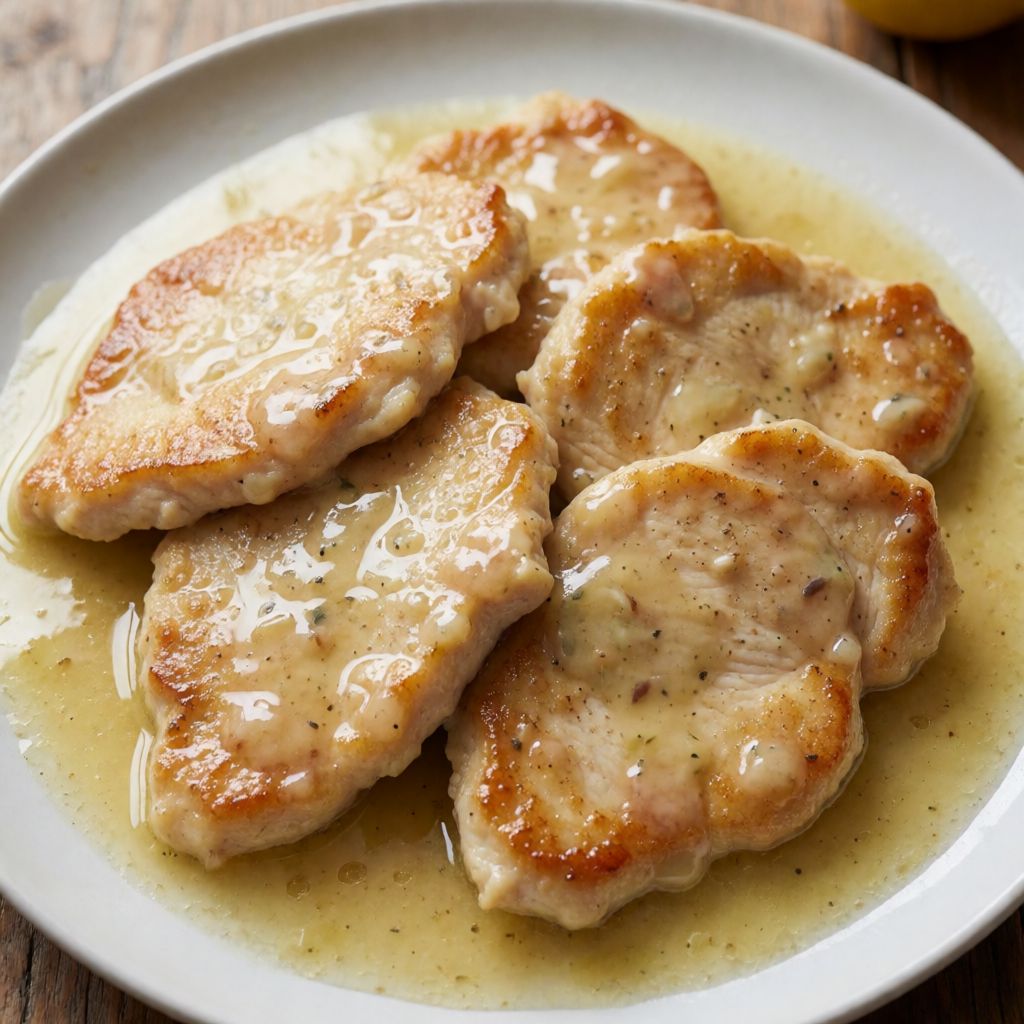
 AI photo
Chicken Piccata in Lemon Sauce
A light chicken piccata in a tangy lemon butter sauce.
Labels are worked out automatically from the ingredients and can be wrong. Check the packaging if it matters to you.
Ingredients
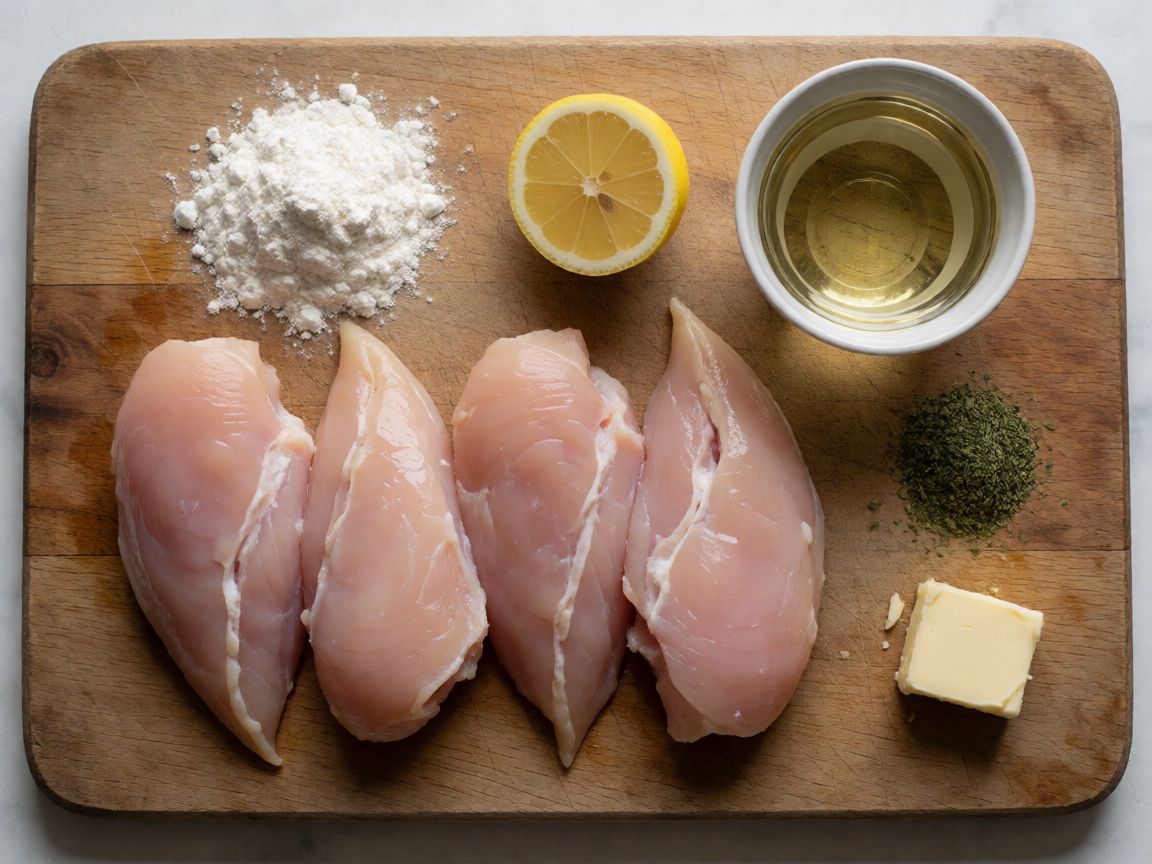
- 4 pcs Chicken breast
- Plain flour as needed
- Salt to taste
- White pepper to taste
- 8 tbsp White wine
- 1 pcs Lemon
- Dried parsley to taste
- 20 g Butter








Steps
Melt the butter in a frying pan.
2 minCoat the chicken breast in flour, shaking off the excess, and place it in the pan.
2 minFry on one side, then turn and pour in the white wine.
3 minLet the wine reduce, then add the lemon juice and a little grated zest.
2 minCover with a lid and cook over low heat until the chicken is fully cooked through. Doneness: internal temperature 74°C.
12 minSeason with salt, pepper, and a light sprinkle of dried parsley.
1 minServe with mashed potatoes.
Piccata is not a stew and not a roast — it's one pan doing three different jobs in fifteen minutes: it browns the chicken, then it becomes the sauce. The flour on the breast isn't just a coating, it's the glue between those two jobs — it gives the surface something to catch and colour against the hot butter, and the bit left behind in the pan is what the wine grabs onto and thickens. Lose sight of that and you're just frying meat and splashing liquid on top, which is a different, thinner dish.
What decides whether it works is the butter, and what state it's in when the chicken goes in. Butter has three lives in a hot pan: it foams, it turns nutty and gold, then it turns bitter and dark. You want the chicken in during the second life, not the third — smell is your gauge here, not a clock, because "medium heat" on a British electric hob means something different from the one in the next flat over.
There's a myth worth naming: that chicken breast is just a dry cut, boring by nature. No — it's dry when it's cooked the same way all the way through. Breast meat has almost no fat to protect it, so searing it hot and uncovered until the centre is safe dries the outside long before the inside catches up. The lid in this recipe (a plate will do the job on a domestic pan with no lid of its own) traps steam after the sear and finishes the meat gently, closer to a light braise than a fry. That's the actual fix, not the cut.
Chicken breast: pick pieces of roughly even thickness, because a lean cut this unforgiving cooks exactly as fast as its thinnest point and exactly as slow as its thickest — any mismatch and one end is done while the other is still raw. If your pieces are uneven, a few firm presses with the flat of your hand before flouring does more for the final result than anything that happens later in the pan.
Flour: plain flour here is doing two jobs, not one — it gives the surface something to brown against, and the little bit that stays behind in the pan after frying is what turns thin wine and lemon juice into a sauce with some body. Shake off the excess before it goes in the pan; too much flour on the meat means too much flour in the sauce, and then you get something closer to gravy than piccata. Any flour that browns the same way will do the job — this isn't the place for a specialty flour.
White wine: dry is the word that matters, not expensive. A dry wine brings acid with almost no sugar, so it lifts the richness of the butter instead of turning it sticky-sweet in the pan. If there's no wine open in the flat, a splash of chicken stock with a thin squeeze of vinegar or extra lemon does a close enough job — you're really after acid plus a bit of body, and wine is just the traditional way of getting both at once.
Lemon: use the juice and the zest both, because they're not the same ingredient wearing two names. Juice is acid; zest is the aromatic oil sitting in the skin, and it carries a smell the juice alone doesn't. Leave the zest out and the sauce still tastes sharp but goes flat on the nose.
Butter: unsalted if you can get it, because salted butter means you're salting the dish twice without knowing by how much the first time. Its job here isn't just flavour — melted and swirled into the wine and lemon, it's what pulls the thin liquid into something that clings to the chicken rather than pooling under it. An oil with no smell of its own can stand in for frying, but finish the sauce with a small knob of real butter regardless, because that's where the richness actually comes from.
White pepper over black is a habit from dishes with pale sauces, kept for how the plate looks rather than for any real difference in heat — black pepper will season it exactly as well, it'll just leave small dark flecks in a sauce that's otherwise clean and yellow. Dried parsley at the end is a garnish, not a flavour base — a pinch of colour and a whisper of green on top of mashed potato, which does the same comforting job here that it does after a Sunday roast, just arrived at in twenty minutes instead of three hours. Patience still matters, even in a quick dish — it just gets spent in small amounts, watching the butter and watching the thermometer, rather than in one long wait.