
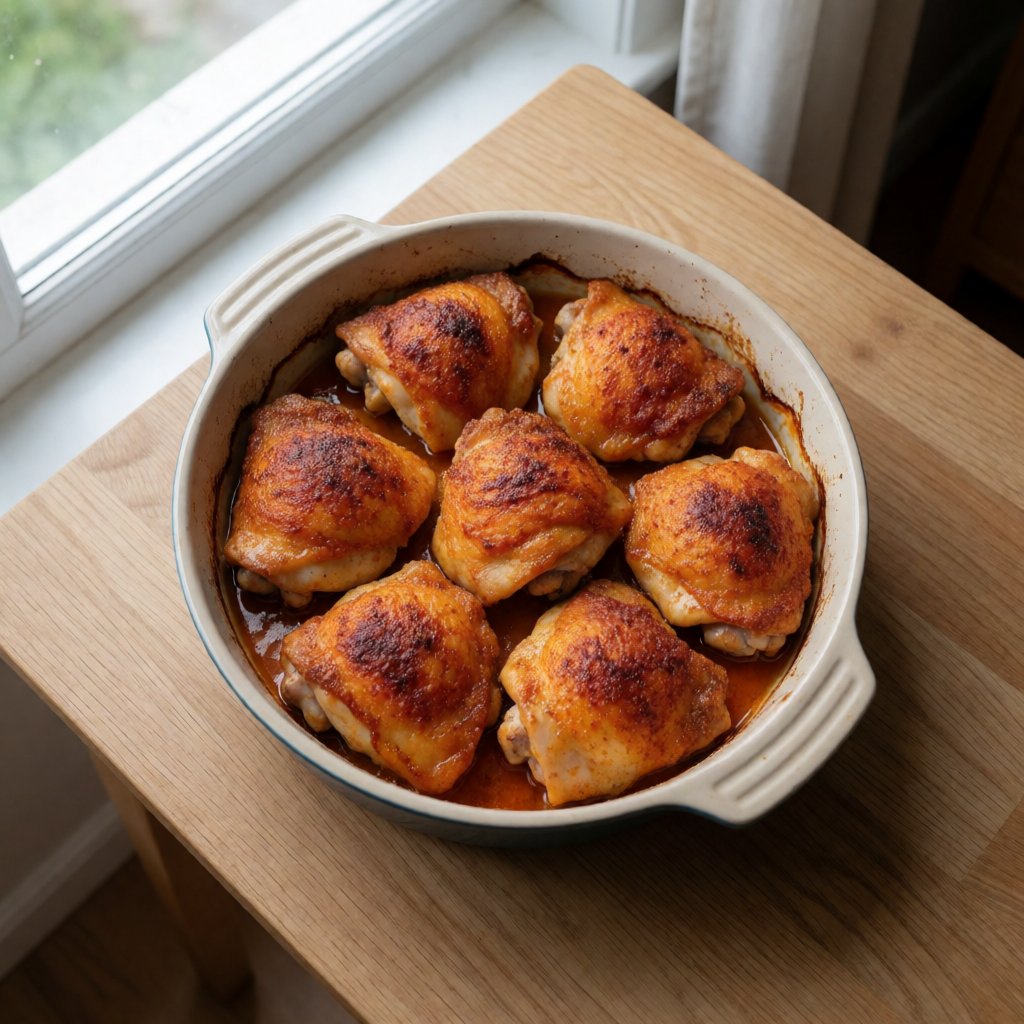
 AI photo
Chicken Thighs with Paprika
Simple oven-roasted chicken thighs seasoned with smoked paprika and garlic.
Ingredients
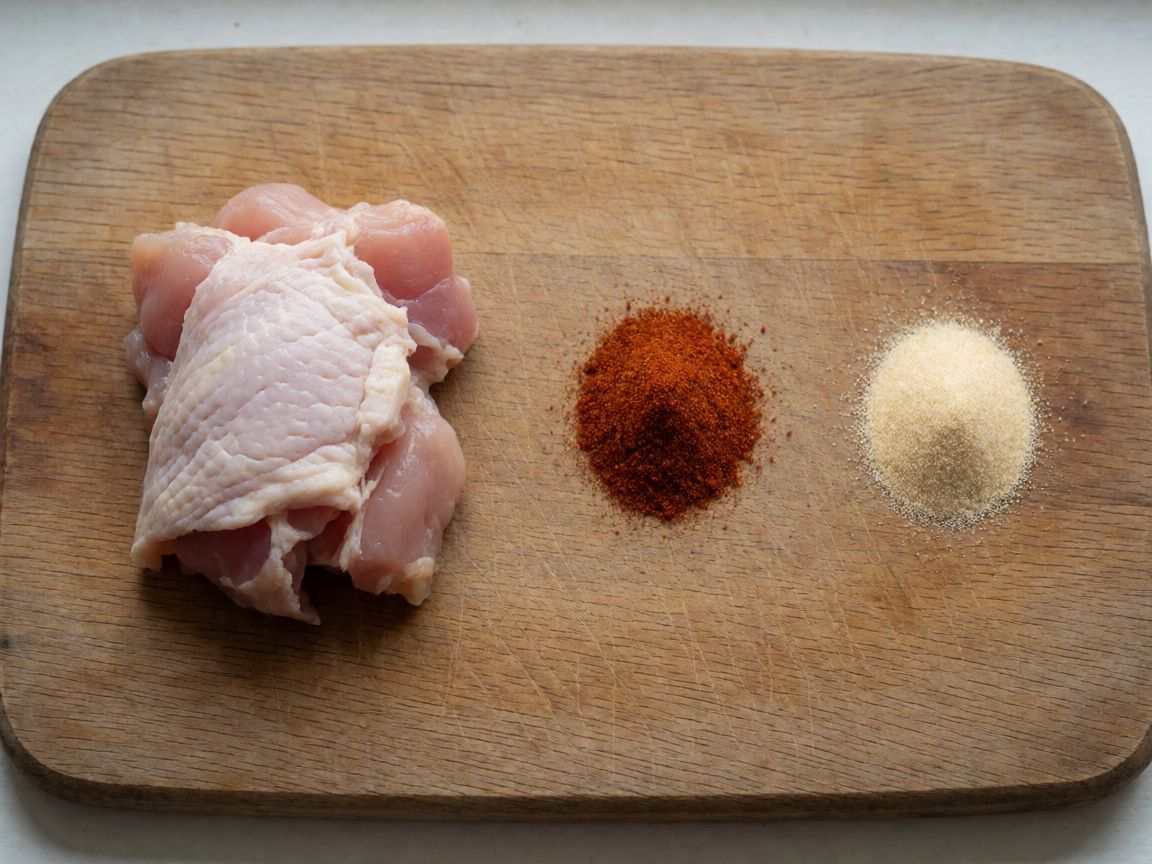
- 500 g Chicken Thighs skin-on, boneless
- 1 tsp Smoked Paprika
- 0.5 tsp Garlic Powder
- 1 tbsp Sunflower Oil
- 1 pinch Salt to taste
- 1 pinch Black Pepper to taste





Steps
Pat the chicken thighs dry with a paper towel, then rub with oil and the spices.
Arrange in a single layer, skin-side up, without crowding the pieces.
Put the dish into an oven preheated to 200°C for 40 minutes, until the internal temperature reaches 74°C.
40 minRemove the dish from the oven.
This is a dry-rub thigh roast, no sauce, no marinade overnight — the whole dish stands or falls on two things: whether the skin crisps and whether you stop cooking at the right internal temperature rather than at a guessed time. Everything else — the paprika, the garlic powder — is seasoning on top of a technique problem.
The technique problem is moisture. Skin only crisps in dry heat. Lay the thighs touching each other in the dish and the steam each piece throws off has nowhere to go — it sits between them, and skin that should go brittle stays pale and rubbery. That's why the recipe insists on a single layer with air between the pieces: it's not tidiness, it's letting the oven's dry heat actually reach the fat under the skin instead of fighting a cloud of its own steam.
Same logic, earlier: patting the thighs dry before oiling them. Some cooks still rinse raw chicken under the tap first, thinking it washes something off — it doesn't remove anything a kitchen tap can touch, and it does two things wrong: it splashes bacteria round your sink, and it leaves the skin wet, which means the first ten minutes in the oven get spent evaporating water instead of rendering fat. Patting dry with paper is the correct move, not rinsing.
Chicken thighs, skin-on and boneless, are the right cut for a beginner-friendly roast precisely because they carry their own fat — unlike breast, they don't dry out the moment you look away from the oven for an extra five minutes. Bone-in works too, if that's what's in the fridge, but add a few minutes and check the temperature nearer the bone, since bone conducts heat differently and can read falsely low right next to it.
Smoked paprika isn't paprika with a flavouring added — it's peppers that were actually dried over smoke rather than hot air, a preservation method from regions like Extremadura in Spain that became the entire point rather than a side effect. That's why sweet paprika can't properly stand in for it: swap one for the other and you get colour without the smoke it's named for. If you've only got sweet paprika, use it, but know you're changing the dish, not just substituting an ingredient.
Garlic powder earns its place here over fresh garlic for one practical reason: fresh garlic, rubbed onto skin that then sits in a 200°C oven for forty minutes, burns and turns bitter long before the chicken is done. Powder is pre-dried, so there's no moisture in it to scorch — it just toasts gently along with the skin.
The oil is there to carry the spices onto the skin and help it brown, nothing more — so the only real criterion is that it shouldn't bring its own smell to the party. Sunflower is fine; so is any other neutral oil you've got, rapeseed included, which is arguably the more sensible choice in a UK kitchen since it's grown and pressed closer to home. Olive oil would work on flavour terms too, but save the good stuff for something you're not roasting at 200°C.
Salt goes on with the rub, before the oven, not after — it has forty minutes to draw a little moisture to the surface and then sit in the fat as it renders, rather than just dusting the finished skin. And give the whole thing its forty minutes without opening the door every ten to check: every time you open it, the oven loses heat and has to climb back, which is exactly the kind of interruption that stops fat from rendering evenly. Patience here isn't poetry, it's the difference between crisp skin and skin that gave up halfway there.
·