
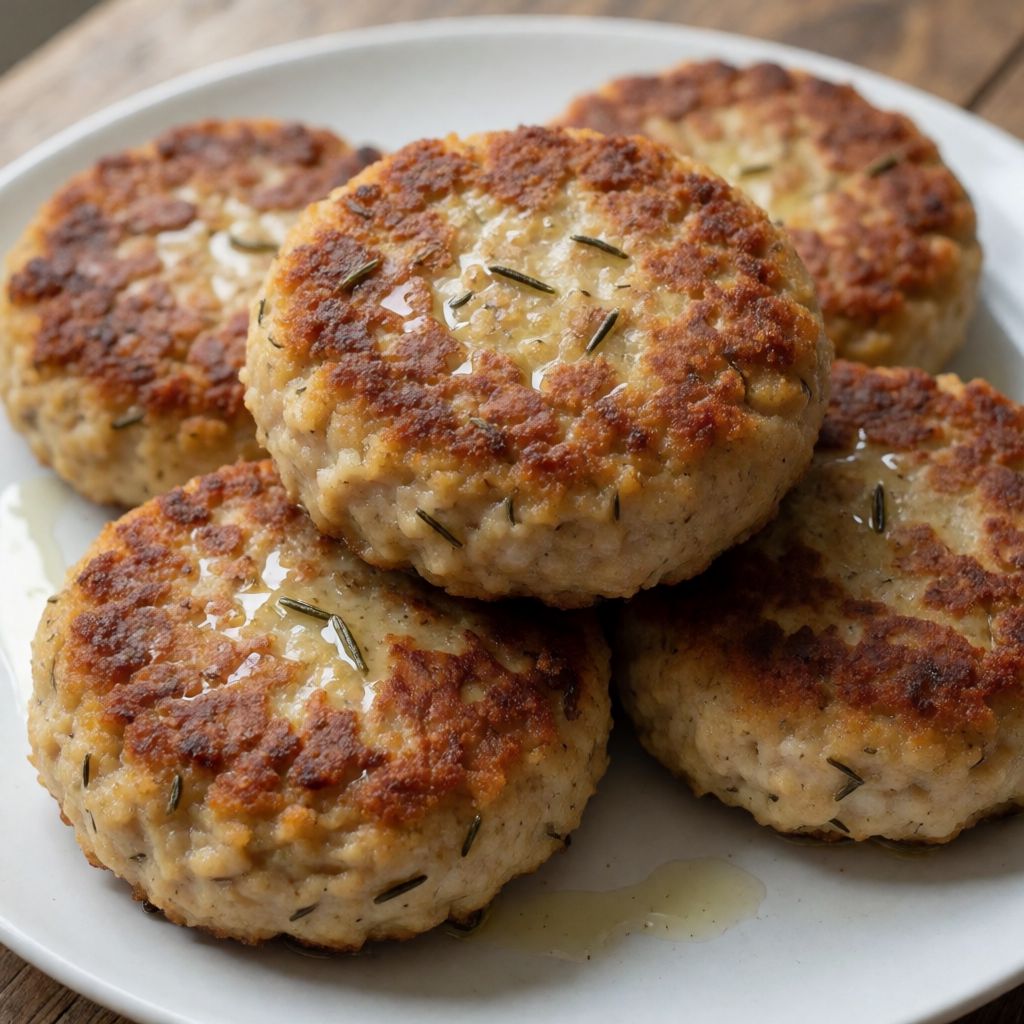
 AI photo
Chickpea Burgers
Hearty chickpea patties flavoured with rosemary, pan-fried or oven-baked until golden.
Labels are worked out automatically from the ingredients and can be wrong. Check the packaging if it matters to you.
Ingredients
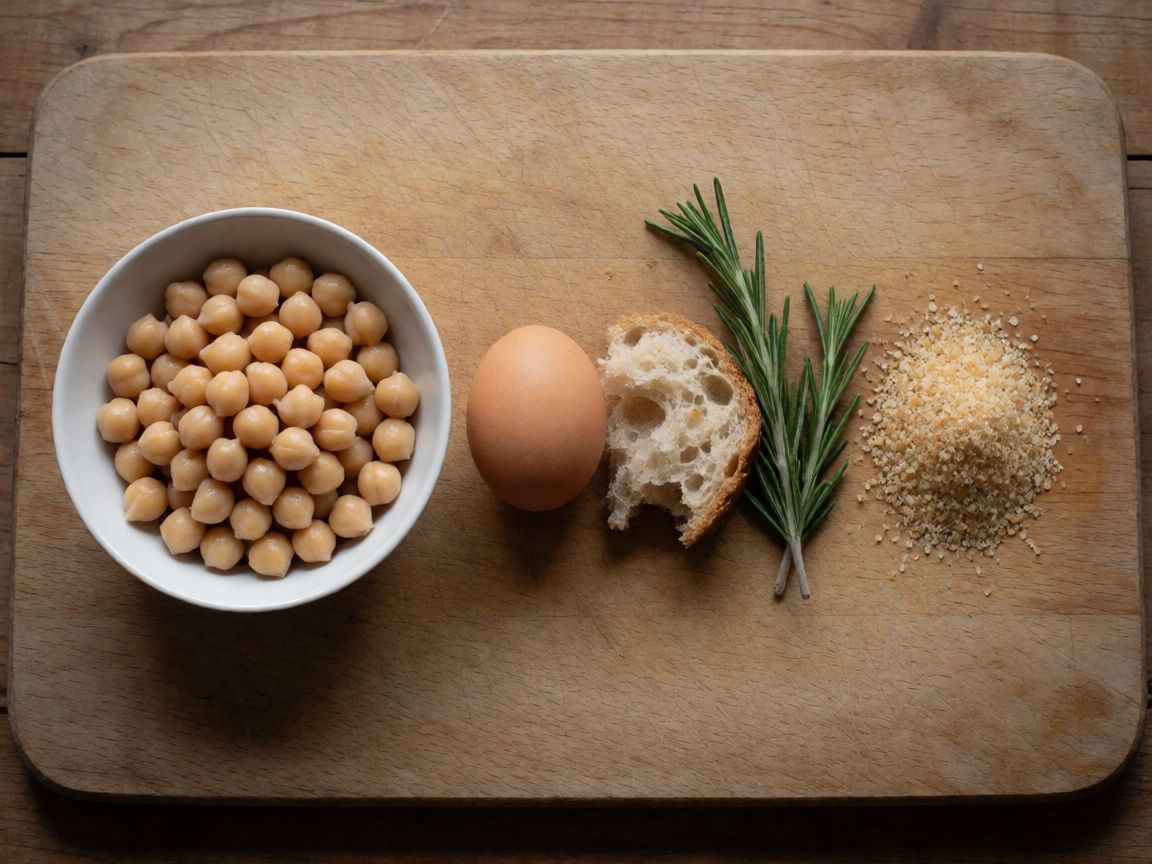
- 450 g Chickpeas
- 1 pcs Egg
- 25 g White bread, crusts removed soft interior only
- 2 pcs Rosemary sprigs
- Olive oil to taste
- Salt to taste
- Black pepper to taste
- Dried breadcrumbs to taste







Steps
Place the chickpeas in a blender and pulse briefly to break them up coarsely. Add the egg, white bread and rosemary leaves.
Continue blending until the mixture is smooth, with no lumps.
Divide the mixture into 4 equal portions and shape into patties up to 10 cm in diameter and about 2 cm thick.
Coat the patties evenly in the dried breadcrumbs.
Warm a little oil in a frying pan over medium heat, then fry the patties until golden brown on both sides.
Alternatively, bake the patties in a fan oven at 170°C for 32 minutes.
32 min
This is a vegetable cutlet dressed up as a burger — the shape and the crust belong to meat cookery, the inside does not. Call it a fritter with ambitions. What decides whether it holds together on the pan or collapses into chickpea rubble is moisture, nothing else. Too wet, and it slides apart the second the spatula touches it. Too dry, and it eats like cardboard with rosemary in it.
Some say a burger needs meat to earn the name. No — a burger is a method, not a protein. Flatten something, give it a crust, cook it through before the crust burns: that's the whole trick, and it works on beef, lentils or mashed chickpeas exactly the same way. The poorer kitchens of the Mediterranean and the Middle East worked this out centuries before anyone put a bun around it — cheap legumes, bound and fried, because meat was for Sundays and chickpeas were for every other day.
The binding here is doing real engineering. The egg sets at heat and glues the mass; the soft white bread soaks up the water chickpeas carry even after draining, so the patty isn't fighting its own moisture while it tries to form a crust. Skip the bread and you get a denser, heavier disc that still tastes of chickpea but takes twice as long to brown because it's steaming itself from the inside.
Size and thickness aren't decoration — they're the only way a patty this soft cooks through without turning to mush on the surface. Ten centimetres across, two thick: thin enough that the centre catches up with the crust, thick enough that you get an actual bite instead of a crisp wafer.
Chickpeas — 450 g, and I'll assume tinned, because that's what a British kitchen reaches for and it's the honest choice: drained, patted, ready. Dried chickpeas cooked from scratch give a drier, mealier mash that needs more egg to bind — not better, just different arithmetic. Blend them coarse first, on their own. This matters: go straight to smooth with everything in the bowl and you lose control, end up with a paste with no texture memory at all. Pulse the chickpeas alone first, feel for broken-up rubble, then add the rest.
The egg is non-negotiable in the sense that nothing else coagulates the same way at heat. If you need an egg-free version, a tablespoon of ground flax in three of water does a looser job — the patty will be a touch more fragile, so handle it like it's annoyed with you.
White bread, crusts off, soft interior only — the crust is tough fibre that won't break down in the blender and leaves hard flecks in the mix. Any soft, bland, absorbent crumb does the same job: a stale bread roll works even better than fresh, because it soaks liquid faster without turning to glue. The job is to draw off excess water from the chickpeas so the egg isn't binding a swamp.
Rosemary brings oil-soluble aromatics that need either heat or fat to open up — bruise the leaves, chop them fine, don't drop in whole sprigs expecting flavour by osmosis. Dried rosemary works at half the quantity; its oils are already concentrated and somewhat stale-tasting if the jar's old, so smell it before you trust it. Thyme is the honest substitute if rosemary isn't in the cupboard — same resinous family, quieter voice.
Olive oil here is for frying and for flavour both, which is a fair use of it since the patty itself is mild. If you want a neutral cooking fat for the pan — any oil with no smell of its own, sunflower or vegetable — save the olive oil for a drizzle at the end instead. Salt and pepper go in the mix before shaping, not after; taste the raw mixture, because this is one of the few times you legitimately can.
Shape the four patties and let them sit — in the fridge, ten minutes is not laziness, it's the egg and bread settling into each other so the patty doesn't crack the moment it hits the breadcrumbs. Skip this and the crumb coating won't take evenly, and the patty edges fray in the pan. Coat in dried breadcrumbs for a dry, abrasive surface that crisps rather than just colours — panko if you want more crunch, crushed crackers if that's what's in the tin.
Frying: oil should ripple, not smoke, when you tilt the pan — that's your medium-high, no thermometer needed. Flip once. Flipping twice or three times to check progress is how crusts tear off and patties fall apart; trust the first side until it's properly dark gold before you touch it. The oven route, 170°C fan for 32 minutes, is gentler and more even — a fan oven moves hot air past every surface at once, which is why the stated temperature sits lower than you'd expect from a conventional oven recipe, and why the crust comes out quieter, less assertive than frying gives you. Either way, 32 minutes is where you start checking, not where you stop — press the centre, it should spring back firm, not give like raw dough. Four patties, four people, one each with whatever sits under a Sunday roast usually — mash, a green veg, or a bun if you're calling it a burger properly.