
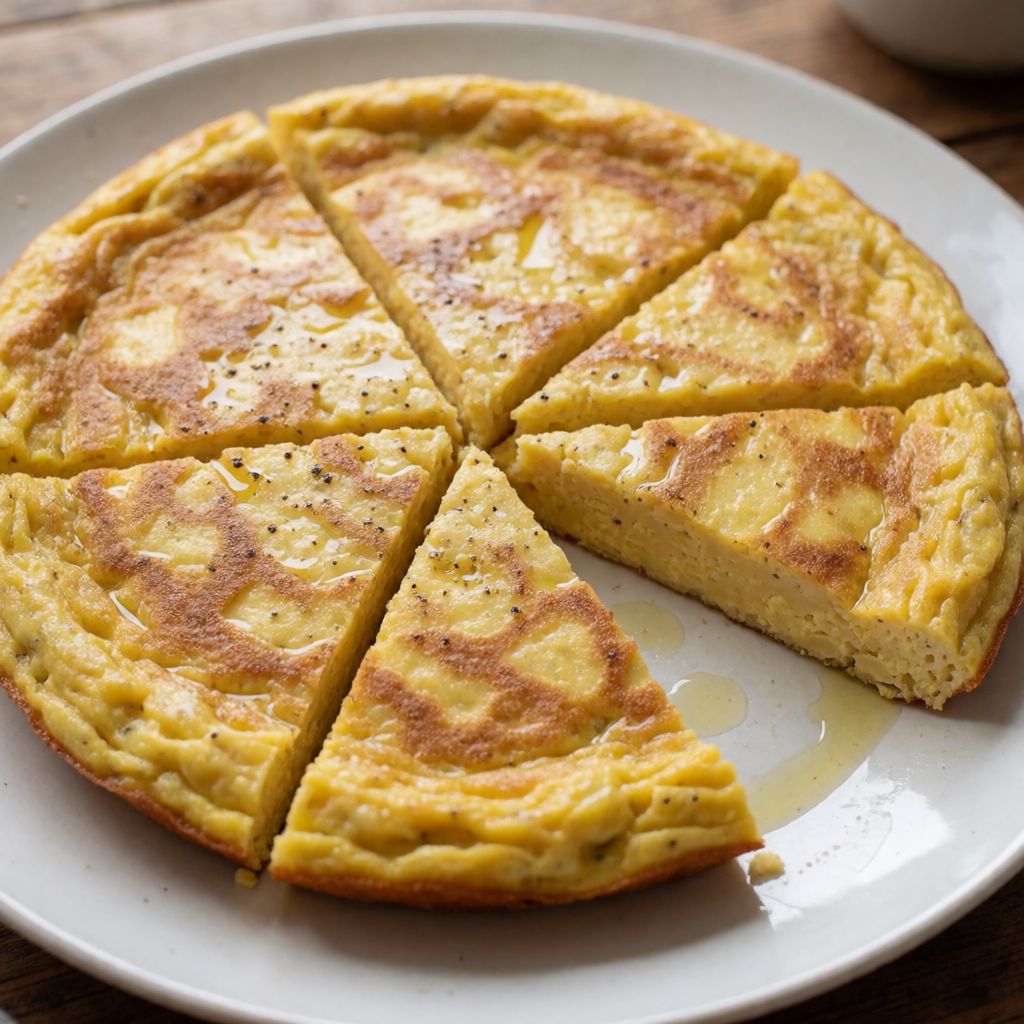
 AI photo
Vegan Chickpea Flour Frittata
A simple vegan frittata made from chickpea flour instead of eggs.
Labels are worked out automatically from the ingredients and can be wrong. Check the packaging if it matters to you.
Ingredients
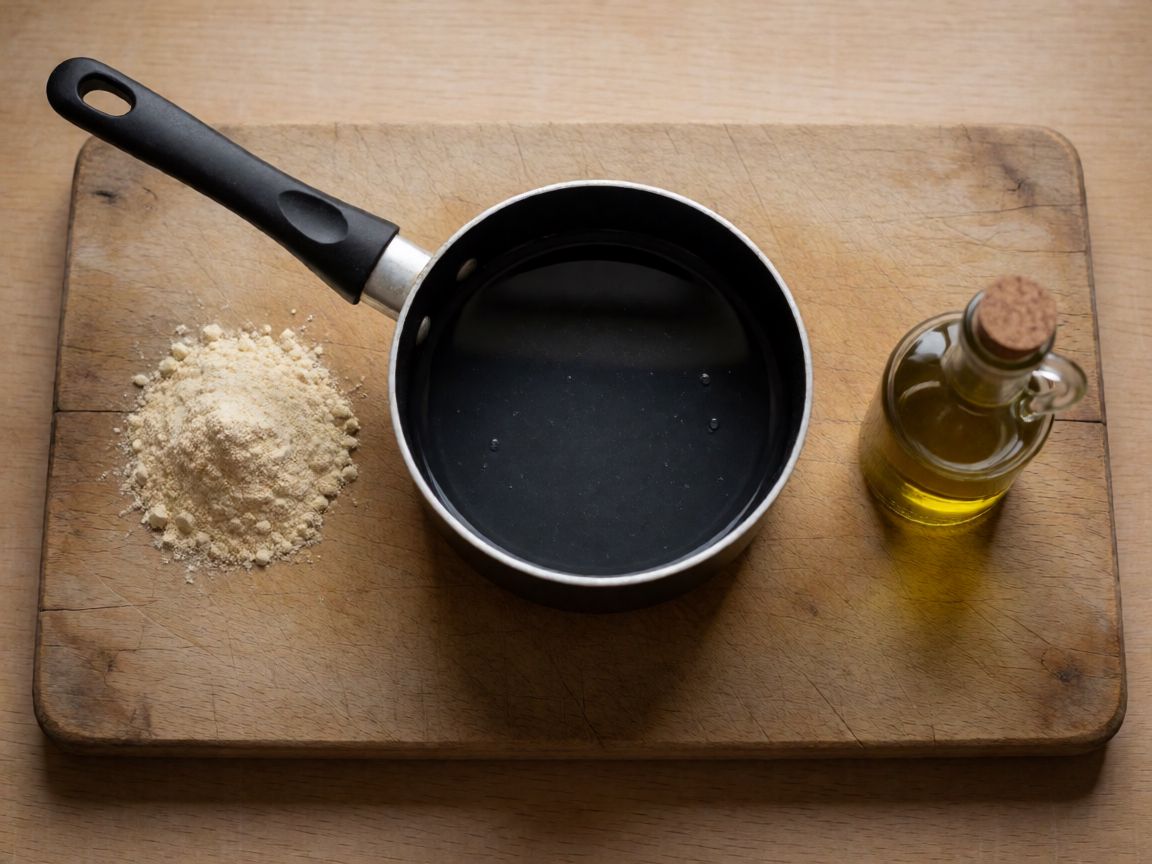
- 150 g Chickpea flour
- 300 ml Water or vegetable stock
- Salt to taste
- Black pepper to taste
- Olive oil for frying, to taste




Steps
Put the chickpea flour into a bowl and season with black pepper and a pinch of salt.
Gradually pour in the water or vegetable stock, whisking constantly until the batter is smooth and runny.
Let the batter rest if you have time.
If you like, add vegetables such as courgette, asparagus, leek or onion.
Heat the oil in a frying pan and pour in the batter.
Carefully flip the frittata using a plate or lid and let it cook on the other side.
20 minServe immediately.
Despite the name, there's no egg anywhere in this — it's chickpea flour and water, set by heat alone, the same mechanism as socca in Nice and farinata in Genoa, carried into English as "frittata" because the finished disc looks like one in the pan. What decides whether it works isn't the egg you didn't use — it's whether the chickpea flour has actually turned into batter, or is still just flour hanging suspended in water because you rushed it.
Chickpea flour carries its own binding protein. When a thin layer of it meets heat in an oiled pan, that protein sets the way egg white sets, pulling the starch into something you can slide a spatula under rather than something that stays soup. That's the whole mechanism, and it isn't a trick — poor harbour towns worked this out long before anyone called it vegan cooking; eggs were never the point, cheap flour that didn't need an oven was.
The flip is where it goes wrong, and not because flipping with a plate is difficult — it isn't, once you've done it badly once and learned. People flip too soon, while the surface still has a wet shine, and the whole thing folds on itself rather than landing flat. Wait until that shine is gone and the edge has pulled back from the metal on its own; that's the cue worth trusting, not the clock.
Two people, one thin pancake, twenty real minutes in the pan and ten minutes of patience before that, which you're meant to actually give it. It's a weekday plate — nobody is carving this at the table the way they'd carve a Sunday joint.
Chickpea flour — gram flour, besan, same thing with different labels depending on the shop — is the dish. Buy it pale and fine, not grey and coarse; a bad batch tastes of raw bean and no amount of resting rescues it. There isn't a real substitute that keeps this dish what it is: other gluten-free flours won't self-bind this way without egg, because the gelling protein belongs specifically to legumes. If you're stuck, chickpea flour cut with a spoon of cornflour gets closer than most things — but it's a patch, not an equal swap.
Water versus stock is flavour, not technique. Water gives you a neutral base that tastes of whatever seasoning and vegetables you add; stock seasons the pancake from inside, useful if you're keeping toppings plain. Either way the ratio here — roughly double liquid to flour by weight — gives a batter that pours like thin cream. Thicker than that and it won't spread across the pan; thinner and the centre never fully sets.
Resting the batter is the step people skip, because "if you have time" sounds optional and it isn't, not really. Chickpea flour is coarser than wheat flour, and the particles need real time — twenty minutes as a floor, an hour is better — to actually drink in the water. Skip it and the finished pancake tastes faintly dusty and a little bitter at the edges, which people then blame on the chickpea flour itself rather than on having rushed it.
Oil wants no personality of its own here — any oil without a smell does the job, which is exactly why olive oil became the default along the Ligurian coast: it was what was already there, pressed locally and cheap, not chosen for taste. Sunflower or rapeseed oil in a British kitchen does the same work without complaint. What matters more than which oil is how it's behaving when the batter goes in: it should shimmer, and a test drop of batter should set at its edges within a couple of seconds without the oil smoking first. Smoking oil scorches the base before the middle has had any chance to firm up — that's the actual cause behind a pancake burnt on one side and wet in the centre, not bad timing.
If you're folding in courgette, leek or onion, slice them thin and remember they're carrying water you didn't ask for. Added raw and thick, they bleed moisture into the setting batter and leave a soggy patch where there should be a set one. A few minutes alone in the hot pan first — just long enough to soften and sweat out some of that water as steam rather than into your pancake — is the fix, and it's missing from the written steps because nobody bothers writing down vegetable prep for something that looks this simple on paper.
Use a wide pan, not a narrow one, if you want this to cook evenly on an ordinary hob. Spread across 26–28cm it's thin enough to set through before the surface darkens. Crammed into a small pan it goes thick, and you get the classic complaint — burnt outside, raw middle — which has nothing to do with the recipe and everything to do with the shape of the pan you chose.