
 AI photo
Chocolate Almond Sweets
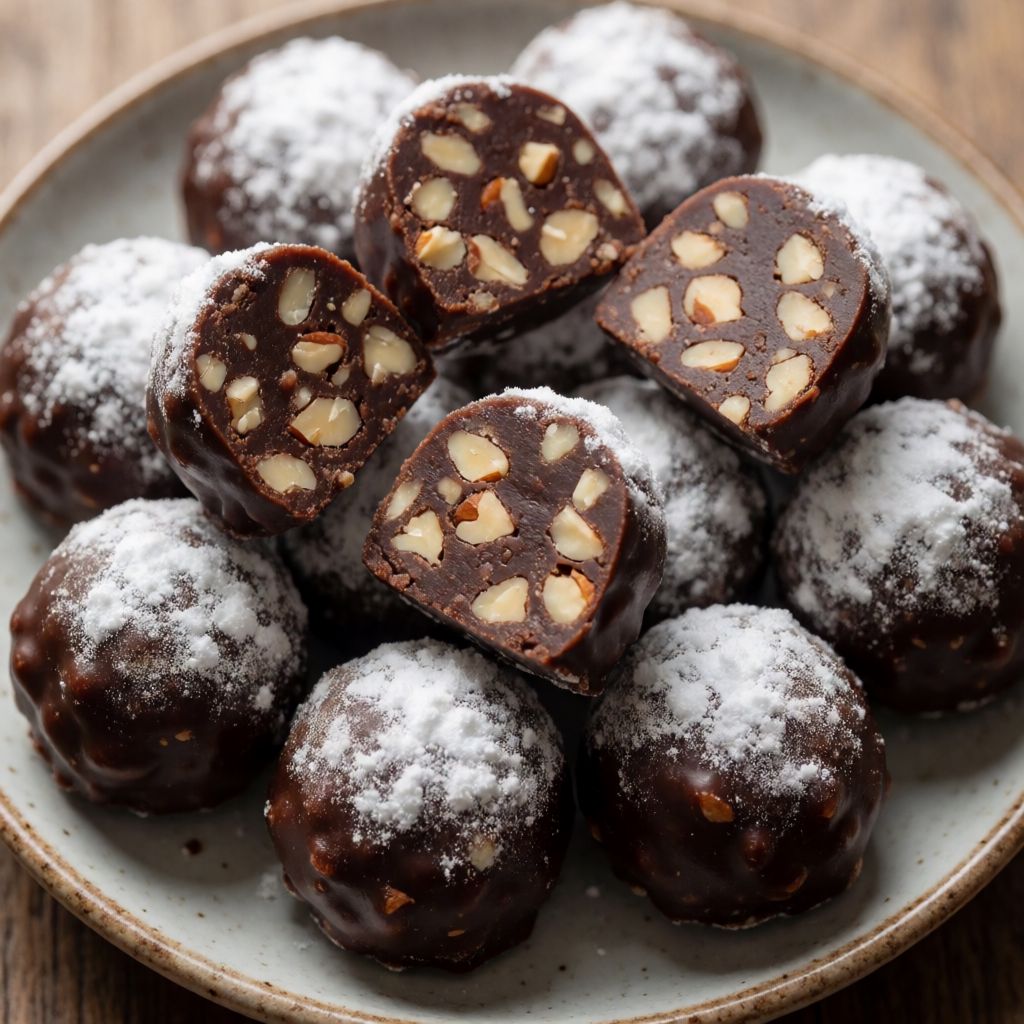
A simple sweet of almonds coated in sugar syrup, baked, then dipped in melted dark chocolate.
Labels are worked out automatically from the ingredients and can be wrong. Check the packaging if it matters to you.
Ingredients
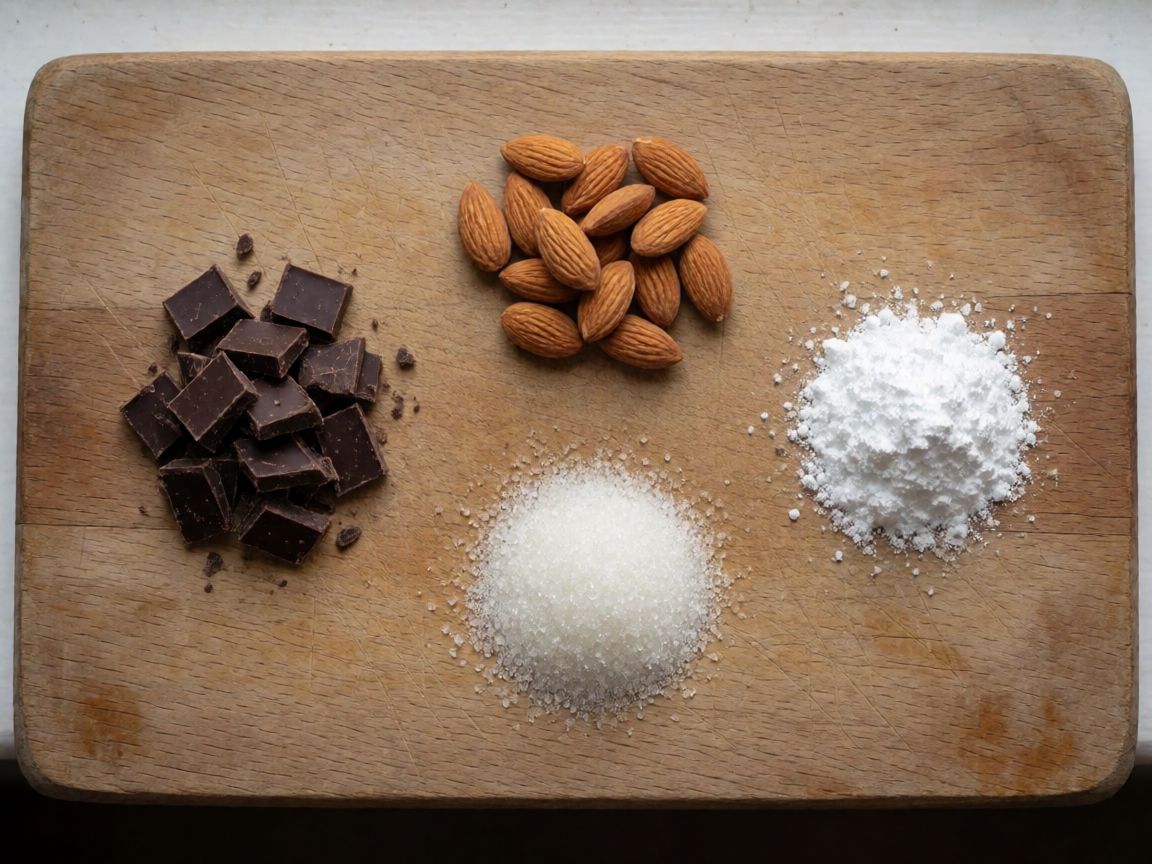
- 150 g Dark chocolate
- 120 g Almonds
- 2 tbsp Water
- 3 tbsp Caster sugar
- Icing sugar to taste





Steps
Put the sugar in a small saucepan, add the water and bring to the boil. Stir for 1-2 minutes until the sugar dissolves into a thick syrup. Remove from the heat.
Cut the almonds in half lengthways, place them in a bowl and pour over the hot syrup.
Mix well so the almonds are evenly coated in the syrup. Using two teaspoons, shape small mounds and place them on a sheet of baking parchment.
Dust the mounds with icing sugar and bake at 180°C.
4 minRemove from the oven and leave to cool completely.
Melt the chocolate in a bain-marie.
Dip the cooled almond mounds into the melted chocolate, place on a wire rack to let the excess drip off, and leave to set.
This is a nut cluster dipped in chocolate — what French confectioners would call a croquant d'amande, though nobody needs the French to make it. The whole trick is a spoonful of caramelised sugar acting as both glue and crunch: it holds halved almonds together into a little haystack, then in a short blast of oven heat turns from syrup to brittle shell. Chocolate afterwards is just the coat, not the structure.
What decides whether it works is timing in two very different places. First: how far you cook the syrup — too thin, and the almonds slide apart on the tray; too dark, and you've already made caramel, and it will turn bitter before the oven even finishes the job. Second: how completely the mounds cool before they meet the chocolate. Warm sugar and melted chocolate don't get along — the fat in the chocolate separates, or the shine goes dull and streaky, and no amount of tapping on the rack fixes a cold-start mistake made two steps earlier.
Some say you need to roast the almonds first for flavour. No — raw almonds get all the roasting they need from the caramel shell around them; roast twice and you push them toward bitter before the sugar even sets. The oven's job here isn't to cook the nut, it's to finish the syrup.
Makes about one generous plateful — a dozen or so mounds, enough for a few people with tea, not a crowd.
Dark chocolate is the coat, so pick one with enough cocoa solids — 60 to 70 percent — to set firm and snap at room temperature; it needs no fridge to hold its shape once it has rested. Milk chocolate carries too much milk fat and sugar, so it stays soft and sticky, and the whole point of dipping is a shell that breaks cleanly against the almond, not a gum that coats your teeth. Use milk chocolate if that's what's in the cupboard, but expect a softer bite and keep the finished sweets somewhere cool rather than on a warm windowsill.
Almonds, split in half lengthways rather than left whole, aren't a cosmetic choice. The flat cut faces give the syrup somewhere to grip — a whole almond is round and slides, a halved one locks against its neighbour. Any nut with decent fat and a bit of bite will do this job, hazelnuts included, but almonds hold their shape best once sliced. This kind of sugar-coated nut was never a luxury item in its own country of origin — it was how a confectioner stretched expensive chocolate and nuts with cheap sugar, so the bulk comes from the almond and the syrup, and the chocolate on top stays a thin, costly finish.
The syrup is two ingredients doing one job. Water lets the sugar dissolve evenly instead of scorching in patches on the base of the pan; it then boils off until what's left is thick enough to coat the back of a spoon and hold a thread when you lift it off — that's your real cue, not the clock. Caster sugar dissolves faster and more evenly than granulated because the crystals are smaller; if granulated is all you've got, give it another minute of stirring so nothing gritty is left sitting at the bottom.
Icing sugar, dusted over the mounds before they go in the oven, is doing something different again. Caster or granulated sitting on top would stay grainy; icing sugar is fine enough to melt almost on contact with the heat, finishing the caramel shell evenly across the whole mound rather than only where the syrup already reached. Skip this step and you get patchy, dull clusters instead of an even amber gloss.
Baking at 180°C for a few minutes isn't cooking in the usual sense — it's finishing the caramelisation the syrup started on the stove and fusing the dusted sugar into one continuous shell. Watch it rather than time it: you want the colour to move from pale to proper amber-gold, not to brown. A domestic oven runs hotter at the back and the edges than the middle, so turn the tray if yours does that, and pull the mounds the moment the colour shifts rather than trusting the clock blindly — ovens vary more than recipes admit.
Melting the chocolate in a bain-marie — a bowl set over, not in, a pan of barely simmering water — keeps it away from direct heat, which is the one thing chocolate genuinely minds. Contact with a hot pan base scorches the cocoa solids unevenly and the chocolate seizes into a grainy paste that won't come back smooth however much you stir it. No special kit needed: any heatproof bowl that sits over a saucepan without touching the water does the job. And give it patience here — rushing the cooling of the mounds, or rushing the melt, is where most of this goes wrong; everything else is fairly forgiving.