
 AI photo
Cocoa Chiacchiere
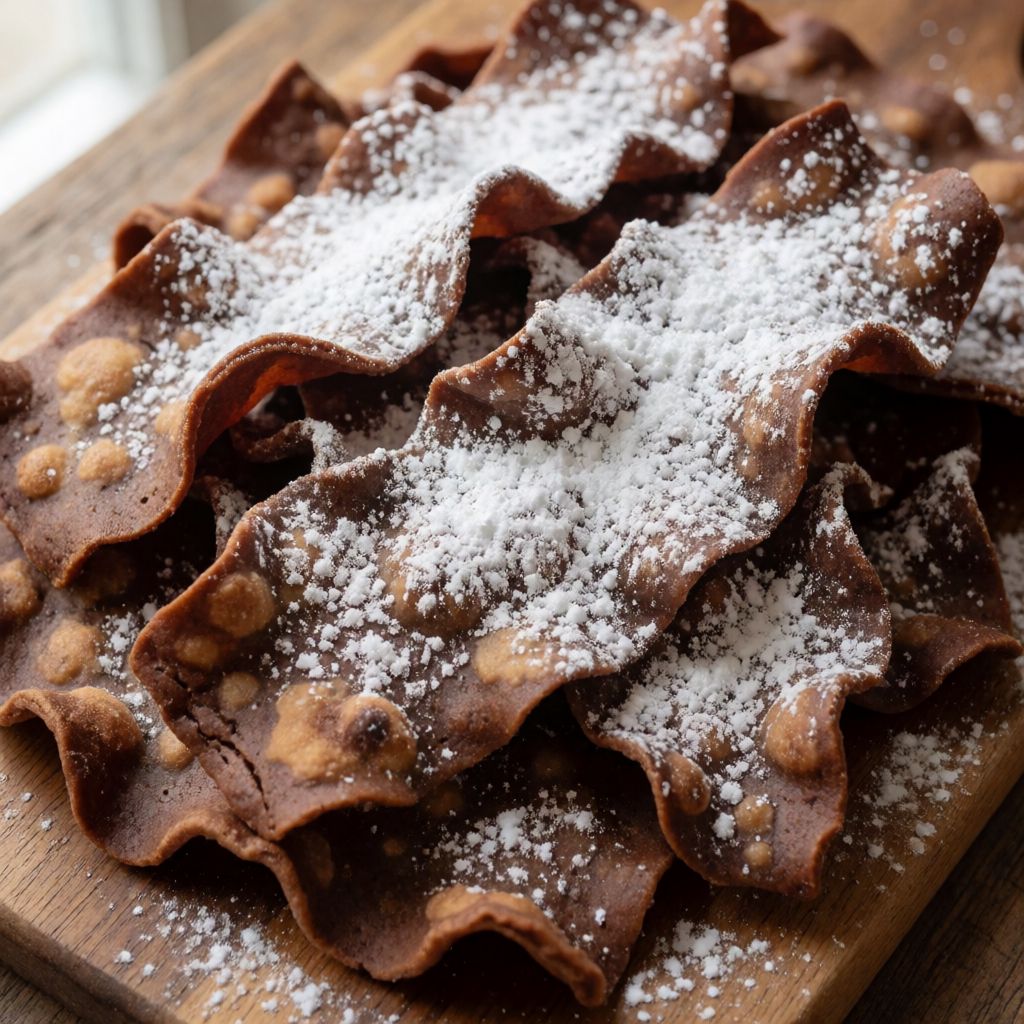
Crisp fried cocoa ribbons, dusted with icing sugar — a chocolatey twist on the classic carnival pastry.
Labels are worked out automatically from the ingredients and can be wrong. Check the packaging if it matters to you.
Ingredients
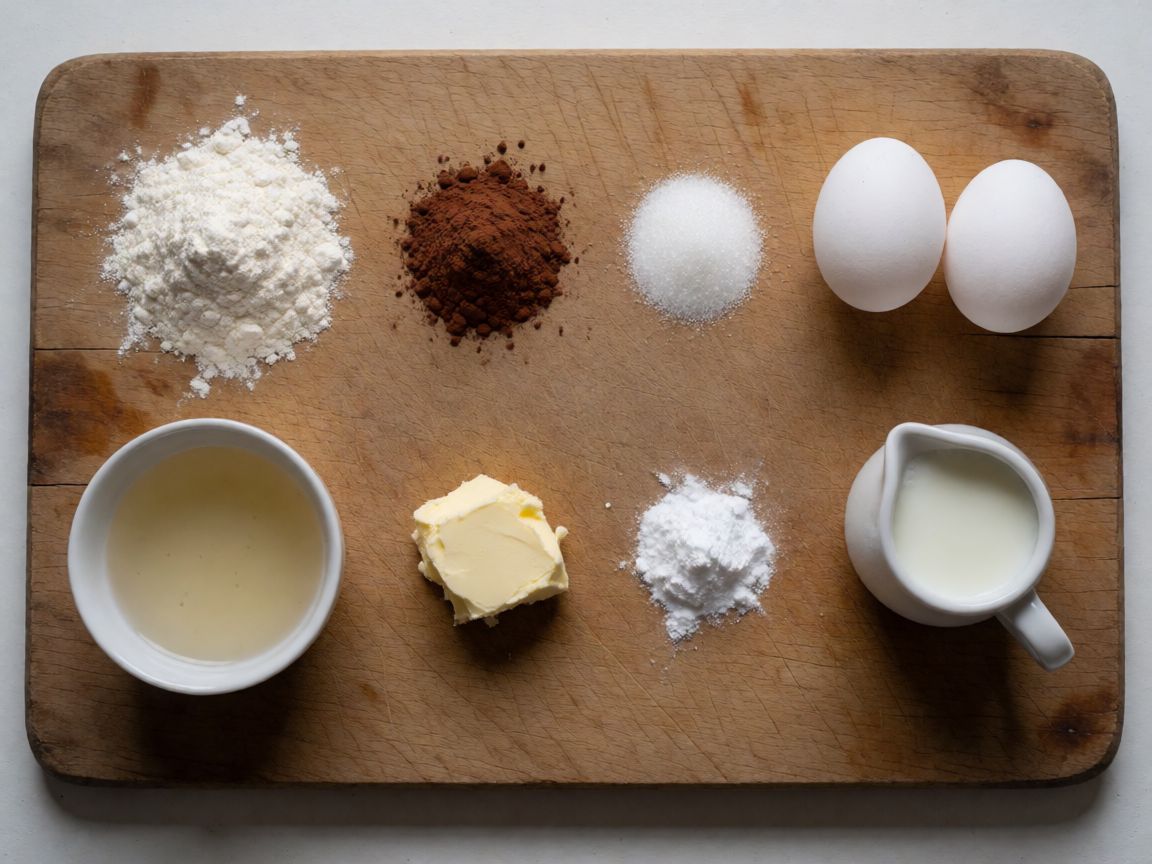
- 350 g Plain flour
- 40 g Cocoa powder
- 60 g Caster sugar
- 120 g Eggs about 2
- 20 g Grappa
- 80 g Milk
- 50 g Butter
- 1 pinch Salt
- 8 g Baking powder
- Peanut oil to taste
- Icing sugar to taste










Steps
Into a bowl, tip the flour, cocoa powder, baking powder, salt and sugar. Add the butter, cut into cubes.
Knead the dough, gradually pouring in the grappa and milk and adding the eggs, until you have a smooth, even ball.
Transfer the dough to a work surface, work it with your hands, wrap in film and let it rest.
20 minDivide the dough into 4 pieces and roll each one out with a pasta machine on a lightly floured surface.
Trim the edges with a pastry wheel and cut into rectangles about 10 cm on a side, with two slits in the centre.
Fry the chiacchiere in small batches in oil at 170°C, then place them on paper towel to drain.
Dust the cooled chiacchiere with icing sugar.
Chiacchiere means "chitchat" — the name tells you what they're for. Thin, brittle, slightly bubbled strips of fried dough, dusted white, eaten standing up with your hands while you talk to someone. This is the cocoa version, Carnival food dressed in dark clothes. What decides whether they work isn't the dough, which is forgiving, but the frying: thin enough to blister and crisp in seconds, hot enough that it doesn't just sit there drinking oil.
The dough itself is closer to pasta than to pastry — flour, egg, a little fat, a little liquid, worked into something smooth and then rested. No yeast, no rise to wait for. That's the giveaway: this isn't a bread dough learning patience, it's a pasta dough learning to be crisp instead of chewy. The baking powder is there for lift at the edges when it fries, not for any dramatic puff.
The two slits down the centre of each rectangle aren't decoration. They let steam escape and let the hot oil get at more surface, which is why the strip twists and blisters instead of frying flat and leathery. Skip them and you get a stiffer, denser biscuit that fried, not a chiacchiera.
Some say these need a kazan-deep fryer and special equipment to work. No — a wide pan with a few centimetres of oil does the job; chiacchiere are thin and float, they don't need to swim.
Flour and cocoa together are doing two different jobs. The flour is structure — plain flour, nothing strong or bread-like, because you want tenderness and crispness, not chew. A strong bread flour here would give you something tough enough to survive a fight, not a biscuit that shatters between your fingers. The cocoa isn't flavouring poured in afterwards; it's part of the dry mix, so it gets evenly worked through rather than streaked. Use a cocoa with no added sugar — the sweetness comes later, from the caster sugar and the icing sugar dusted on at the end. If your cocoa tastes bitter and thin, that's not a flaw to fix with more sugar in the dough; it's meant to contrast with the sweet dust on top.
The eggs bind and give the dough enough give to roll thin without tearing — about two eggs here, by weight rather than by "a couple," because egg size varies and 120 g is the number that actually matters. The butter, cut into cubes and worked in cold-ish, coats the flour and stops it from forming too much gluten, which is exactly why chiacchiere snap clean instead of stretching like a chewy biscuit. If you're out of butter, any flavourless fat that's solid at room temperature will do roughly the same job — but butter's own flavour is part of the point here, so don't swap it for something neutral just because you can.
Grappa is doing real work, not showing off. Alcohol lowers the water activity in the dough and evaporates fast in the hot oil, and that's part of why chiacchiere blister and crisp rather than turn soggy — some of that structure is literally steam and alcohol vapour pushing through the dough as it fries. If you don't have grappa, any neutral high-proof spirit — vodka, a light brandy — gives you the same mechanical effect, just a quieter one on the nose. Leaving it out entirely isn't fatal, but don't expect quite the same lift and crackle.
Milk is there to adjust the dough's give — add it gradually, because flour varies in how much liquid it drinks, and you're aiming for a smooth ball that doesn't crack when you fold it, not a fixed quantity poured blind. The baking powder gives a small lift at the fried edges; it's a nudge, not a rise, so don't expect anything resembling a scone.
Rolling thin matters more than any single ingredient. A pasta machine gives you an even thickness across the whole sheet, which a rolling pin by hand struggles to match — uneven thickness means some parts of a batch are done and bronzed while others are still pale and chewy in the same ten seconds of frying. If you don't own a pasta machine, roll by hand as thin as you can manage and accept the dough will be slightly less uniform — it's not ruined, just less tidy.
For the frying itself: 170°C is the number that stops two opposite failures. Too cool, and the dough sits in the oil soaking up fat before it crisps — heavy, greasy chiacchiere. Too hot, and the outside colours and seizes before the inside has had a chance to cook through and blister properly — you get dark, raw-centred strips. A thermometer earns its keep here; failing that, drop in a scrap of dough and watch it rise and bubble within a couple of seconds without darkening instantly. Use oil with no smell of its own — peanut is traditional and has a high enough smoke point to sit at 170°C without breaking down, but any neutral refined oil (sunflower, rapeseed) does the same job in an ordinary British kitchen, and rapeseed is probably sitting in your cupboard already.
Draining on paper towel isn't fussy kitchen theatre — it's the difference between crisp chiacchiere and ones that go soft from their own trapped oil as they cool. Dust with icing sugar only once they're cooled, because sugar on hot, oily dough just melts into a sticky film instead of sitting as a visible dust.
And give the rested dough its twenty minutes — that's not dead time, it's the gluten relaxing so the sheet rolls thin without springing back or tearing. Rushing that step is the single easiest way to end up fighting the dough on the pasta machine instead of working with it.