
 AI photo
Chocolate Chip Muffins
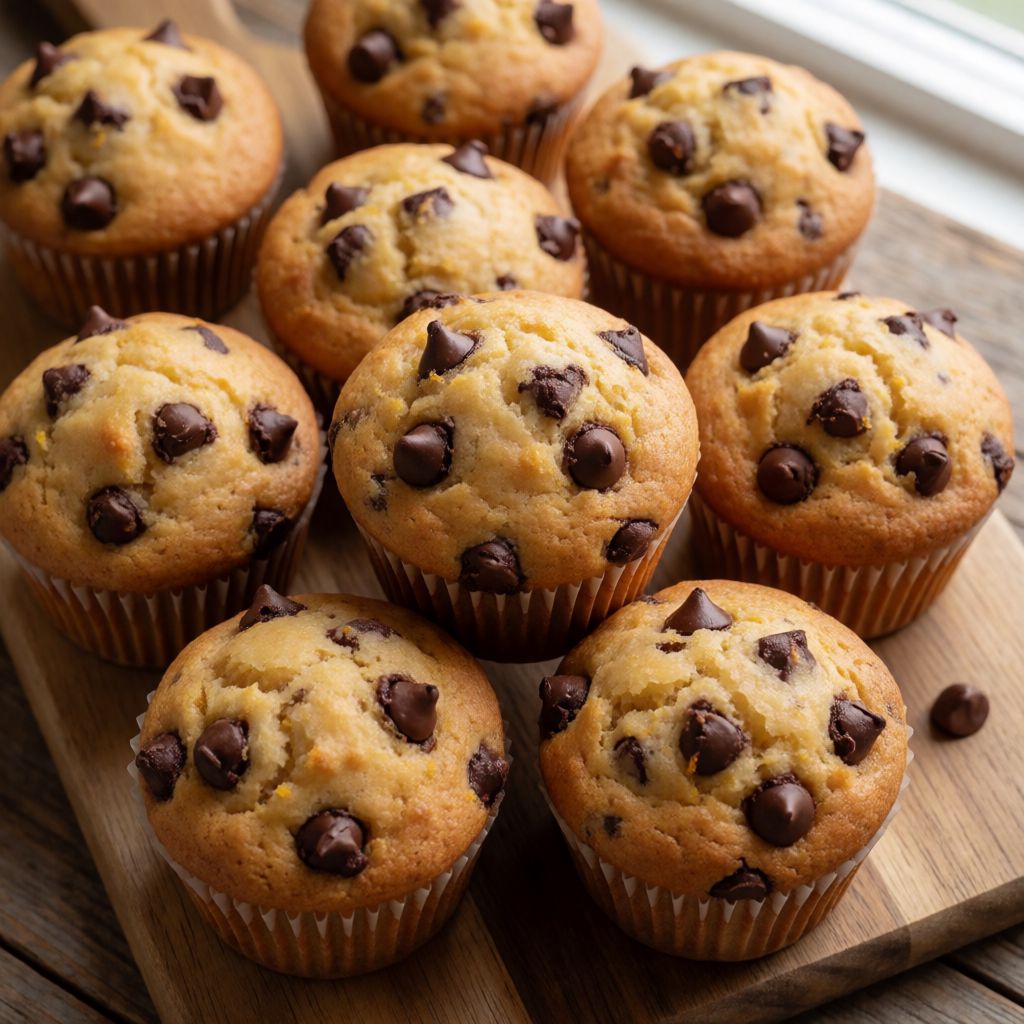
Light, fluffy muffins studded with chocolate chips and flavoured with orange zest - a quick teatime bake.
Labels are worked out automatically from the ingredients and can be wrong. Check the packaging if it matters to you.
Ingredients
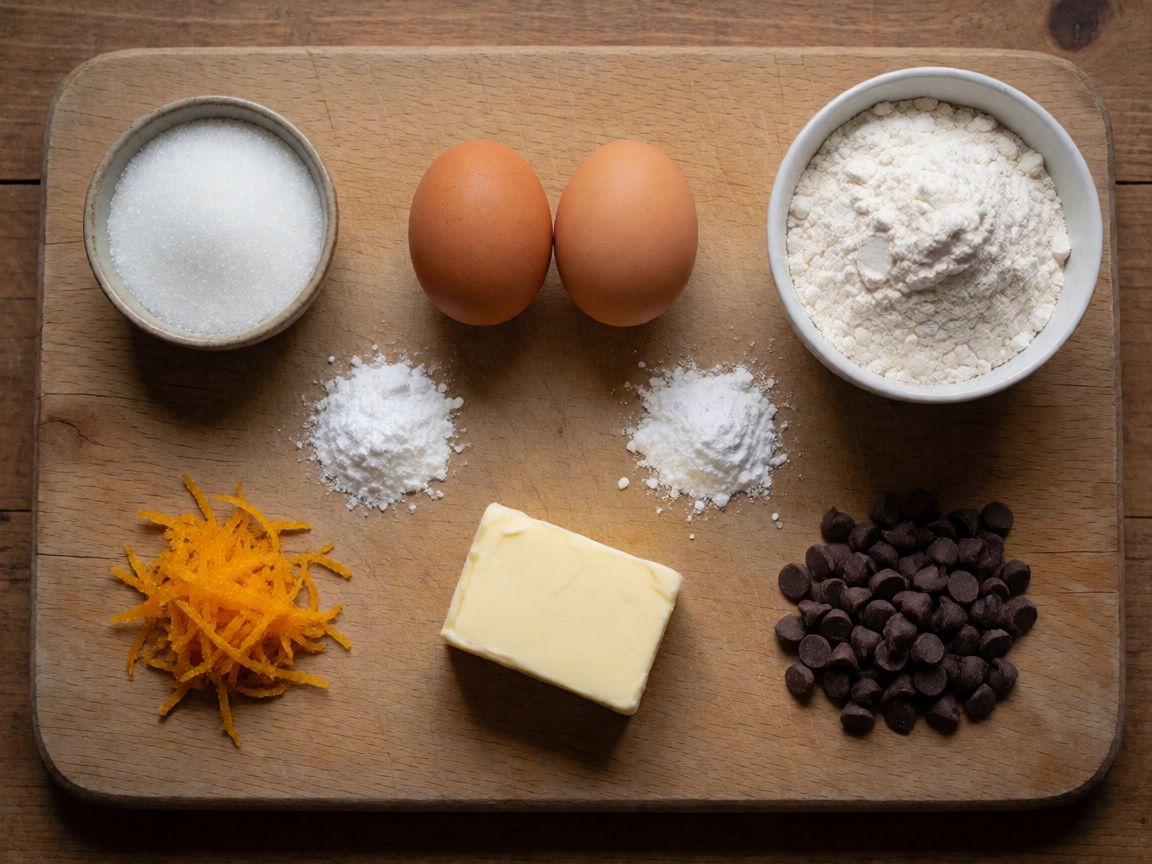
- 125 g Caster sugar
- 2 pcs Eggs
- 150 g Plain flour sifted
- 0.5 pcs Baking powder
- 100 g Butter softened
- 0.5 pcs Orange zest zest of half an orange
- 100 g Chocolate chips







Steps
Beat the eggs with the caster sugar for a few minutes until the mixture doubles in volume and becomes a light, airy cream.
Add the softened butter and orange zest, and mix well.
Stir in the baking powder and sifted plain flour, mix until smooth, then fold in the chocolate chips.
Place muffin cases on a baking tray and spoon the batter into each case.
Sprinkle a few extra chocolate chips on top and bake in a fan oven at 180°C.
18 minLet the baked muffins cool before serving.
What was changed
The oven temperature was rounded to match the usual 10°C steps used in UK ovens.
This is a small batch of chocolate chip muffins built like a sponge, not like the paper-cup American muffins you buy in a chain café. Those are mixed on purpose: wet bowl, dry bowl, stirred together in ten seconds so the gluten barely wakes up, batter left lumpy. This one does the opposite — you whip eggs and sugar into a pale, doubled foam first, and that foam is where the lift actually comes from. The baking powder is backup, not the engine.
What decides whether it works is how much air survives from the whisk to the oven. Whip the eggs and sugar properly — it takes a few minutes, you'll see the ribbon when you lift the beater, don't rush it, patience here is an ingredient same as the flour is. Add the butter soft, not melted, because melted butter is a liquid and a liquid collapses foam; soft butter folds in and keeps the bubbles standing. Then flour goes in last and you stop stirring the second it's smooth — some say lumpy batter is always safer, no, not here, that rule belongs to the oil-based method, this one is a sponge and a sponge wants to be smooth, overmixing is what develops gluten and turns a tender crumb into a chewy one.
Eggs and sugar are the real raising agent here. Caster sugar is chosen because its grains are small enough to dissolve into the egg as you whip, rather than sitting there gritty — if all you have is granulated, give it a few seconds in a blender first, nothing more exotic needed. The eggs trap air as you beat; that air is physical, mechanical lift, and it's why the mixture has to double before you move on — if you stop early, you're asking the baking powder to do a job it was never going to manage alone.
Butter softened, not melted, for the same reason: it needs to still be something you can fold air into, a loose cream, not a pool. Melt it and you deflate the foam you just built — flat muffins, dense in the middle, is the usual tell that this happened. Any fat that's solid at room temperature and can hold a bit of air will do the same job — a baking margarine of similar fat content works, but oil won't, oil has no structure to keep bubbles in.
Orange zest is there for the oil in the coloured skin, not for juice or acidity — grate down to where the white pith starts and stop, pith is bitter and will fight the sugar instead of lifting it. Any citrus zest substitutes on the same logic: lemon, even a tangerine, as long as it's the outer skin.
Flour is sifted before it goes in to break up any lumps that would otherwise force you to stir harder and longer than the batter can afford — every extra turn of the spoon once flour's wet is a small tax on tenderness, paid in gluten. Baking powder is measured separately from the flour rather than using a self-raising one, because here it's a top-up dose on purpose, calibrated against how much lift the egg foam is already giving; swap in self-raising flour and you'll over-lift, the muffin rises fast and then sinks back as the structure can't hold the extra gas.
Chocolate chips bought as proper baking chips are shaped to survive the oven mostly whole, because they're stabilised to resist melting completely — chop a bar instead and you get bigger, gooier pockets where the chocolate has slumped into the crumb; neither is wrong, it's just a different bite, and either way fold them in gently at the very end so you're not knocking air back out of the batter you worked for.
As for the tray and paper cases instead of a proper muffin tin — this batter is stiff enough, thanks to the butter and flour, to hold its own shape in a case standing alone on a flat tray. A wetter, oil-based batter would slump sideways without a tin's walls to lean on; this one won't, which is one of the few places a British kitchen without specialist tins gets off easy.
One hundred grams of butter and a hundred and fifty of flour is a deliberately modest batch — four to six muffins, built for a teapot and a Sunday afternoon rather than a bakery tray of a dozen. Scale it up by the same ratios if you're feeding more, but keep the whisking time the same: doubling the eggs doesn't mean doubling the minutes, you're still just watching for the ribbon.