
 AI photo
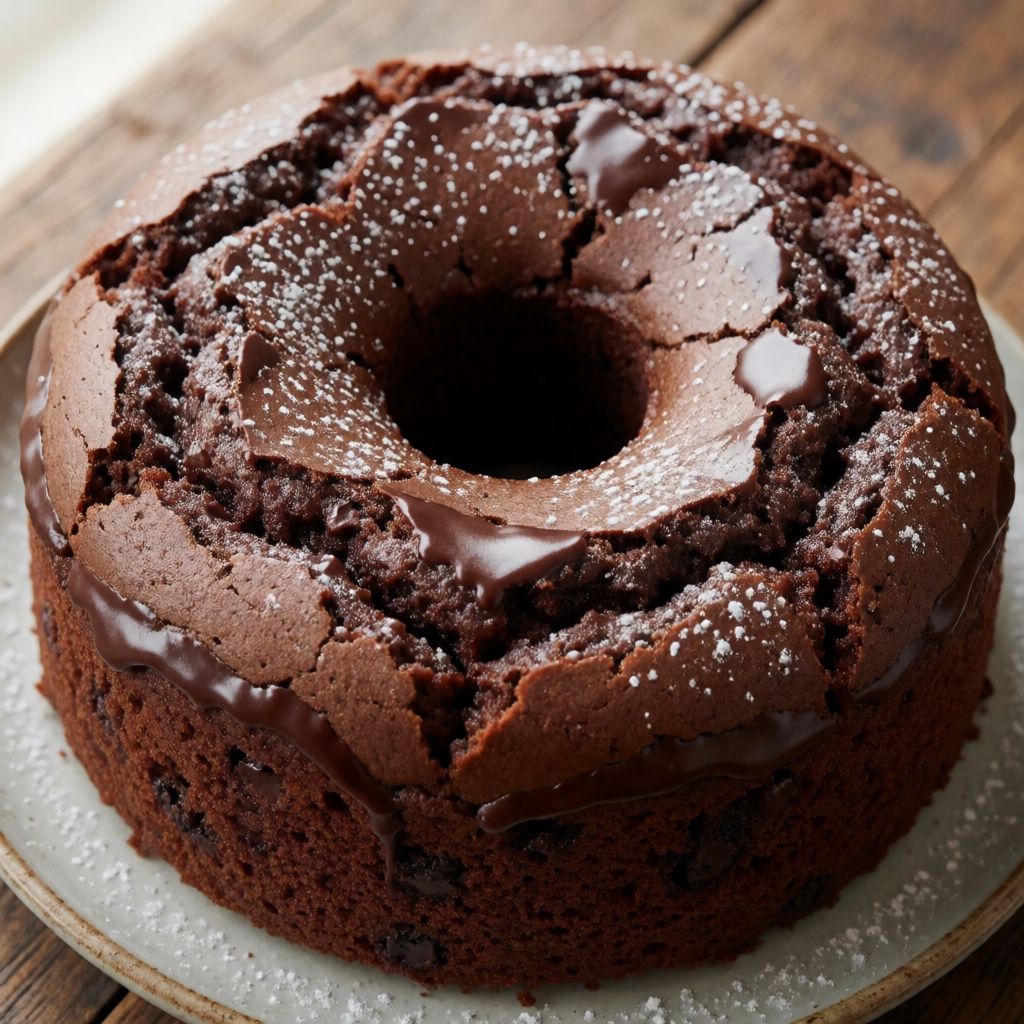
Chocolate Ciambella Cake
A soft Italian-style ring cake made with melted dark chocolate stirred into the batter, finished with a dusting of icing sugar.
Labels are worked out automatically from the ingredients and can be wrong. Check the packaging if it matters to you.
Ingredients
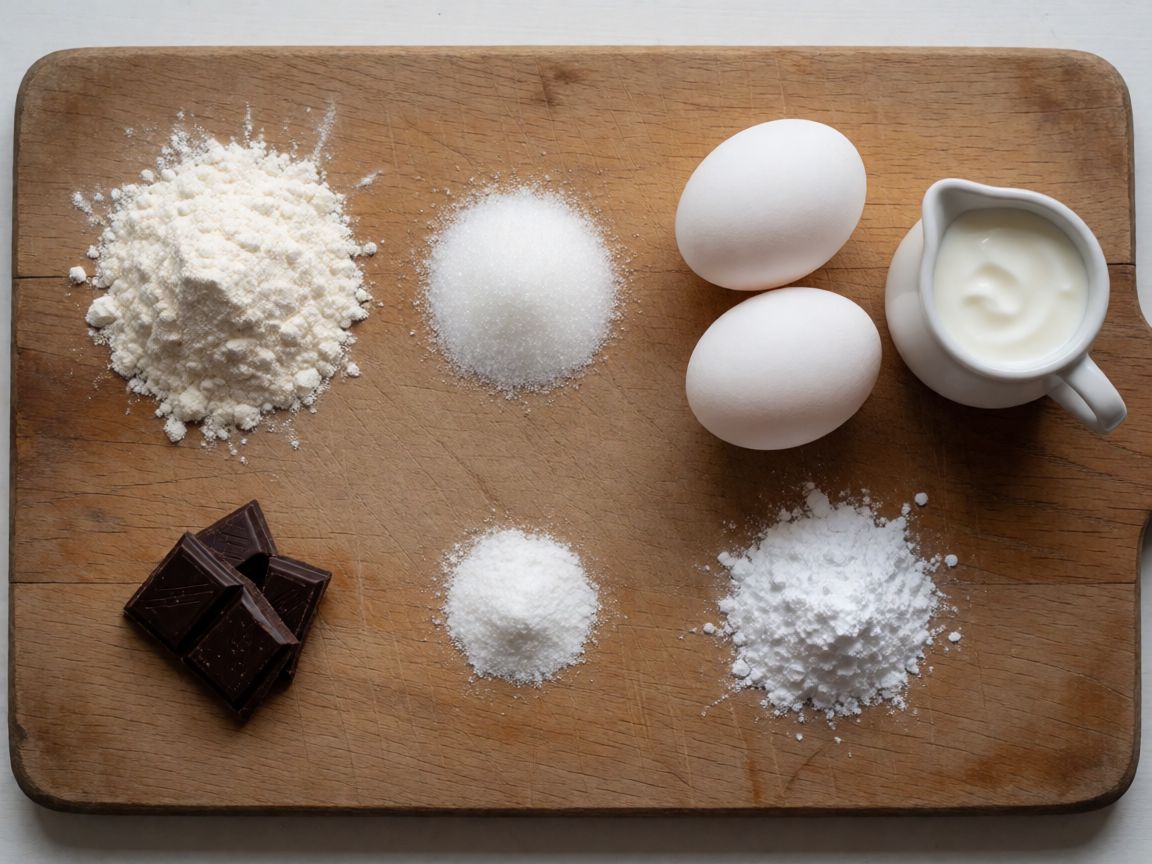
- 300 g Plain flour
- 200 g Caster sugar
- 3 pcs Eggs
- 125 ml Yogurt
- 80 g Vegetable oil
- 150 g Dark chocolate
- 16 g Baking powder
- 1 pinch Salt
- Icing sugar to taste








Steps
Melt the dark chocolate in a bain-marie and leave to cool
Beat the eggs with the sugar using an electric mixer for at least 15 minutes, until light and fluffy
15 minAdd the yogurt and vegetable oil, mixing to combine
Sift the flour with the baking powder and gradually fold into the batter, stirring
Add a pinch of salt and the cooled melted chocolate, stirring until evenly combined
Preheat the oven to 180°C
Grease a 22cm ring cake tin, dust with flour, and pour in the batter
Bake the cake for about 30-35 minutes until done
32 minCheck it is cooked through with a wooden skewer
Leave the cake to cool completely in the tin
Dust the top with icing sugar and serve
A ciambella is just an Italian ring cake — the hole in the middle isn't decoration, it's engineering. A solid 22cm cake that thick through the centre would cook at the edges long before the middle set, because heat has to travel from the outside in and dense batter is a poor conductor. Cut a hole through it and now every bit of batter is close to a hot surface, inside and out. That's the whole trick, and it's why a ring tin outperforms a loaf tin for a wet, chocolatey batter like this one.
What decides whether it works is the egg-and-sugar stage, not the oven. Fifteen minutes with a mixer isn't a suggestion you can shave down — you're beating air into the eggs and dissolving the sugar into them until the mixture turns pale and holds a ribbon when you lift the whisk. That trapped air is your only rising agent besides the baking powder, and in a cake this dense with melted chocolate and oil, it's doing real work. Rush this and you get a flat, fudgy puck instead of something that holds a dome.
Some say you can tell a cake's done by the time on the packet recipe. No — ovens lie, and so does the clock, because every oven runs a bit hot or cold and every tin holds heat differently. The 30-35 minutes is a floor, not an answer. The answer is the skewer: push it into the thickest part of the ring and pull it out. Wet batter clinging to it means back in the oven. A few moist crumbs, no raw batter, means out.
The chocolate: melt it gently, off direct heat, because dark chocolate scorches and turns grainy the moment it touches a surface hotter than it needs. A bain-marie — a bowl over a pan of barely simmering water, never touching it — keeps the chocolate at the temperature of steam, which is as hot as it needs and no hotter. Letting it cool before it goes into the batter matters too: tip it in hot and it can shock the eggs and deflate all that air you just beat in, or start cooking the eggs at the edges where they meet. Use a dark chocolate with real cocoa content, not a cheap compound bar heavy in vegetable fat — the fat content is already accounted for by the oil in this recipe, so a waxy chocolate won't set properly and leaves the crumb greasy.
The yogurt and oil are doing two different jobs. Yogurt brings acidity and moisture without the extra fat a second egg would add, and that acidity gives the baking powder a little nudge — most baking powders are already balanced to work alone, but a touch of acid never hurts a dense batter like this. Any plain, unsweetened yogurt works; Greek-style will give a slightly denser, richer crumb because it carries less water. Oil, not butter, is the fat here because oil stays liquid at room temperature and keeps the cake moist for days — butter would set solid once the cake cools and tighten the crumb. Use an oil with no flavour of its own — sunflower, a light rapeseed — anything that doesn't compete with the chocolate. Olive oil will leave a taste you'll notice.
Flour and baking powder get sifted together and folded in gradually, not dumped and beaten. The point of folding is to keep the air you worked for in the first fifteen minutes — stir hard at this stage and you knock bubbles out of a batter that has nothing else to lift it but those bubbles and the raise from the baking powder. 16g of baking powder against 300g flour is a strong dose, there because the chocolate and oil weigh the batter down and it needs the extra lift to climb at all.
The pinch of salt isn't there to make the cake taste salty — it's there so the chocolate tastes like more chocolate. Salt sharpens perception of sweetness and bitterness both, which is why even sweet bakes carry a pinch.
On tins: a proper ring or bundt tin with a fixed tube is what this recipe wants, because the tube is the whole reason it bakes evenly. If you only have a loaf tin or a plain round one, you can still make this cake, but expect to add time and check the centre harder with the skewer — it will cook from the outside in rather than from both directions, so give the middle real attention rather than trusting the clock.
Icing sugar on top at the end is cosmetic, not structural — dust it just before serving, because icing sugar sitting on a moist cake will slowly dissolve into damp patches within the hour. This isn't a cake you ice to disguise a mistake; if the crumb and dome are right, the dusting is just a finish, the kind of thing you do at the table while the tea's still brewing.