
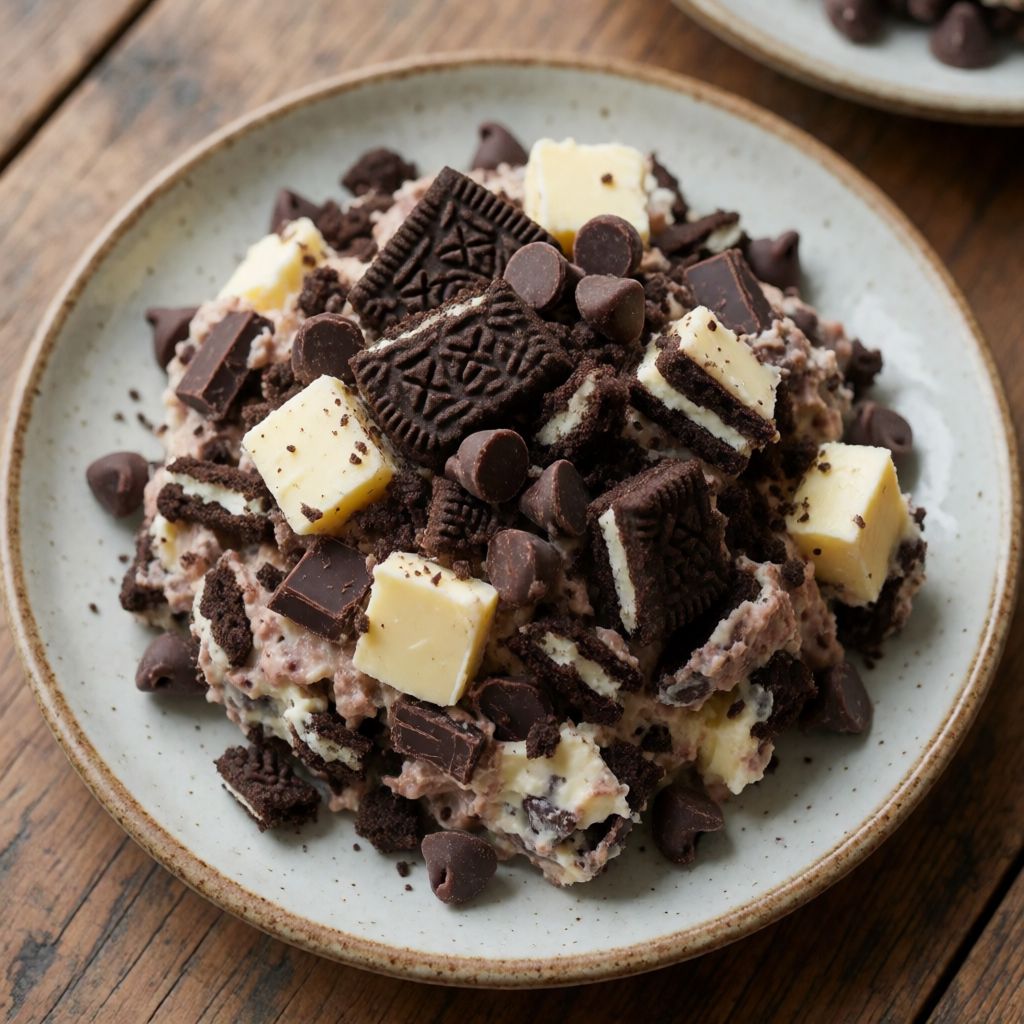
 AI photo
No-Bake Chocolate Crumble Cake (No Gelatine)
A no-bake chocolate crumble cheesecake with a buttery biscuit base, chilled until set.
Labels are worked out automatically from the ingredients and can be wrong. Check the packaging if it matters to you.
Ingredients
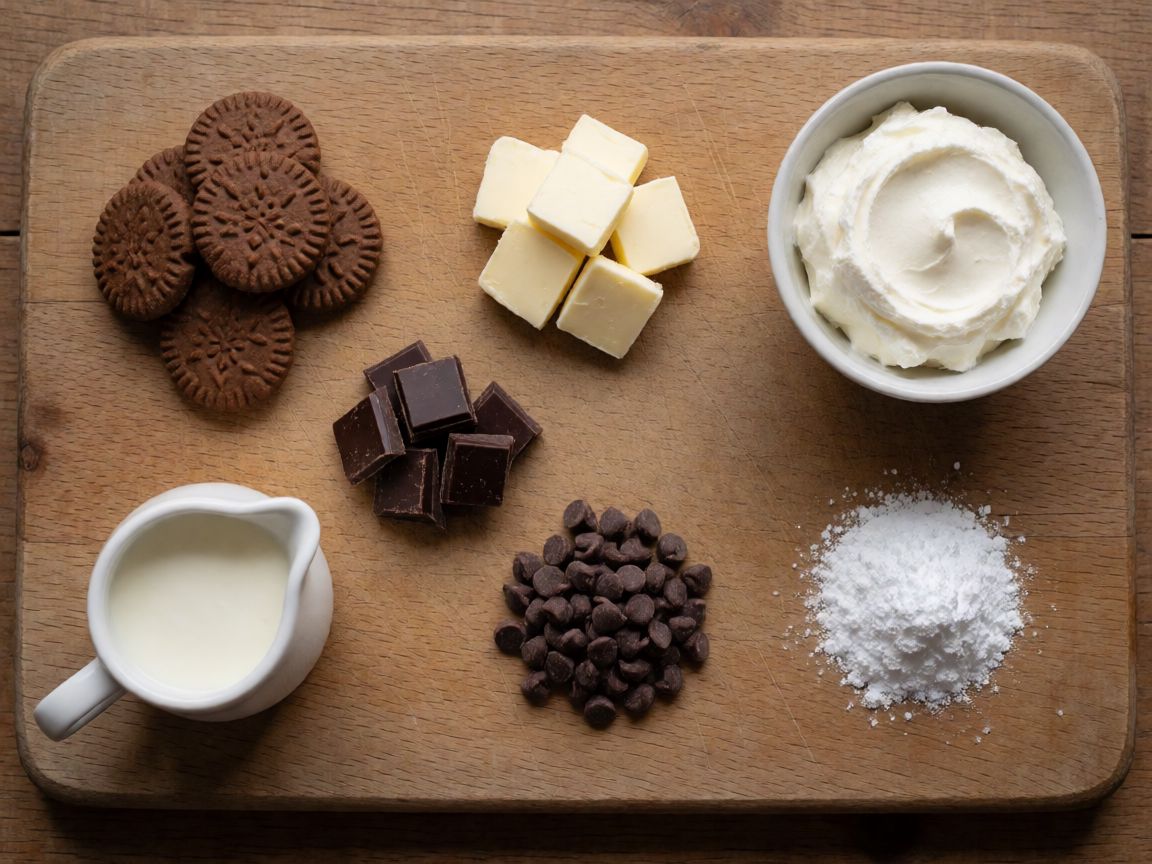
- 380 g Cocoa biscuits
- 150 g Butter
- 250 g Cream cheese
- 100 g Dark chocolate
- 100 g Chocolate chips
- 200 ml Double cream
- 85 g Icing sugar







Steps
Blend the cocoa biscuits in a food processor, tip into a bowl, add the melted butter and mix.
Press about two-thirds of the crumb into a 22 cm tin, levelling it and shaping a rim around the edge.
Put the tin in the fridge.
30 minBeat the cream cheese with an electric mixer until soft, add the melted chocolate and mix until smooth.
Add the chocolate chips and fold them in with a spatula.
Whip the double cream with the icing sugar until thick.
Gently fold the whipped cream into the chocolate mixture with an under-and-over motion.
Take the tin out of the fridge, spoon in the filling and smooth with a spatula.
Scatter the remaining crumb evenly on top.
Chill in the fridge before serving.
240 min
This is a fridge cake, not a baked one — and that word 'fridge' is doing all the work the oven would normally do. There's no flour here to set with heat, no egg to firm up in a bain-marie. What holds this cake together is fat, cooling from liquid to solid, twice: once in the crumb base, once in the mousse filling. Get that cooling right and the cake stands when sliced. Rush it, and you get a trifle in a tin.
The base is biscuit crumb glued with melted butter. Some people think a biscuit base needs baking to 'set'. No — because there's no raw flour or egg in it to cook. Butter melted and mixed through crumb is already a finished mixture; all it needs is to go cold again, so the butterfat re-forms into the solid crystal structure it had before you melted it. That's the only job the first 30 minutes in the fridge does. Skip it, press the filling straight on top, and the base will slide and crumble when you cut it — not because the recipe failed, but because you asked warm butter to hold weight it can't hold yet.
The long chill at the end — four hours, stated as a minimum, not a target — is not about flavour developing, it's about the fat crystallising right through the middle of the tin, not just at the edges where the cold reaches first. Nudge the tin gently before you unmould: if the centre still gives like a soft cushion, it isn't ready, whatever the clock says. Fat sets from the outside in, and a fridge is a weak, slow cold compared to an oven's heat, so don't expect it to hurry. This is the one place in the whole recipe where patience really is an ingredient — you can't whip or fold your way around under-chilling.
Cocoa biscuits are the base and the crunch on top both. You want a biscuit with enough fat in it already — most chocolate digestive-style biscuits qualify — because that fat helps the crumb bind to the melted butter instead of just sitting in it like gravel in mud. A drier, leaner biscuit will need a touch more butter to come together; you'll feel it in the mixing bowl, crumb that won't hold a clump in your fist needs more fat, not more pressing.
Butter is the glue in the base and part of the glue in the filling (through the melted chocolate, which carries cocoa butter as well as flavour). Use unsalted if you can — salted butter isn't wrong, it just adds a variable you didn't choose. Any other fat that's solid at room temperature and melts cleanly could stand in, but you'd be trading butter's flavour for nothing gained, so there's little reason to.
Cream cheese has to be the full-fat kind, not the light tub — the light version carries more water and less fat, and it's exactly that fat you're relying on to set firm later. Thin, watery filling isn't a flaw in your folding, it's a flaw in the tub you bought.
Dark chocolate and chocolate chips do two different jobs, which is why the recipe keeps them separate rather than melting both together. The dark chocolate, melted, blends into the cream cheese for flavour and for its share of the set. The chips stay whole and go in by fold, not by beating, so they survive as little pockets of bite inside the smooth mousse. Melt them both together and you lose that contrast — a fair swap if that's what you want, but know what you're trading.
Double cream means the real, heavy British kind — high enough in fat that it whips to stiff peaks and stays there, rather than collapsing back to liquid under the chocolate's weight once folded in. A lighter whipping cream will whip, but it holds less sturdily; fine for eating with a spoon from the fridge, less fine for a cake meant to slice clean. Icing sugar dissolves into cold cream without the grit that caster or granulated sugar would leave behind — a small thing, but it's the difference between a smooth mousse and one with sugar crystals still crunching through it.