
 AI photo
Chocolate Desert Roses
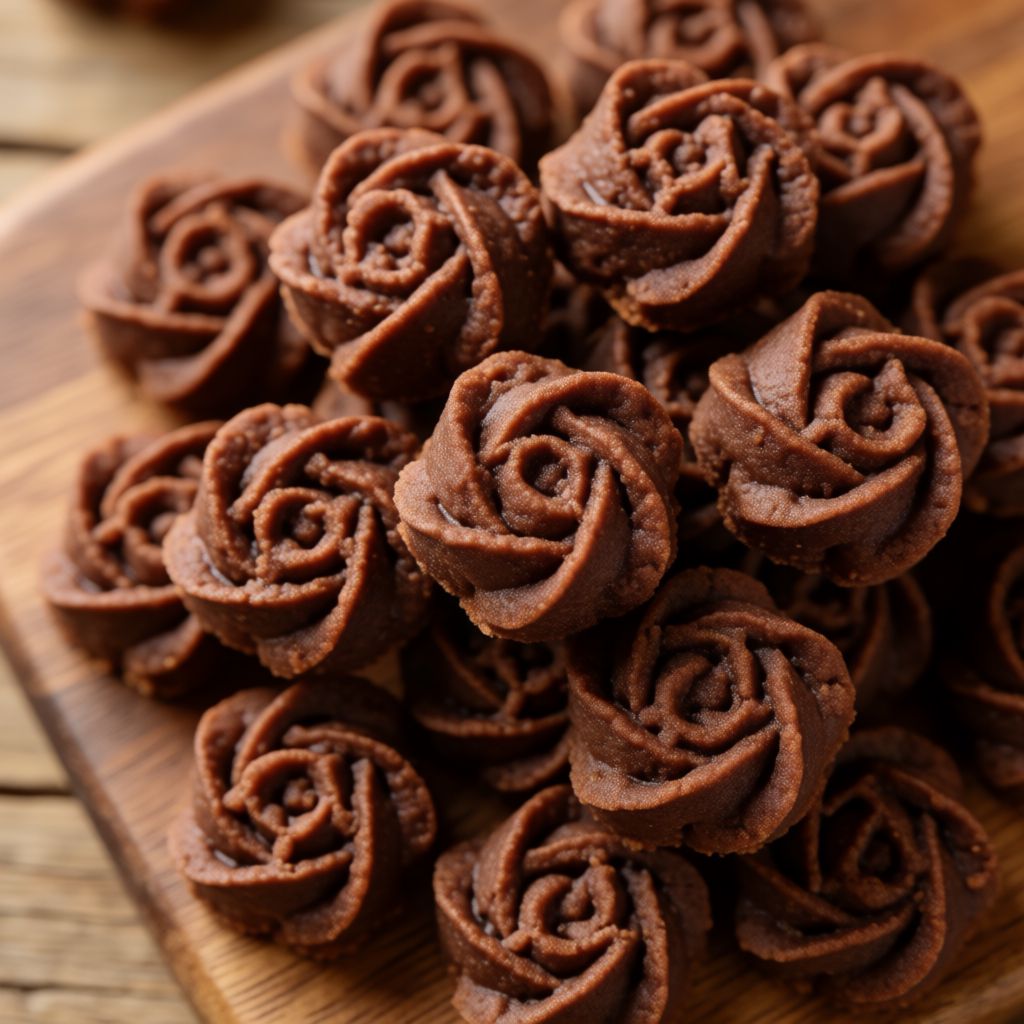
Crunchy chocolate cookie bites rolled in cornflakes, baked until they look like little desert roses.
Labels are worked out automatically from the ingredients and can be wrong. Check the packaging if it matters to you.
Ingredients
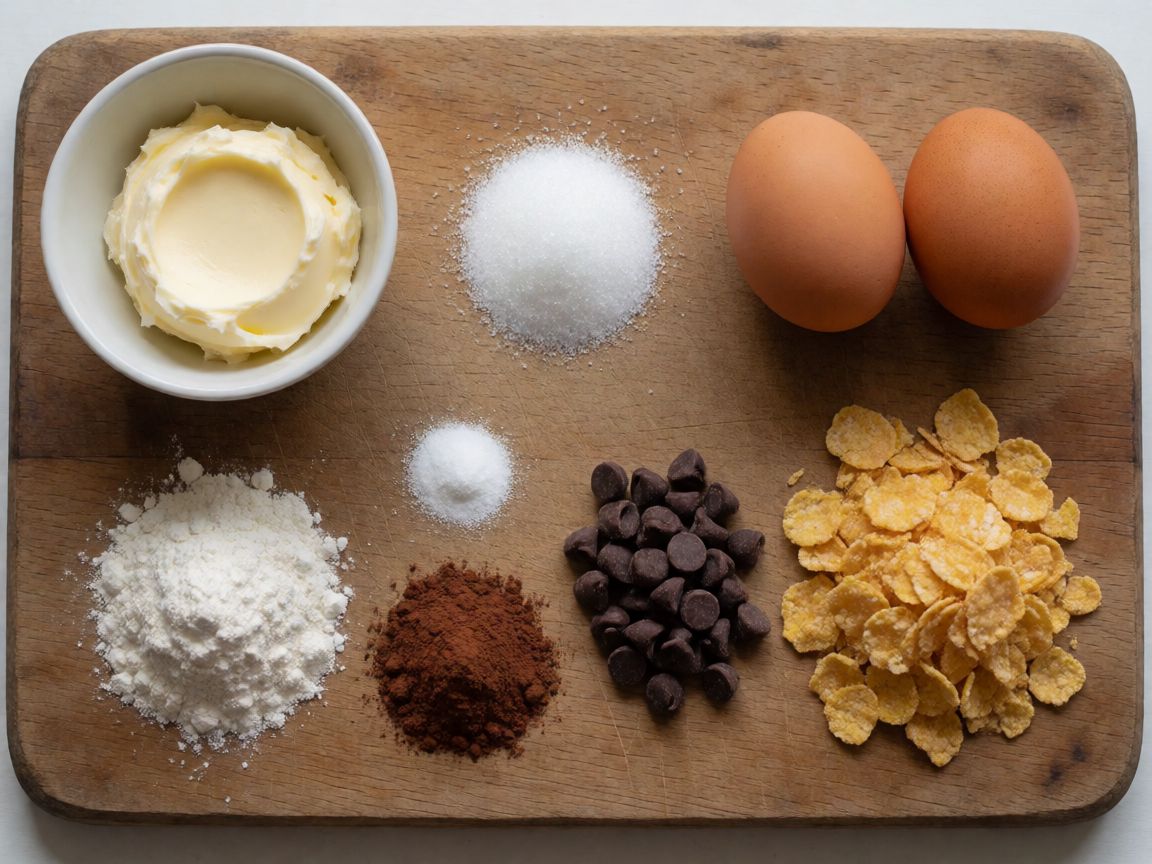
- 150 g Butter softened
- 160 g Sugar
- 2 pcs Eggs
- 300 g Plain flour
- 4-5 g Baking powder
- 30 g Cocoa powder
- 100 g Chocolate chips
- Cornflakes to taste, for coating
- Icing sugar for dusting









Steps
Take the butter out of the fridge in advance so it softens slightly. In a bowl, beat the butter with the sugar using a mixer until light and fluffy.
Add the eggs one at a time, mixing well each time until fully incorporated into the dough.
Gradually add the flour, then the baking powder. The dough will become thicker: mix with the mixer at first, then switch to a spatula when it gets too stiff.
Add the cocoa powder, then the chocolate chips, and mix thoroughly.
Cover the dough and chill in the refrigerator for about 10 minutes.
10 minTake a small portion of dough, shape it into balls with your hands, and roll them in cornflakes so they stick to the surface. Place the balls on a baking tray.
Bake in a preheated oven at 180°C for about 10-12 minutes.
11 minLet cool slightly, dust with icing sugar if you like, and serve.
These are small, cracked chocolate domes - the 'desert rose' is the cornflakes, not the dough, because when cornflakes bake they curl and sharpen into something that genuinely looks like the spiky mineral rosette, not a chocolate chip cookie wearing a hat. That's the whole point of the coating, and it's worth knowing before you start, because if you expect a smooth cookie you'll think you've done something wrong when the surface comes out jagged.
What decides whether this works is mostly decided before the oven ever gets involved. Creaming the butter and sugar is not a cosmetic step you can rush through - it's you physically beating tiny pockets of air into the fat, and those pockets are what gives the ball lift later, because there isn't enough egg in this dough to do the lifting alone. That's why baking powder is in the ingredient list at all: between the air you beat in and the gas the baking powder releases in the heat, you get a centre that stays soft instead of turning into a dense dark brick.
Some say you can skip chilling the dough for ten minutes because 'it's already firm enough.' No - the chill isn't there to develop flavour, like it would be for a shortbread left overnight. It's there purely so the butter stiffens enough that you can roll a ball without it slumping sideways on the tray, and so the balls hold their shape instead of spreading into flat pools before the structure has set.
Butter has to be soft, not melted, and this matters more than it sounds. Melted butter is liquid - it can't hold air, so the creaming step does nothing and you lose your main lift. Fridge-cold butter is the opposite problem: the mixer just bashes it into gritty lumps instead of folding air through it. You want it at the stage where a finger leaves a dent but the butter still holds its shape - that's the window where creaming actually works. If you've only got margarine, it'll cream too, but you'll trade the dairy flavour for a flatter one.
Sugar in this step isn't just sweetness, it's a mechanical tool - fine crystals act like tiny blades, cutting through the fat and opening up those air pockets as you beat. Caster sugar does this better than coarse granulated simply because it has more edges per spoonful. If all you have is chunky sugar, give it a minute in a blender first; don't skip straight to mixing coarse crystals into soft butter and expect the same lift.
Eggs go in one at a time for a reason that has nothing to do with tradition and everything to do with emulsion. Butter is fat, egg is mostly water - add all the egg at once to a lot of fat and it can split instead of blending, leaving you with a curdled-looking mixture that never quite smooths out. Adding gradually, and making sure each egg disappears into the batter before the next goes in, keeps the two talking to each other instead of fighting.
Flour here is plain flour on purpose - low in the gluten-forming proteins that would make this chewy and bready rather than short and tender. That's also why the method tells you to switch from mixer to spatula once the dough thickens: a mixer run too long at this stage develops gluten strands you don't want, and the cookie turns tough instead of crumbly. Baking powder needs to be reasonably fresh - drop a pinch in warm water and if it doesn't fizz, it's dead weight, not a lifting agent, and your dough will bake dense no matter how well you creamed the butter.
Cocoa powder should be the plain, unsweetened kind - not drinking chocolate, which carries its own sugar and milk powder and will throw off both the sweetness and the structure if you swap it in blindly. Natural cocoa is slightly acidic and gives the baking powder a bit of extra kick; Dutch-processed is mellower and less reactive. Either works here, use what's on the shelf. Chocolate chips should be a chocolate that holds some shape in the dough but still melts into a soft pocket once baked - a chopped dark chocolate bar does the same job and usually tastes better than chips built to survive baking too well.
Cornflakes are the coating, and the only real criterion is: a dry, flaky cereal with no strong flavour of its own, so it crunches and toasts without competing with the chocolate. Bran flakes or lightly crushed rice cereal do the same job if that's what's in the cupboard. Dust the icing sugar only once the balls have cooled - do it while they're hot and the sugar just melts into the surface and vanishes, which defeats the reason you bothered dusting at all. This recipe makes roughly a couple of dozen small balls depending on how generous your hands are, which is why it's pitched to feed six with a pot of tea rather than as a single showpiece cake.