
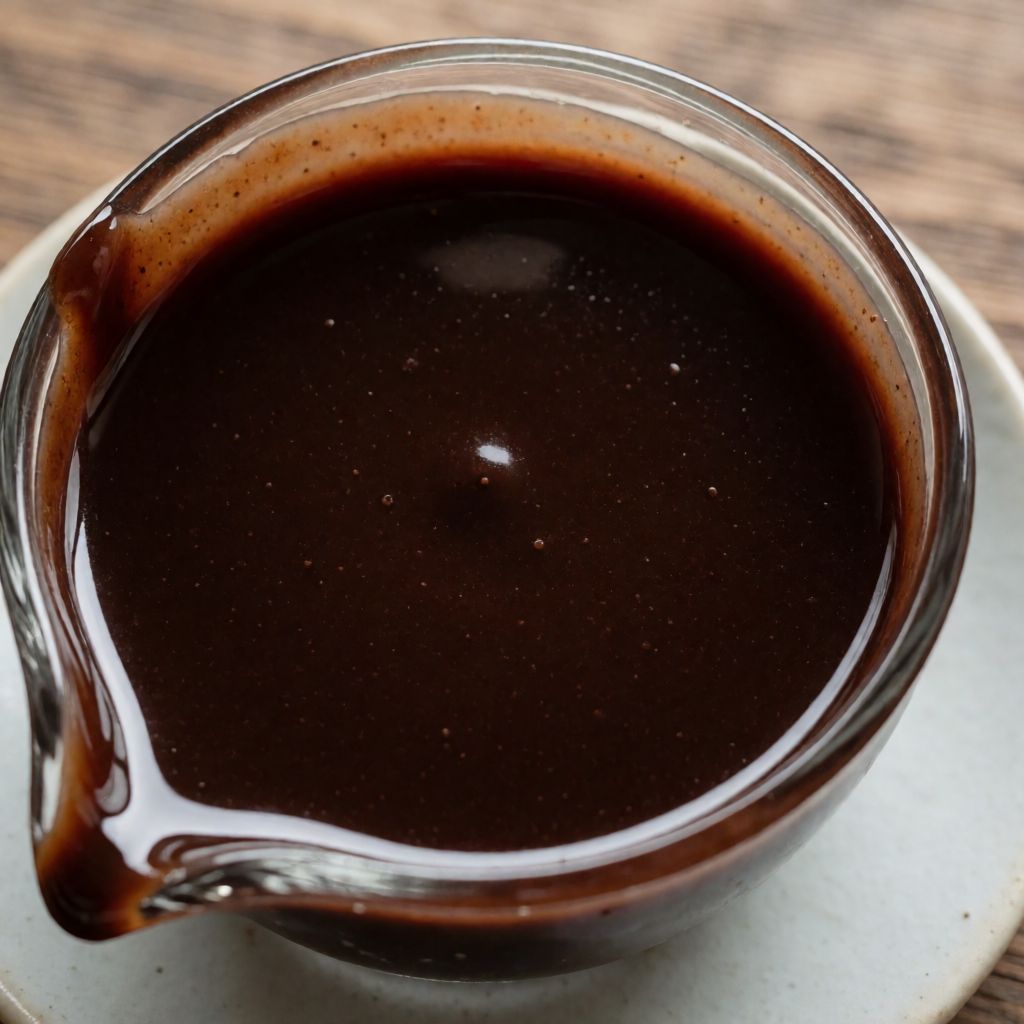
 AI photo
Chocolate Topping
A simple, glossy chocolate topping made on the stovetop and kept in a jar for later use.
Labels are worked out automatically from the ingredients and can be wrong. Check the packaging if it matters to you.
Ingredients
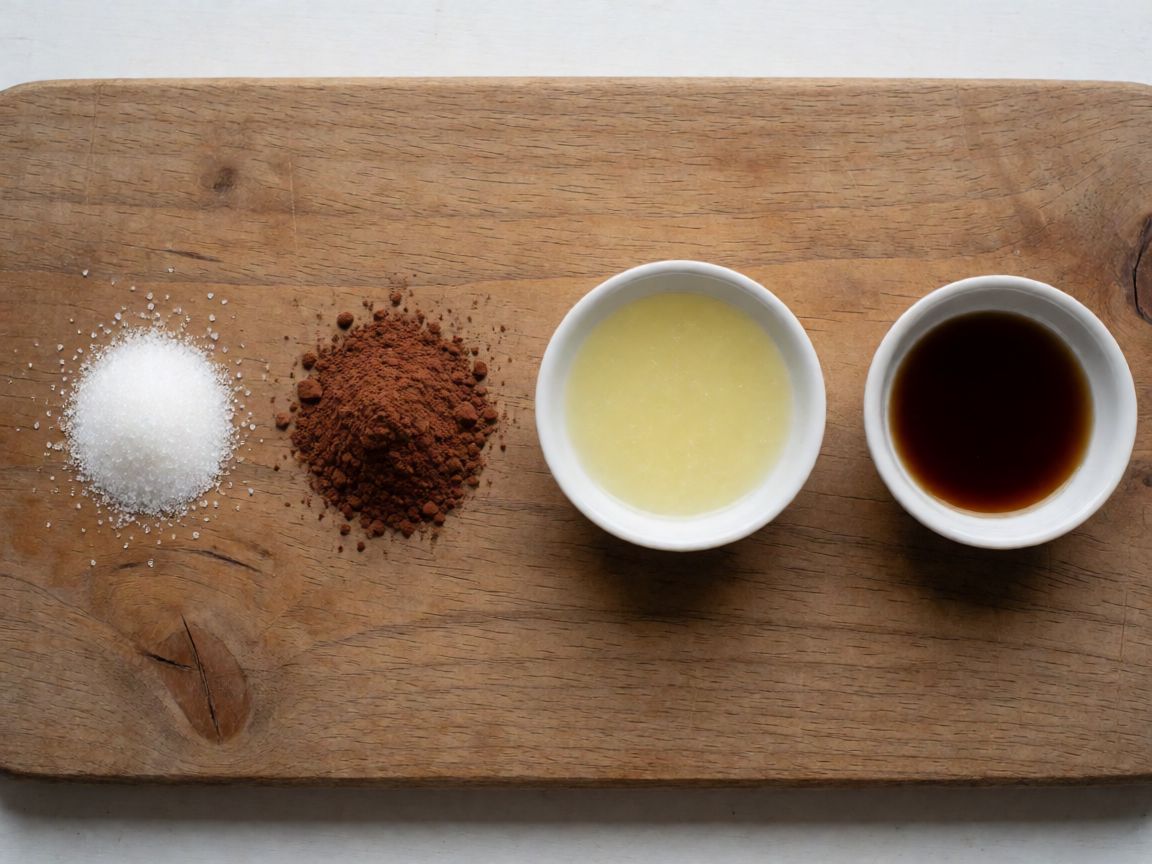
- 180 g Water
- 250 g Sugar
- 110 g Cocoa powder sifted
- 1 pinch Salt
- 1 tbsp Lemon juice
- 1 tbsp Vanilla extract






Steps
Pour the water into a small saucepan, add the sugar and a pinch of salt. Place over heat and bring to the boil, stirring.
Once the sugar has dissolved and the mixture is boiling, pour in the lemon juice.
Remove the pan from the heat, add the cocoa powder and whisk in vigorously.
Add the vanilla extract.
Return the pan to the heat, bring to the boil and cook the topping for a further 5 minutes.
5 minSterilise a glass jar and pour in the still-hot topping. Seal with the lid.
Let cool at room temperature.
Put the jar in the fridge so the topping thickens. Leave to stand for a full day before using.
This isn't a melted-chocolate sauce — it's a cooked sugar syrup carrying cocoa, treated exactly the way you'd treat jam: boiled, jarred hot, sterilised, and left to set in the cold. That's the whole logic of it. Water and sugar here aren't trying to taste of chocolate on their own — they're building a syrup that cocoa can ride inside, one that thickens by itself once it's cold, with no cream, no butter, none of the fuss of a bain-marie.
What actually decides whether this jar works isn't the cocoa — it's the lemon juice, and it's easy to walk straight past why it's there. Boiled sugar left alone wants to crystallise: given time, the sucrose finds itself again and locks into grit. A spoonful of acid at the boil breaks some of that sucrose apart into glucose and fructose, which don't recrystallise the same way. That's inversion, the same trick behind a glossy jam and a smooth fudge. Leave it out, and your jar of topping turns gritty within a week in the fridge instead of staying pourable.
Some say it hasn't worked if it's still thin and watery in the pan — no, because a hot sugar syrup and a cold one are two different textures entirely. Judging the one by the other is like judging stock for a jelly while it's still on the boil. The whole point of the fridge day is that the thickening happens afterwards, in the cold, not at the stove.
Water and sugar here are simply syrup-in-the-making. 250g sugar dissolved in 180g water gives a concentration strong enough both to set on cooling and to keep the jar from growing anything nasty afterwards — the same osmotic principle that lets jam sit on a shelf without a chemical preservative in sight. The pinch of salt isn't seasoning in the savoury sense; it's there so the sweetness doesn't taste flat and one-note, the same reason a pinch goes into caramel — it sharpens, it doesn't salt it.
Sift the cocoa before it goes in, and whisk hard once it does, because cocoa powder dropped into liquid without care clumps into dry little pellets that refuse to wet through — each one is coated in cocoa butter, which resists water until it's broken up by real movement. Taking the pan off the heat for this step matters too: whisking cocoa into something still rolling at a boil means splashing near-boiling sugar syrup onto your hand, and that stings far worse than a tea burn. Off the heat, you get a calm half-minute to work it smooth before it goes back on. Any unsweetened cocoa does the job here, natural or Dutch-processed — alkalised cocoa gives you a smoother, less sharp result, natural cocoa something a little more sour and fruity at the edge. Don't reach for drinking-chocolate powder instead of cocoa — it already carries its own sugar and milk solids, and it'll throw this whole balance off.
The lemon juice goes in at the boil, not before, because inversion needs heat to do anything useful at speed — cold acid and cold sugar barely react with each other. Any food acid will stand in: a teaspoon of cream of tartar, citric acid if you bake and happen to have some, even vinegar at a pinch, though vinegar brings a smell lemon juice doesn't carry. Vanilla extract goes in and then gets a further five-minute boil alongside everything else, which cooks some of its aroma away — that's simply what happens to a volatile flavouring returned to the heat, nothing gone wrong. If you want it to come through brighter, nothing stops you adding a few more drops once the jar's cooled, before the lid goes on for the fridge.
Sterilising the jar isn't ceremony, it's the only thing standing between this syrup and mould — there's no fat here to seal the surface the way butter does on a potted dish, and a generous sugar content slows spoilage, it doesn't stop it outright. On an ordinary hob at home, especially an electric ring, keep the spoon moving once the syrup's rolling: the heat concentrates right under the centre of the pan, and a syrup left still there for even half a minute will scorch exactly on that spot while the rest of the pan still looks innocent. A wide, light-bottomed pan spreads that heat kinder than a small deep one.
The day in the fridge isn't optional and it isn't negotiable — that's where the actual thickening happens, slowly, as the sugar concentration does its quiet work on texture. Taste it the evening you make it and you'll think you've failed; taste it tomorrow and it's a different jar entirely. This recipe makes you wait, the same way a proper jam asks you to leave it alone for a week before you decide whether it's set. Patience isn't on the ingredient list, but it's doing as much work as the cocoa is.
This quantity makes a modest jar — enough to dress eight bowls, a drizzle each over ice cream, sponge, or whatever's left after a Sunday roast's pudding course, not a cupful apiece. Treat it less as a dessert in its own right and more as what golden syrup is to a steamed pudding here — a finishing pour, not the main event.