
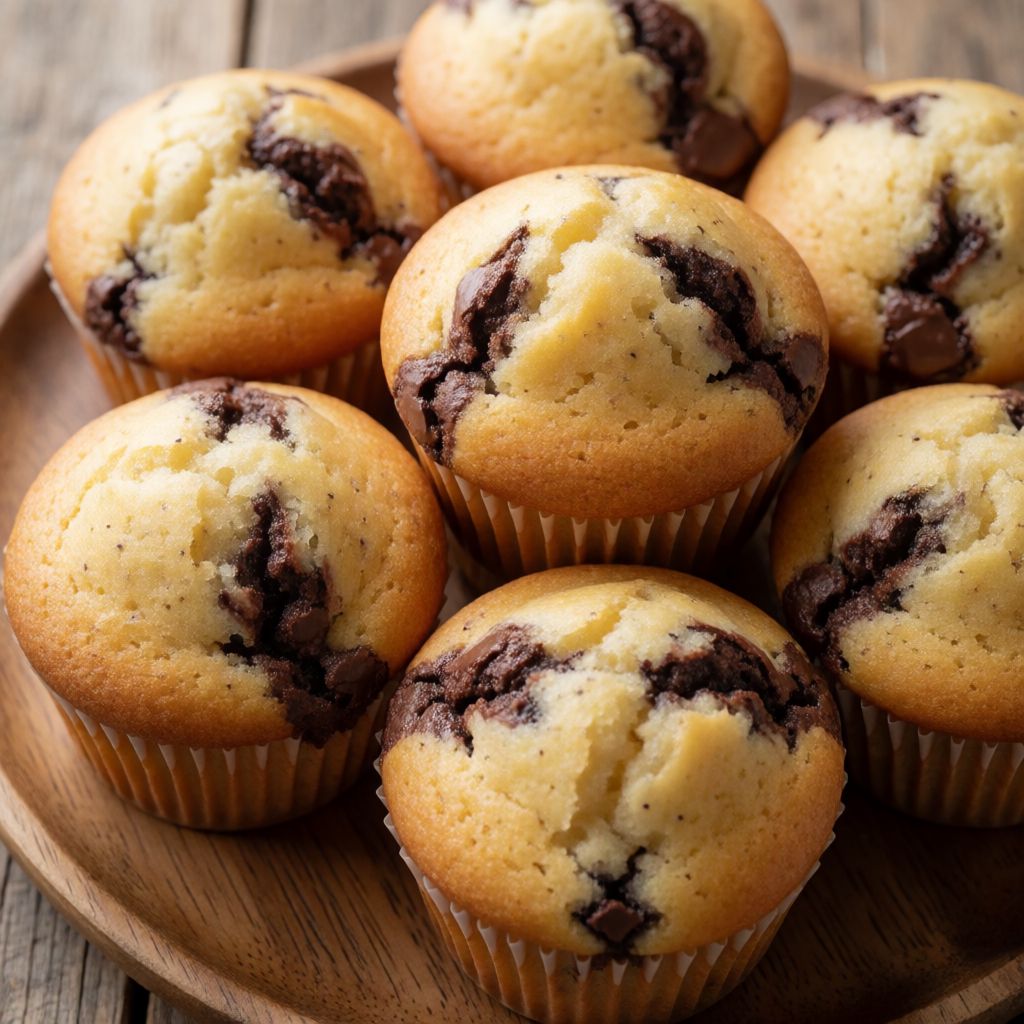
 AI photo
Vanilla and Chocolate Muffins
Soft vanilla muffins studded with dark chocolate chips, flavoured with real vanilla seeds.
Labels are worked out automatically from the ingredients and can be wrong. Check the packaging if it matters to you.
Ingredients
- 1 pcs Vanilla pod
- 150 g Caster sugar
- 150 g Butter at room temperature
- 3 pcs Eggs
- 150 g Plain flour
- 2 tsp Baking powder
- 1 pinch Salt
- 75 g Dark chocolate chips







Steps
Split the vanilla pod lengthways, scrape out the seeds and put them in a bowl with the sugar and butter.
Beat everything together until light, fluffy and pale, then beat in the eggs one at a time.
Mix the flour, baking powder and salt, sift into the batter and stir through.
Add the dark chocolate chips and fold gently into the batter.
Divide the batter between the muffin cases.
Bake in a preheated fan oven at 180°C for about 20 minutes.
20 min
What was changed
The oven temperature was rounded to 180°C , matching the display step used here.
What you've got here is a pound cake wearing a muffin's clothes — same creamed butter and sugar, same egg-and-flour logic as a Victoria sponge, just baked tall in paper cups with chocolate chips thrown in. Calling it a muffin is mostly about the tin, not the technique: a proper American muffin is a quick bread, wet poured into dry, lumpy on purpose, no creaming at all. This one is cake method through and through, which is exactly why it comes out tender and fine-crumbed rather than coarse and bread-like.
Everything that decides whether this works happens before the oven ever gets involved. When you beat butter and sugar together, the sharp edges of the sugar crystals are physically cutting tiny tunnels into the fat, and each tunnel traps a bubble of air. That beaten-in air is your first rise, and it happens whether or not the baking powder ever gets round to its job. Butter at true room temperature is soft enough to let the sugar cut through it but still firm enough to hold the shape of each tunnel — too cold and the sugar can't cut in, too warm or melted and the tunnels collapse as fast as they're made. Either way the result is the same: a dense, flat-topped muffin, and people usually blame the oven for it.
Vanilla pod versus extract is worth settling honestly. Some say you need the pod because extract is a compromise — no, the real reason is that the pod gives you the whole range of aromatic oils plus the black specks that prove you used the real thing, and the spent pod isn't rubbish once you've scraped it: dry it out and bury it in your sugar jar, and in a few weeks you've got vanilla sugar for next time, which is the pod paying you back. If you've only got extract, that's fine — it's alcohol-carried, so it goes in with the wet ingredients same as the seeds would, nothing else changes. Vanilla paste sits in between: all the specks, none of the scraping.
Butter is doing a mechanical job here, not just a flavour one — it has to be soft enough to trap air when the sugar cuts into it, and that rules out most substitutes. A neutral margarine can stand in and will aerate roughly the same way, but it carries more water, which turns to steam in the oven and can leave small tunnels or a slightly gummy patch near the base. If you're choosing a fat, choose one that's solid at room temperature and stays pliable — butter is simply the benchmark, nothing mystical about it.
Plain flour plus baking powder is, in effect, homemade self-raising flour. If self-raising is what's in your cupboard — and in most UK kitchens it is — use it and drop the baking powder, or you'll get a double dose of lift that rises fast and then sinks once the structure can't hold the extra gas. The pinch of salt isn't there to preserve anything; it's there to stop the sugar tasting flat and to push the chocolate's bitterness forward, which otherwise gets buried under sweetness.
Chocolate chips are chosen deliberately: manufacturers add a touch of stabiliser so the chips hold their shape at baking temperature instead of melting into streaks through the batter. A dark bar chopped by hand, high in cocoa solids, behaves almost the same. Milk chocolate has more sugar and milk fat, so it slumps and smears — fine if you want that look, wrong if you want distinct pockets. Fold them in gently rather than stirring hard for the same reason you were careful with the eggs: vigorous mixing at this stage knocks the air back out of a batter you've spent ten minutes building up.
On the oven: 180°C fan is a reasonable setting, but every domestic oven lies a little about its own thermostat, sometimes by ten degrees either way, and opening the door to peek costs you heat you don't get back quickly. That's the real argument for judging by the muffin rather than the timer. Once they're out, give them a few minutes in the tin before you move them — pull them straight onto a wire rack and the paper cases can tear away wet crumb with them; leave them too long sealed in a hot tin and trapped steam turns the base soggy. A few minutes' patience either side of the oven costs nothing and saves the texture you worked for. This batch makes ten, one each with a cup of tea, and they keep their crumb for a couple of days in a tin with the lid on — not a biscuit tin with holes in it, an actual lid.