
 AI photo
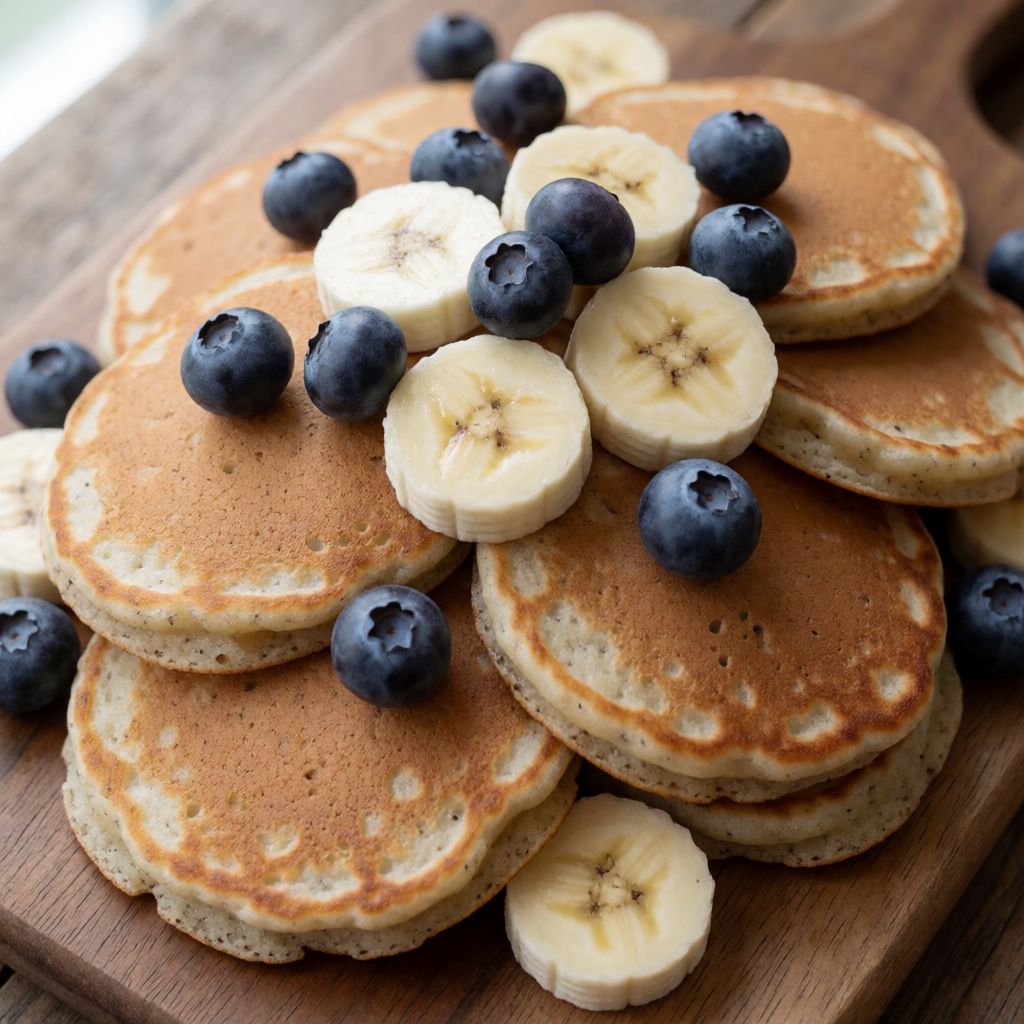
Coconut Pancakes with Banana and Blueberry
Fluffy coconut and almond flour pancakes with mashed banana, served with fresh blueberries and maple syrup.
Labels are worked out automatically from the ingredients and can be wrong. Check the packaging if it matters to you.
Ingredients
- 2 pcs Banana ripe
- 3 pcs Eggs
- 50 g Coconut flour
- 30 g Almond flour
- 1 tsp Vanilla sugar
- 1 tsp Baking powder
- 50 g Blueberries
- 1 tbsp Olive oil
- 1 tbsp Butter for frying





To Serve
- 30 g Coconut flour for serving
- 50 g Blueberries fresh
- 2 tsp Maple syrup

Steps
Mash the bananas with a fork until smooth and whisk with the eggs. Mix the coconut flour, almond flour, vanilla sugar and baking powder, then stir into the banana mixture until smooth.
Heat a frying pan over medium heat, add the butter and let it melt and sizzle before adding the batter.
2 minFry the pancakes for 2-3 minutes on one side until golden, then flip and fry on the other side.
3 minServe the pancakes on plates, dusted with coconut flour (about 1 tablespoon per portion), drizzled with maple syrup and topped with fresh blueberries.
This is a pancake that doesn't want wheat and doesn't miss it. No ordinary flour here — the lift and the chew that wheat usually gives you come from egg protein and banana starch doing the work instead. Coconut flour and almond flour are in the mix for body and flavour, not for structure. That quiet mechanical fact decides everything else about how this dish behaves.
What decides if it works: how much the batter has thickened before it meets the butter, and how patient you are with the fry. Coconut flour is thirsty — properly thirsty, the kind that keeps drinking liquid for a minute or two after you've stopped stirring. Rush the pan while the batter's still loose and you get a pancake that spreads thin, tears at the edges, and falls apart the second the spatula goes under it. Give it that minute. That's not wasted time, that's coconut fibre finishing its job.
Some say pancake batter needs to rest, the way crepe batter does, so the gluten can relax. No — there's no gluten here to relax. What looks like resting is the coconut flour swelling in the egg and banana liquid, and that happens on its own short schedule, usually a couple of minutes, not the twenty or thirty you'd give a wheat batter.
Feeds two, generously — three eggs and two bananas are carrying the whole structure, which tells you this sits closer to a flourless cake cooked in discs than to a thin breakfast crepe. Fry small and a little thick rather than wide and thin: without gluten, a thin pancake has nothing holding its edges together when you try to flip it.
Banana here isn't flavouring, it's structural. Ripe, spotty banana mashes down into something closer to a paste than a fruit, full of natural sugar converted from starch over days of sitting on the counter, and that paste is what the coconut flour clings to and swells against. Under-ripe banana won't mash smooth — it leaves lumps that turn into dense, gummy patches once cooked. There's no fixing that with more mashing; the fruit has to have gone soft and fragrant on its own time, not yours.
Three eggs for two bananas and 50 g of flour is a heavy ratio, and that's deliberate: eggs do the job gluten would do in a wheat pancake, holding the crumb together as they set in the heat. Coconut flour itself is a byproduct — what's left once the oil and the milk are pressed out of coconut meat, dried and ground fine. It's cheap because it used to be waste, and it's famously greedy for liquid, able to pull in several times its own weight. That's why anything built around it leans fat- and egg-heavy: you're not baking flour here, you're rehydrating fibre.
Almond flour softens what coconut flour does on its own — left alone, coconut flour dries a crumb out and leaves it slightly sandy; almond flour brings back fat and a looser, more cake-like bite. No almond flour — any nut meal ground fine enough not to feel gritty does the same job, hazelnut or cashew included. Vanilla sugar is there for scent, not sweetness; the actual sugar comes from the banana and, at the table, the maple syrup. No vanilla sugar in the cupboard — a few drops of real vanilla extract and a pinch of ordinary sugar land you in the same place. Baking powder is the one borrowed trick from wheat baking: with no gluten to trap gas by stretching, the lift has to come from a chemical push instead, which is why it's in a batter that is, structurally, closer to a dense egg cake than to bread.
Olive oil goes into the batter for fat and moisture and has no job to do with heat, so any oil with no smell of its own works the same — sunflower, a mild rapeseed, whatever's already open on the shelf. Butter is for the pan, and that's a different job: butter browns, olive oil mostly doesn't at a pancake's frying heat. Let it melt and foam before the batter goes in — the foam is water cooking out of the butter, and once it quiets down the fat is hot enough to brown without scorching the milk solids black. Forget 'medium heat' as an instruction on an ordinary UK hob and watch the butter instead; it tells you when it's ready. A nonstick pan earns its keep here — this batter has no gluten mesh to hold it together if it catches on a rough surface, and a torn pancake at the flip is the single most common way this dish goes wrong in a home kitchen.
Doneness on the first side looks like small bubbles breaking the surface and staying open, and the edges turning from wet-shiny to matte — that's the cue to flip once, not sooner. Fresh blueberries for the finish should be firm and unbroken with no juice weeping in the punnet; frozen ones work but bleed colour the moment they warm through, fine for eating straight off the freezer, less fine for sitting pretty on a plate. The second batch of blueberries in the ingredients, the ones meant for topping, stay raw and whole — they're there for the burst of cold, tart juice against a warm, sweetish pancake, which is the actual point of blueberries in this dish.
Maple syrup wants to be the real thing — look for '100% maple syrup' on the label, not 'maple-flavoured syrup', which is mostly corn syrup with a single flat vanilla-ish note and none of the real thing's smoke and bitterness underneath the sweetness. The dusting of coconut flour at the end isn't decoration for its own sake — it stands in for icing sugar, a dry, faintly sweet, faintly nutty contrast to the wet syrup and the fruit, and a sensible use for the flour you've already got open rather than buying icing sugar for one dusting.