Baking
Coconut Flour
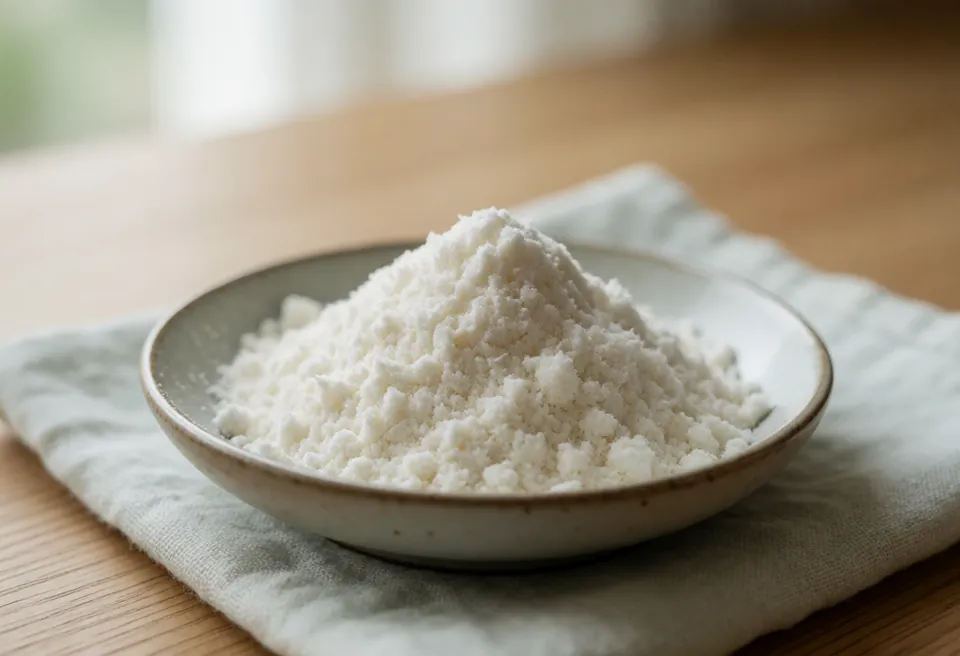
Finely ground flour made from dried coconut meat. Used in baking, such as for muffins, pancakes, and cookies.
438 kcal per 100 g
Nutrition per 100 g
438 kcal
| Protein | 16.1 g |
|---|---|
| Fat | 15.3 g |
| Carbs | 58.9 g |
| Fiber | 34.2 g |
Source: USDA FoodData Central, 2026-10-03. Per 100 g of product.
Good to know: Coconut Flour
Let me tell you about Coconut Flour, and about the one mistake nearly everyone makes with it.
This is not a grain flour. It is ground, dried coconut flesh — what remains after the oil and milk have been pressed out. That matters, because the fibre in that flesh soaks up liquid like nothing you have worked with before. Drop it into a batter the way you would wheat flour, cup for cup, and you will end up with something closer to dry sand than dough.
Some people say coconut flour can simply replace wheat flour in any recipe. No! It carries no gluten, so it builds no structure of its own — the batter needs eggs or another binder to hold together at all. And its thirst for liquid is so strong that recipes written for wheat flour will leave you with a crumbly, dry mess if you follow them literally.
Choose it by smell above all. Good Coconut Flour smells sweet and faintly nutty, like fresh coconut, never musty or rancid — rancid oil in the flesh will ruin anything you bake with it. Run it between your fingers: it should feel soft, dry and powdery, with an even colour throughout, no damp clumps.
The common mistake, then, is measuring by volume instead of watching the batter. Add liquid slowly, and let your eyes and hands tell you when it is ready — not the recipe card.