
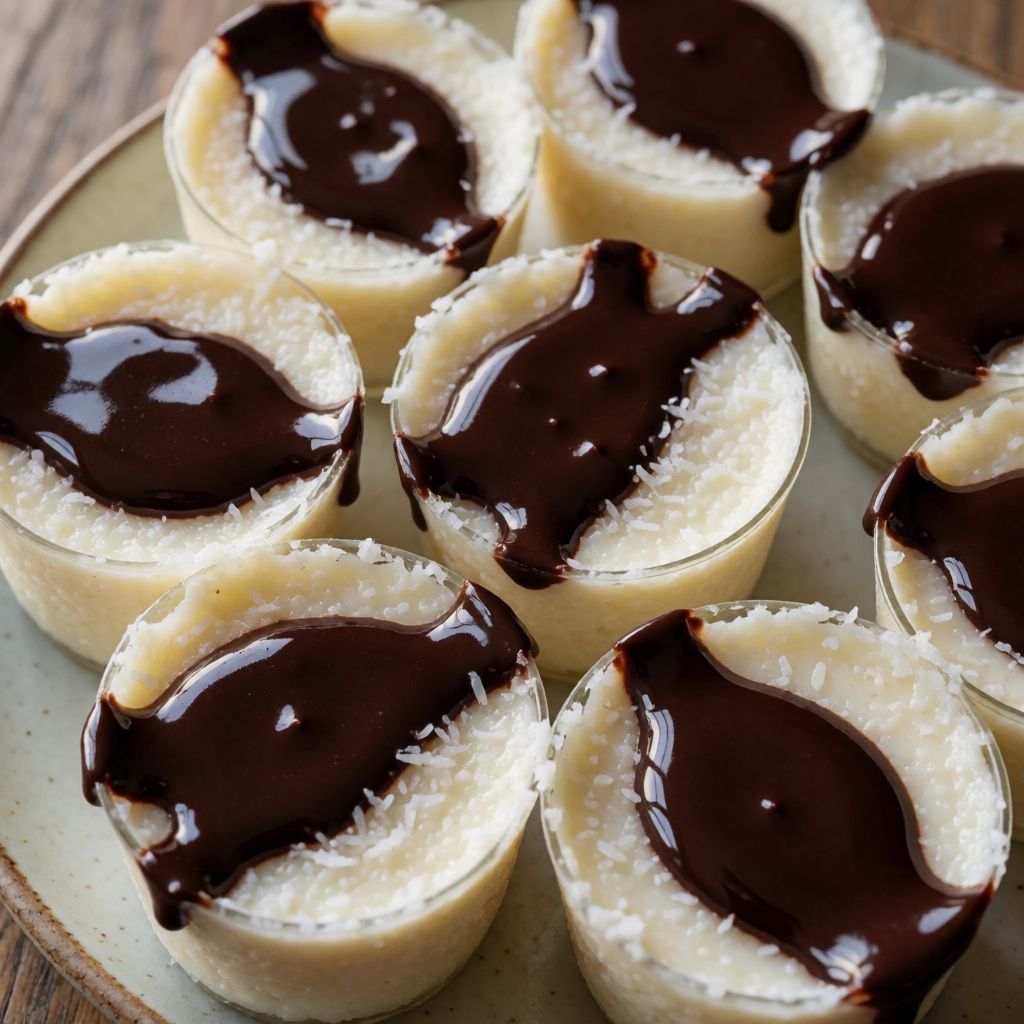
 AI photo
Coconut and Ricotta Cups
A no-bake coconut and ricotta dessert, set in small moulds and finished with dark chocolate.
Labels are worked out automatically from the ingredients and can be wrong. Check the packaging if it matters to you.
Ingredients
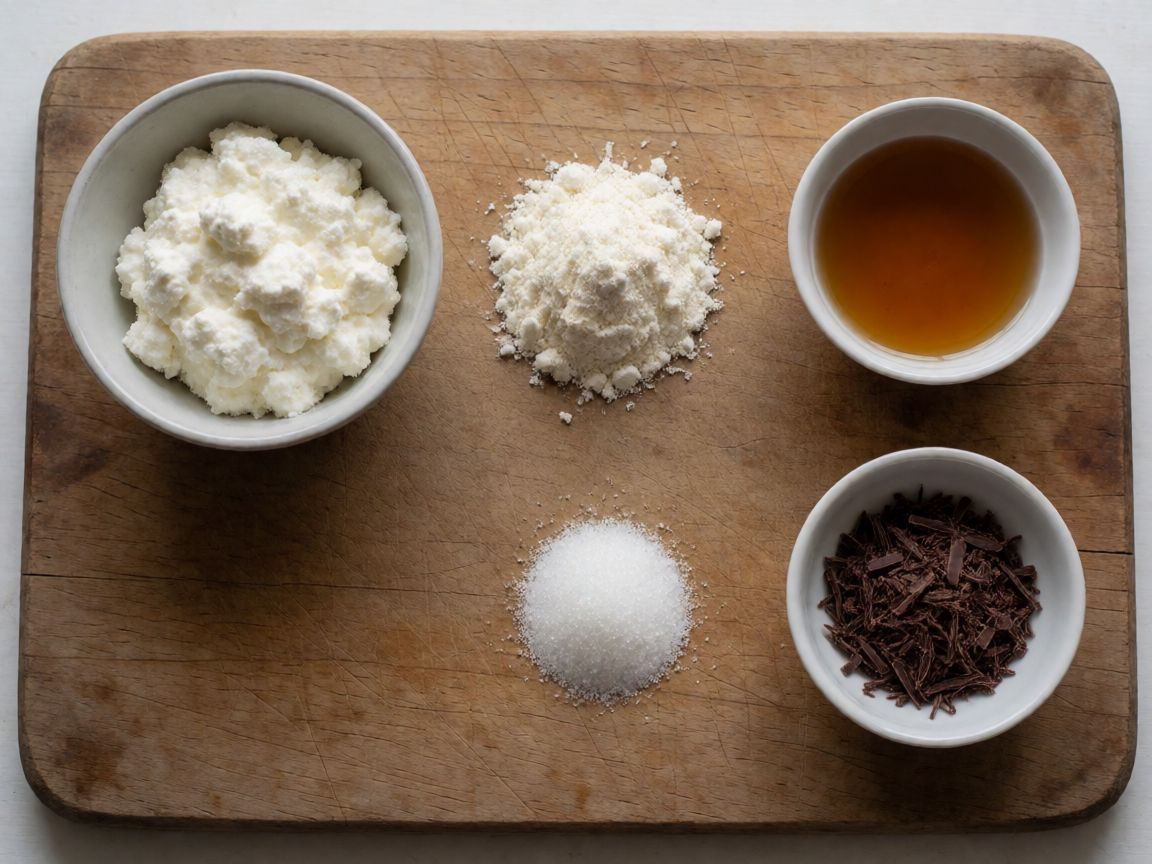
- 250 g Ricotta
- 125 g Coconut flour
- 60 g Sugar
- 3 tbsp Orange brandy
- Dark chocolate to taste, for decoration




Steps
Whisk the ricotta together with the sugar until smooth.
Gradually pour in the orange brandy, then add 65–70 g of the coconut flour. The mixture should be fairly thick.
Spoon the mixture into small square moulds (7x7 cm) and sprinkle the remaining coconut flour on top.
Chill the moulds in the refrigerator.
35 minBefore serving, decorate with dark chocolate if desired.
This is not a baked thing and not even a chilled custard — nothing here is cooked, nothing sets by egg or gelatin. It sets because a dry, absorbent ingredient (the coconut) soaks up the wet ones (ricotta, sugar, brandy) and swells, while the fridge firms the fat in the ricotta just enough to hold a shape. Take it out of the oven's business entirely — that's the whole point of a 'cook: 0 min' dessert on a day when the oven is busy with the roast.
What decides whether it holds together in the mould or slumps into soup on the plate is one thing: how wet your ricotta was to begin with. Supermarket ricotta in the UK comes swimming in whey more often than the Italian stuff does. If you tip it straight from the tub without draining, you've already added extra liquid the coconut has to mop up, and 35 minutes in the fridge won't be enough — the mixture will still be loose at the edges when you unmould it, and it'll spread rather than stand.
Some say ricotta must be bought fresh from a deli counter to work in a dessert like this. No — the deli ricotta isn't magic, it's just usually drier. Buy the tub, but tip it into a sieve over a bowl for ten minutes first and let the whey run off. That's the whole trick, and it costs you nothing but patience, which is the real ingredient in a recipe with no cooking in it at all.
The second thing that decides it: which coconut you reach for. 'Coconut flour' in the ingredient list is doing a lot of work and causing a lot of confusion in a British kitchen, because two completely different products share that name on the shelf here.
Ricotta is the body of the thing — soft curd cheese, mild, slightly sweet on its own, with enough fat to firm up in the cold without turning to rubber. Whisking it with the sugar first isn't decoration; it's dissolving the sugar into the whey still clinging to the curd, so you don't bite into a gritty pocket later. Granulated sugar works fine for this if you whisk properly — some cooks insist on icing sugar for a 'smoother' result, but that's saving your arm fifteen seconds of work, not fixing a real fault. If ricotta isn't to hand, a well-drained cottage cheese blitzed smooth, or mascarpone cut with a spoon of yoghurt for acidity, will do the same job: something soft, mild, with fat enough to set cold.
The brandy goes in gradually for a reason — it's liquid with no absorbency of its own, and if you dump it in at once before the coconut arrives to catch it, the mixture turns thin before you've had a chance to control it. Orange brandy specifically because the citrus oil cuts the richness of the ricotta; any orange liqueur does the same — Cointreau, Grand Marnier, triple sec. No alcohol in the house, or none wanted: use the zest of an orange worked into the sugar with your fingers before you ever touch the ricotta, so the oil releases into something that'll carry it, plus a spoon less liquid overall to keep the thickness honest.
Now the part that actually causes trouble: coconut flour. In a British shop this sits in two places — the baking aisle has desiccated coconut, sweet, oily, forgiving; the health-food aisle has true coconut flour, a fine, almost starchy powder stripped of its oil, which drinks liquid like blotting paper. This recipe wants the first one. Use the second by mistake and you'll need far less of it than the amount given, or you'll get a dry, crumbly block that tastes of nothing but absorbed brandy. If the packet just says 'desiccated coconut,' that's your ingredient — don't go hunting for anything fancier.
The square moulds are a nicety, not a requirement. A domestic kitchen rarely has 7x7 cm forms lying around; small ramekins, silicone muffin cups, or even teacups lined with a strip of cling film to help the turn-out will set the same mixture just as well — the shape only matters for how it looks on the plate, not for whether the coconut does its job of thickening.
The fridge time is a floor, not a clock to watch. Thirty-five minutes is where it starts being reasonable to check, not where it's guaranteed done — press the surface gently; it should resist a little, not wobble like a half-set jelly, and when you ease a knife round the edge of the mould the whole cup should come away as one piece, not leave a wet smear behind. If it doesn't, give it longer; the fridge isn't failing you, the coconut just hasn't finished drinking.
The chocolate is where you get to be loose: any dark chocolate that sets firm at room temperature, melted and drizzled or simply grated over the top before serving, so you get a small bitter edge against all that sweet coconut and brandy. No rule says it has to be dark — but milk chocolate against this much sugar starts to feel like dessert eating dessert, and you lose the contrast that's doing the actual work.