
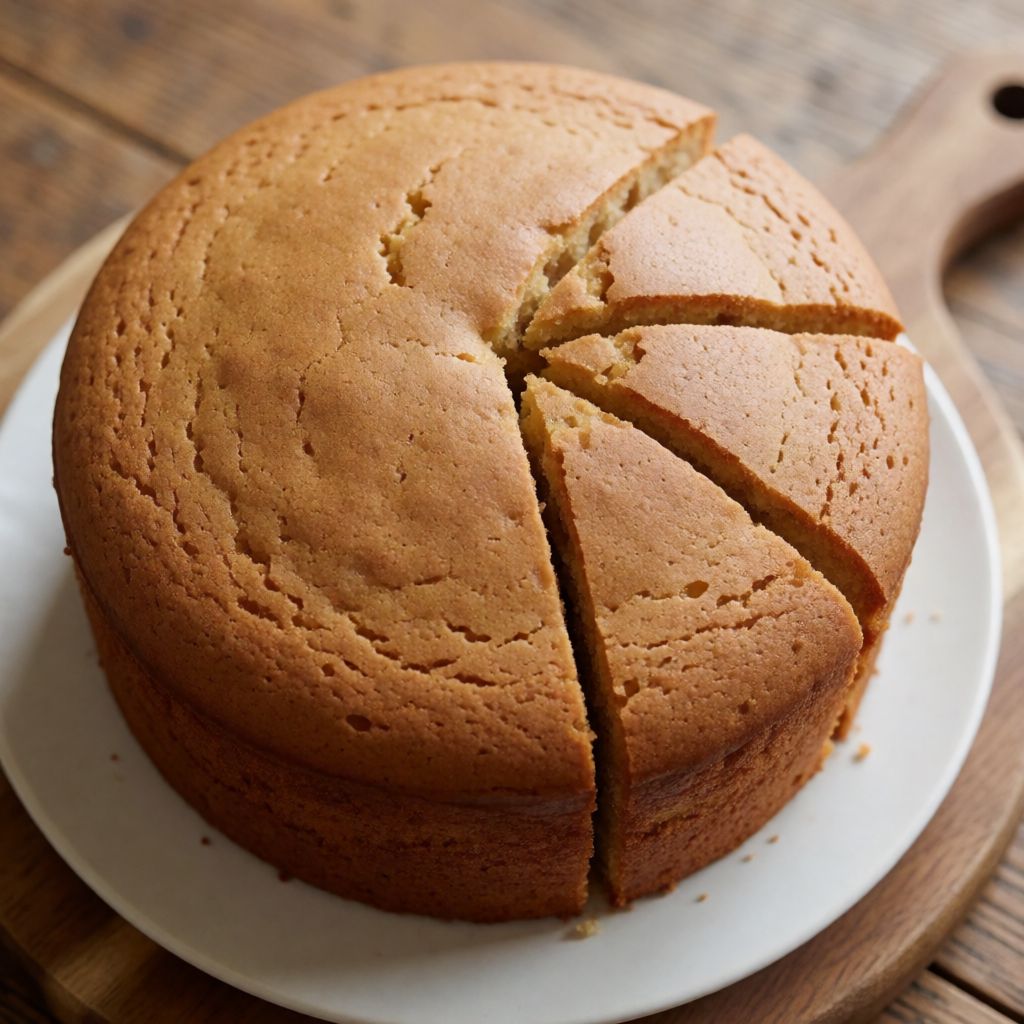
 AI photo
Coffee Cake
A moist coffee-flavoured sponge cake, finished with a dusting of icing sugar.
Labels are worked out automatically from the ingredients and can be wrong. Check the packaging if it matters to you.
Ingredients
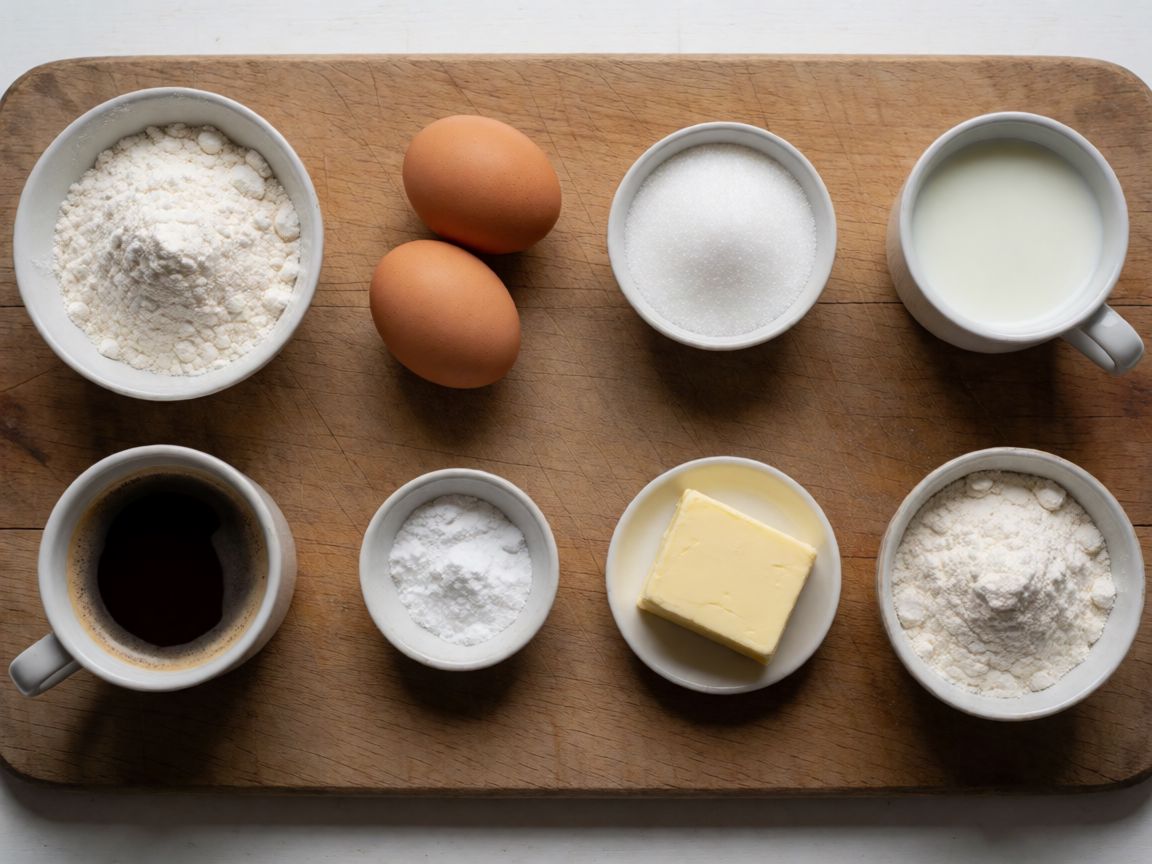
- 300 g Plain Flour
- 3 pcs Eggs
- 220 g Caster Sugar
- 120 ml Vegetable Oil
- 100 ml Milk
- 100 ml Strong Coffee strong
- 15 g Baking Powder
- Butter for greasing the tin
- Plain Flour for dusting the tin
- Icing Sugar for dusting









Steps
Crack the eggs into a bowl and add the sugar. Beat with a mixer, gradually pouring in the vegetable oil and milk.
Sift the flour and add it in small batches, mixing well so no lumps form, then stir in the baking powder.
Finally pour in the strong coffee to give the cake its aroma, and mix the batter until smooth.
Pour the batter into a 24 cm tin, greased with butter and dusted with flour, and bake in a preheated fan oven for about 55–60 minutes at 165°C (conventional oven: 170°C, for 5–10 minutes longer).
58 minBefore serving, dust the finished coffee cake with icing sugar.
This is a plain, honest cake — the kind that lives on a kitchen counter under a glass dome, not the kind you photograph. No ganache, no layers, no drama. Coffee goes into the batter for scent, icing sugar goes on top for looks, and the whole thing is built on oil rather than butter — which is the first thing worth understanding, because it decides the texture you get three days later, not just today.
Butter-based cakes rely on creaming: you beat air into solid fat, and that trapped air is half the structure. Cut that step out, use oil instead, and you lose the aeration but gain something people forget to value — oil stays liquid at room temperature, butter doesn't. A butter cake firms up as it cools because the fat sets; an oil cake stays soft because the fat never does. That's why this cake is still moist on Tuesday when a Victoria sponge from the same weekend has gone dry at the edges. Some say oil cakes are a shortcut, a worse version of a 'real' cake. No — they're a different mechanism aimed at a different result: keeping moisture over time, not maximising height.
Flour: plain, not self-raising, because you're controlling the rise yourself with a separate baking powder measure. Self-raising would mean guessing how much lift is already baked into the bag — fine for someone else's recipe, not for one that's already telling you exactly how much powder it wants. If plain flour is what's in your cupboard and it says 'plain' on the bag, you're fine; there's nothing special about this one beyond protein content being on the lower side, which is what you want for a tender crumb rather than a chewy one.
Eggs and caster sugar, beaten together first — use caster, not granulated, if you can, because the finer crystal dissolves into the egg foam faster and more completely. Granulated will still dissolve, it just asks more patience from your mixer and more scraping down the sides, and undissolved sugar sitting at the bottom of the bowl is often the real reason a cake comes out with a gritty bite people blame on the oven.
Oil is the backbone here, and the only rule that matters is: anything with no smell of its own. Sunflower oil, rapeseed, groundnut — all fine, all invisible once baked. Olive oil is not a substitute unless you actually want olive oil in your coffee cake, because its flavour doesn't disappear, it just argues with the coffee. Milk is there for moisture and a little tenderness from its fat and protein, not structure — whole milk gives the richest crumb, semi-skimmed works with a touch less of it, a plant milk works too since nothing here depends on milk proteins setting.
Coffee: make it strong and make it fresh. Brewed coffee left standing loses its aroma fast — the oils in it oxidise and what's left tastes flat, almost cardboard-like, which is a real chemical shift, not superstition. Instant coffee made strong and hot works perfectly well here; you're not making espresso, you're flavouring a batter, and the cake doesn't know the difference between a French press and a spoon of granules in hot water, as long as it's concentrated and recently made.
Baking powder: 15g, roughly a tablespoon, and its one job is carbon dioxide released on contact with heat and moisture. It does go stale — if yours has sat in the cupboard since last Christmas, drop a spoonful into warm water; if it doesn't fizz with conviction, your cake won't rise with conviction either, and that's a baking-powder problem, not a recipe problem.
On the oven: the fan figure and the conventional figure aren't two versions of the same guess, they reflect a real difference. A fan strips away the thin layer of still, slightly cooler air that normally clings to the cake's surface, so heat gets delivered faster and more evenly — which is why the fan setting runs cooler and the still-air oven needs it hotter and a bit longer to arrive at the same result. Don't trust either number blindly as the finish line, though — a skewer in the centre coming out clean, and the cake just starting to pull away from the tin's edge, is the actual sign. Let it cool properly in the tin before you touch it; cut it hot and the crumb, still setting its starch structure, will look gummy and you'll wrongly blame the recipe for a result caused by your impatience. Dust the icing sugar only once it's cool — do it on a warm cake and the sugar melts into a wet patch instead of sitting as the fine, dry dusting it's meant to be.