
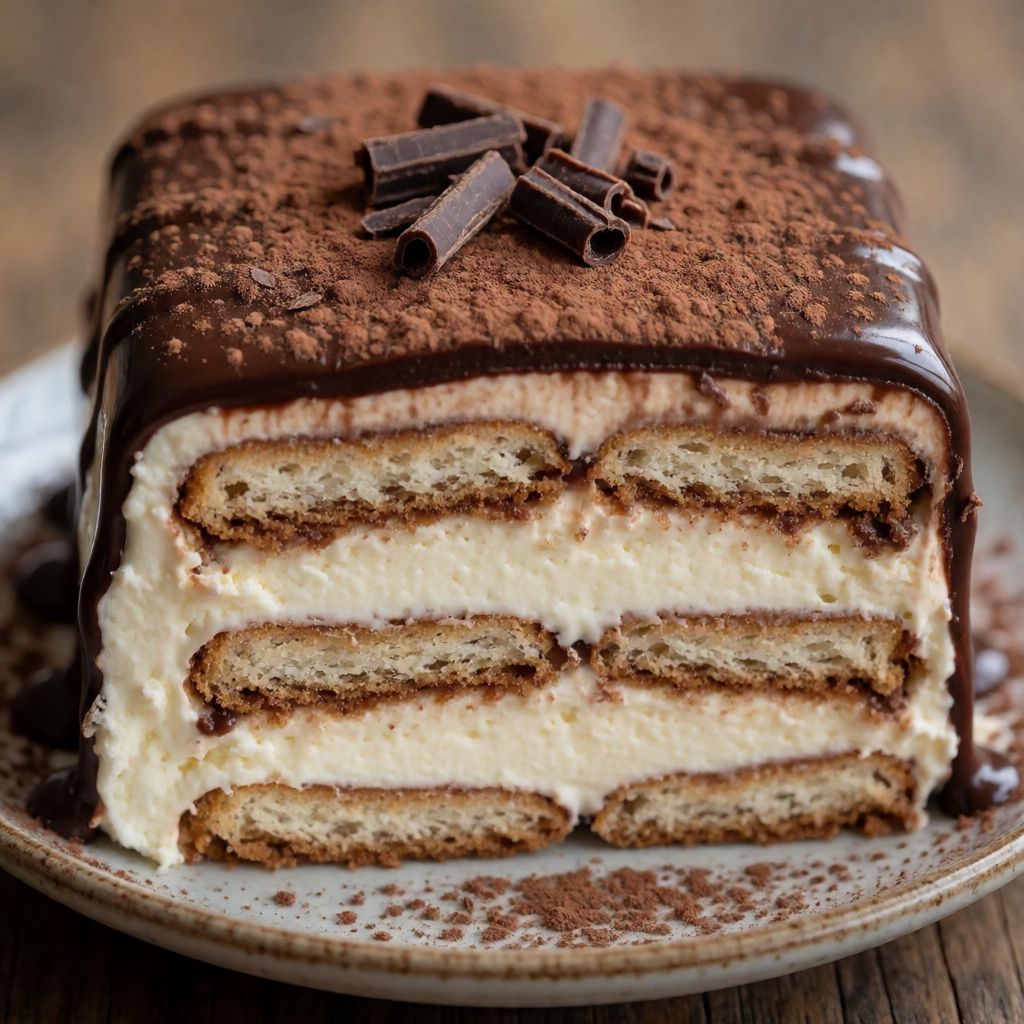
 AI photo
No-Bake Coffee and Chocolate Cake
A chilled no-bake coffee and chocolate cake with a biscuit base and a creamy mascarpone filling.
Labels are worked out automatically from the ingredients and can be wrong. Check the packaging if it matters to you.
Ingredients
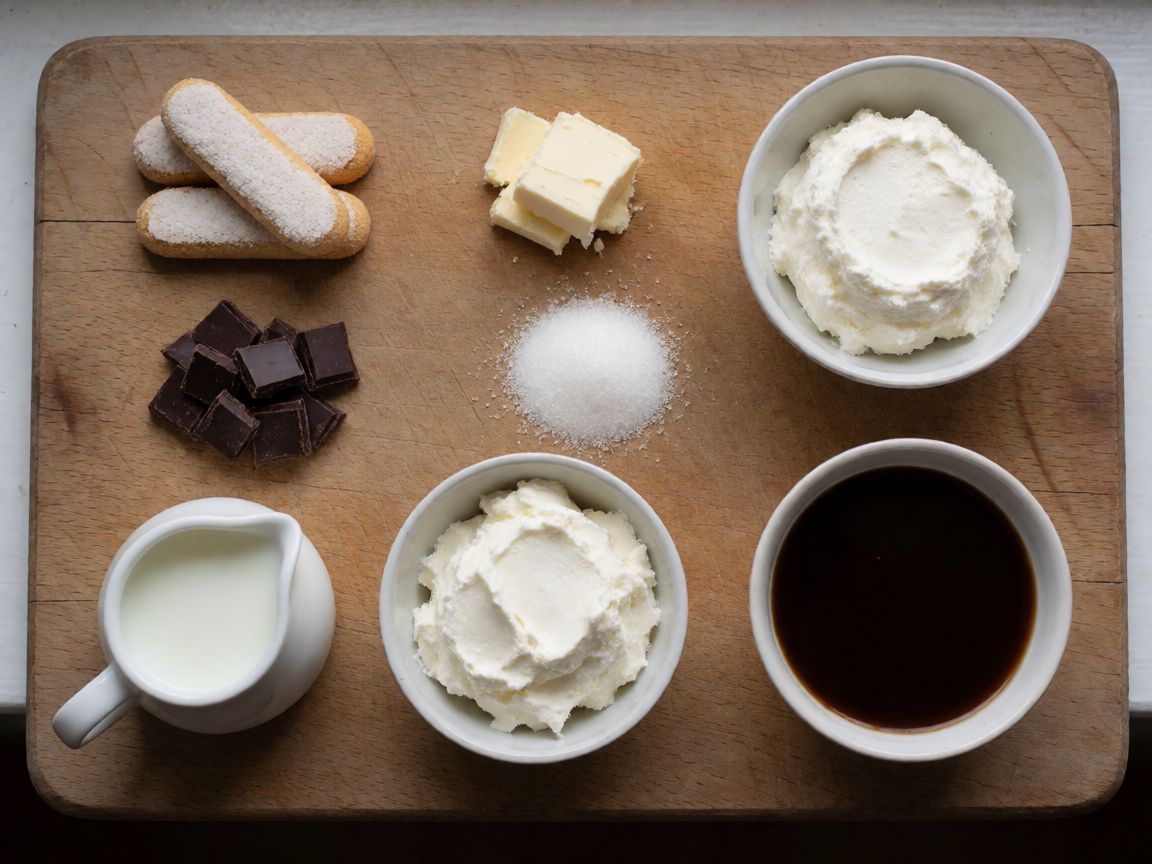
- 250 g Digestive biscuits
- 100 g Butter
- 300 g Mascarpone
- 3 tbsp Caster sugar
- 240 g Cream cheese
- 3 tbsp Milk
- 475 ml Coffee brewed and cooled
- 130 g Dark chocolate





Steps
Crush the digestive biscuits coarsely in a blender. Melt the butter over low heat and combine with the biscuits, mixing evenly.
Line a 20 cm cake tin with baking paper and press the biscuit base evenly into it with the back of a spoon.
Place the tin in the freezer.
20 minBrew the coffee and leave it to cool.
Combine the mascarpone, cream cheese, caster sugar and cooled coffee, mixing with an electric whisk.
Spread the cream over the biscuit base, smoothing the surface well.
Melt the dark chocolate over a bain-marie and mix with the milk until smooth and thick. Leave to cool.
When the chocolate mixture is just warm, pour it over the cream layer of the cake.
Decorate with a few chocolate shavings.
Place the cake in the freezer to set.
This is a tiramisu's cooler cousin, built not on ladyfingers and raw egg but on a crushed-biscuit base — so there's no oven, no custard to split, and no raw-egg worry at all. What decides whether it works isn't skill, it's cold. The biscuit base has to set hard before you load weight on it, the cream has to be thick enough to hold a shape, and the chocolate has to be poured at the exact moment it's warm, not hot, not cool.
Think of the base as a biscuit shortcrust that never sees heat. Butter, melted, is the only thing holding crushed Digestives together — no egg, no flour, nothing to bind it chemically. That's why it must be pressed hard with the back of a spoon and then frozen before anything else touches it: freezing is what gives the butter back its structure. Skip that step and the base is just rubble under a soft cream, and the first slice collapses sideways.
Some say a no-bake cake is "easier" than a baked one because there's no oven involved. No — because there's no oven, there's also no second chance to fix a mistake by baking it out. A cake that goes wrong in the fridge stays wrong; there's no crust forming to hide a bad ratio. So the mixing and the temperatures matter more here, not less.
The coffee does two jobs at once: it flavours the cream and it has to be properly cold before it goes in, because warm coffee loosens mascarpone and cream cheese past the point where they'll set. Treat "cooled" as a real instruction, not decoration.
Digestive biscuits are doing a job builders usually give to shortcrust: they're the base, the thing you cut through with a fork and the thing that has to not turn to mush under a wet layer. Crush them coarsely, not to dust — fine crumbs pack too tightly with the butter and go dense rather than short; coarse crumbs leave air pockets that keep the base from being a brick. Any crisp, plain, slightly sweet biscuit works on the same logic — digestives, but also a simple shortbread, or ginger nuts if you want the coffee to have something to argue with. What you don't want is anything with chocolate chips or a soft filling; they melt differently and the base sets patchy.
Butter here is pure glue, nothing more — there's no flavour job for it beyond "biscuit flavour, slightly richer." Melt it low and slow: scorched butter turns bitter and that bitterness has nowhere to hide once it's locked into a cold base. Use unsalted if you can, because salted butter plus the natural saltiness of some digestive brands can tip the base savoury against a sweet, coffee-heavy filling.
Mascarpone and cream cheese are splitting one task between them. Mascarpone alone is rich but can be loose once beaten; cream cheese is firmer and more stable, and it's what actually lets this cake hold its shape without gelatine or eggs — which is the whole point of a no-bake dessert, you're relying on fat and cold instead of heat and protein-setting. If you only have one of the two, lean toward cream cheese and add a touch more sugar, since mascarpone carries more natural sweetness and fat.
Caster sugar dissolves into the cream cleanly because the grains are fine — granulated sugar left in a whisked cream can stay gritty, since there's no heat here to melt it the way there would be in a baked custard. If caster isn't to hand, a quick blitz of granulated sugar in a food processor does the same job.
The coffee needs to be brewed strong and properly cooled — any method you'd use for a cup you drink works, but warm coffee is the enemy of a cold-set cream, as above, so don't rush this with a splash of hot coffee "to save time." That's the five minutes you can't skip.
Dark chocolate melted with milk, rather than cream or butter, gives a topping that sets to a soft, cuttable layer rather than a hard shell — pure melted chocolate on its own would crack under the fork and shatter instead of slicing with the cake. The "just warm" instruction matters for two reasons: pour it hot and it'll melt its way down into the cream layer instead of sitting on top of it; let it go cold and stiff and it won't pour at all, it'll clump. Any dark chocolate with no added fillings works; milk chocolate is too sweet against coffee and won't set as firm.
Patience is the real ingredient in this cake, more than any item on the list — the freezer time for the base and the final set aren't padding, they're the only "cooking" happening here. Rush the base and it won't survive a fork; rush the final set and you'll get a wedge that slides rather than slices. This is built for a flat with no kazan and no oven drama — a cake tin, a freezer, and the discipline to leave it alone.