
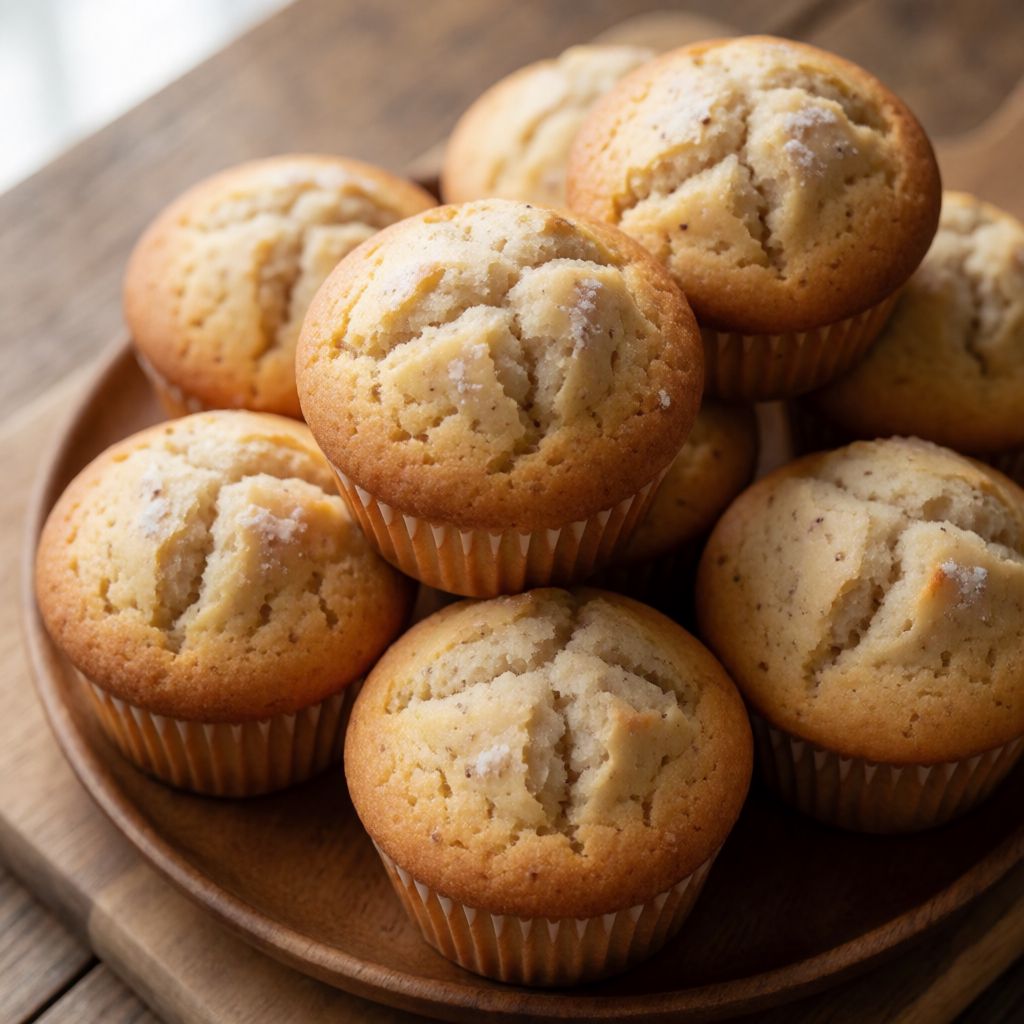
 AI photo
Coffee and Cream Muffins
Light coffee-and-cream muffins with a soft, delicate crumb, perfect alongside a cup of tea.
Labels are worked out automatically from the ingredients and can be wrong. Check the packaging if it matters to you.
Ingredients
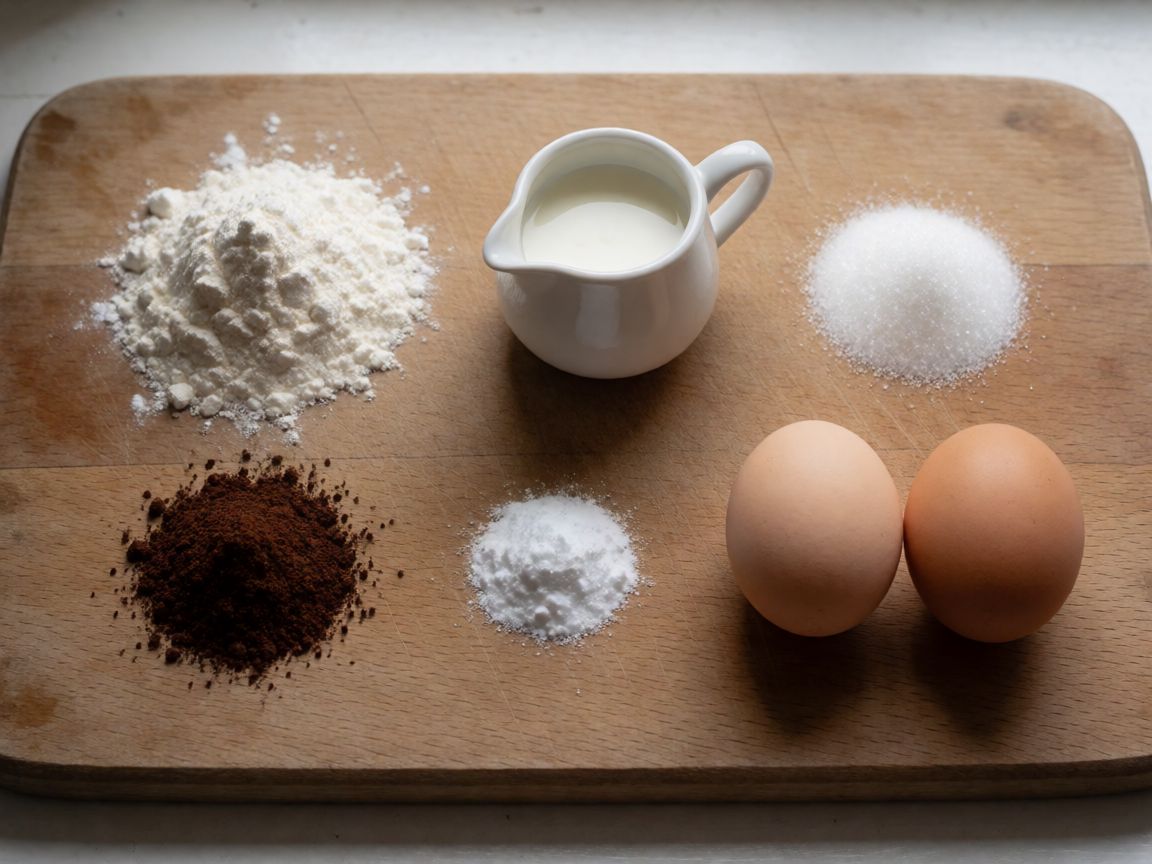
- 260 g Plain Flour
- 210 g Double Cream
- 180 g Caster Sugar
- 40 g Coffee
- 2 pcs Eggs
- 15 g Baking Powder
- 1 pinch Salt to taste







Steps
Brew the coffee in a moka pot, sweeten with a little sugar and leave to cool.
Beat the eggs and sugar together with an electric mixer until pale and fluffy.
Add the cream and the cooled coffee, and keep beating with the mixer.
Add the sifted flour and baking powder, and mix until you have a smooth batter.
Line a muffin tin with paper cases and fill them two-thirds full with the batter.
Bake at 170°C for about 25 minutes.
25 minLet the muffins cool before serving.
This isn't the crumbly American breakfast muffin you dunk in your mug - it's closer to a small, dense sponge wearing a muffin's paper case, with coffee folded right into the crumb and cream doing the work that butter and milk usually split between them. Six good-sized ones, about right for a proper afternoon tea round, the coffee's bitter edge cutting through all that sugar so the thing doesn't just read as sweet.
What decides whether this comes out of the oven as a dome or sits there flat and dense happens at the mixer, not at the thermostat. Beating eggs and sugar until pale and fluffy isn't decoration - it's whipping air into the egg's structure, and that trapped air is half your lift. Baking powder does the rest, but it needs something to push against. A flat, barely-mixed egg bowl gives it nothing to work with, and no amount of baking powder fixes that afterwards.
Letting the coffee cool before it goes in matters for the same reason: hot liquid meeting a whipped egg mixture collapses the bubbles you just spent two minutes building, the same way hot stock splits a mayonnaise. That patience costs you almost nothing and saves you the whole bowl.
Filling the cases two-thirds, not to the brim, isn't caution for its own sake - it's room for that trapped air to push upward instead of over the paper and into the tin. And don't treat twenty-five minutes as a deadline. Push a skewer into the middle; if it comes out with wet batter clinging, the oven isn't finished, whatever the clock says.
Plain flour here, not self-raising, and that's deliberate - self-raising already carries its own fixed ratio of raising agent, and you'd lose control over how hard this particular batter is meant to rise. Sift the 260g together with the baking powder rather than stirring the powder in loose afterwards, so you don't bite into a bitter, metallic pocket where it sat ungauged in one spot.
15g of baking powder for 260g of flour is roughly double what most cake recipes ask for at that weight. It's there because this batter leans harder on chemical lift than on a long stand-mixer beating alone can give in a small bowl. Push past that ratio, though, and you get a soapy aftertaste and a muffin that shoots up fast, then sinks as it cools - the structure made more gas than it can hold. Measure it, don't eyeball it; this is the one ingredient where more is a fault, not an improvement.
Double cream is doing a job that butter and milk would normally split between them in another kind of cake: fat for richness, liquid to bring the batter together, in one spoonful. Its fat coats the flour's proteins before they can link into long, tough strands, which is why this bakes tender rather than bready. The criterion for a substitute is a fat-and-liquid pairing with similar richness - melted butter loosened with a splash of whole milk works at a pinch. Thin milk on its own, with no fat riding along, bakes dry and tastes mostly of egg.
Brewing the coffee in a moka pot rather than using instant isn't snobbery - pressure-brewed coffee is concentrated, so a small amount carries real flavour without watering the batter down, and its aromatics survive the oven better than instant's do. Some say instant granules stirred into hot water are just as good for baking, since you're sweetening and cooling it anyway - no, because what you lose is exactly the aroma that's meant to come through the sugar, and you've nothing left to compensate once that's gone. If you've no moka pot, strong filter coffee or a double dose of good instant, cooled the same way, will do. Sweetening it at step one isn't for sweetness's sake - it rounds off raw bitterness before it has to fight the batter's sugar on its own.
Caster sugar, not granulated, dissolves properly into the beaten egg instead of sitting there as grit - which is the actual point of beating until the mixture goes pale, not until it's merely combined. Granulated sugar's bigger crystals take longer to break down, and in a batch this small you've no volume to hide the ones that don't. The pinch of salt isn't leavening or seasoning in the usual sense - it's there to stop the sugar flattening the coffee's bitterness into something one-note.
If your oven is fan-assisted, know that it moves heat faster than a still conventional one, so start checking with the skewer a little before the stated time rather than exactly at it. Paper cases in an ordinary muffin tray are enough tin here; nothing about this needs a kazan or anything you don't already own. And once they're out, let them cool properly before you eat one - cutting in warm, the crumb is still setting and collapses under the knife, which has nothing to do with the recipe and everything to do with not waiting.