
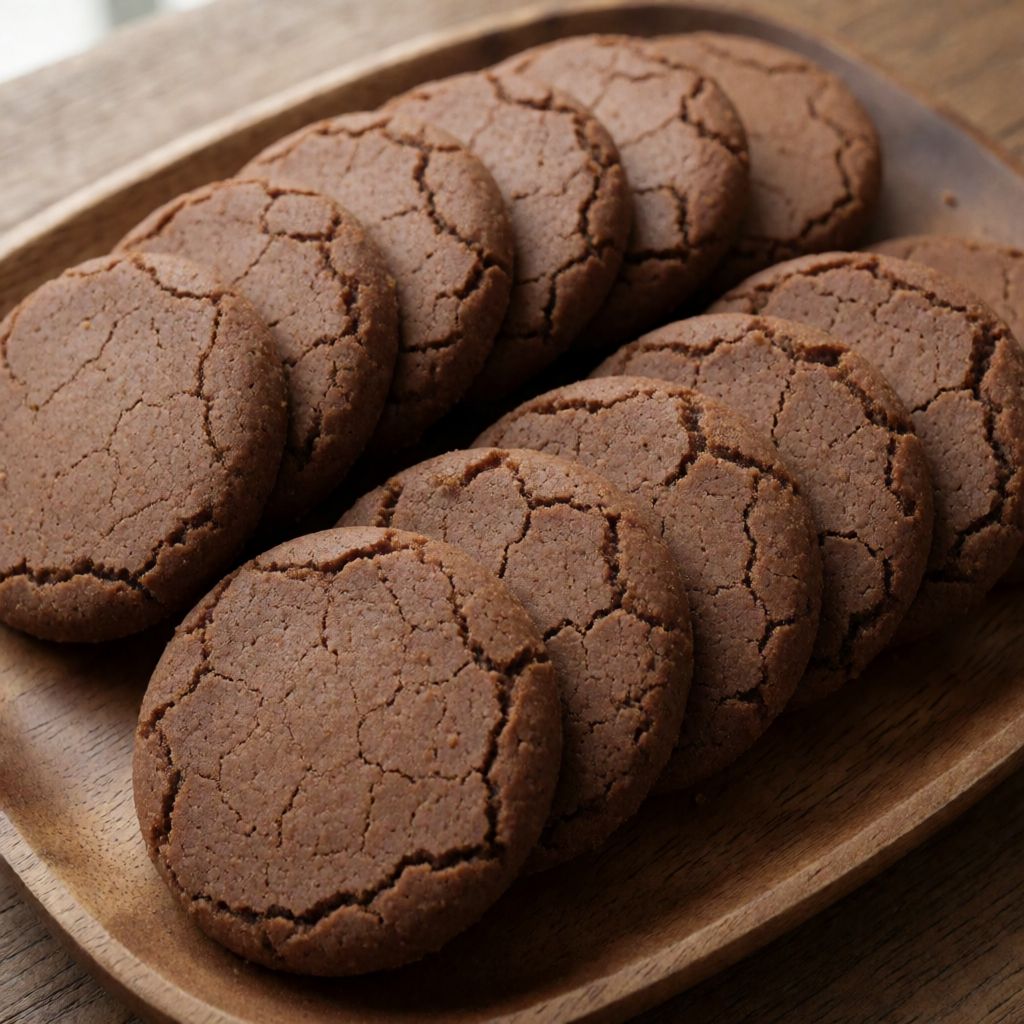
 AI photo
Coffee-Flavoured Biscuits
Soft coffee-flavoured biscuits studded with chocolate chips, quick to make and perfect with a cup of tea.
Labels are worked out automatically from the ingredients and can be wrong. Check the packaging if it matters to you.
Ingredients
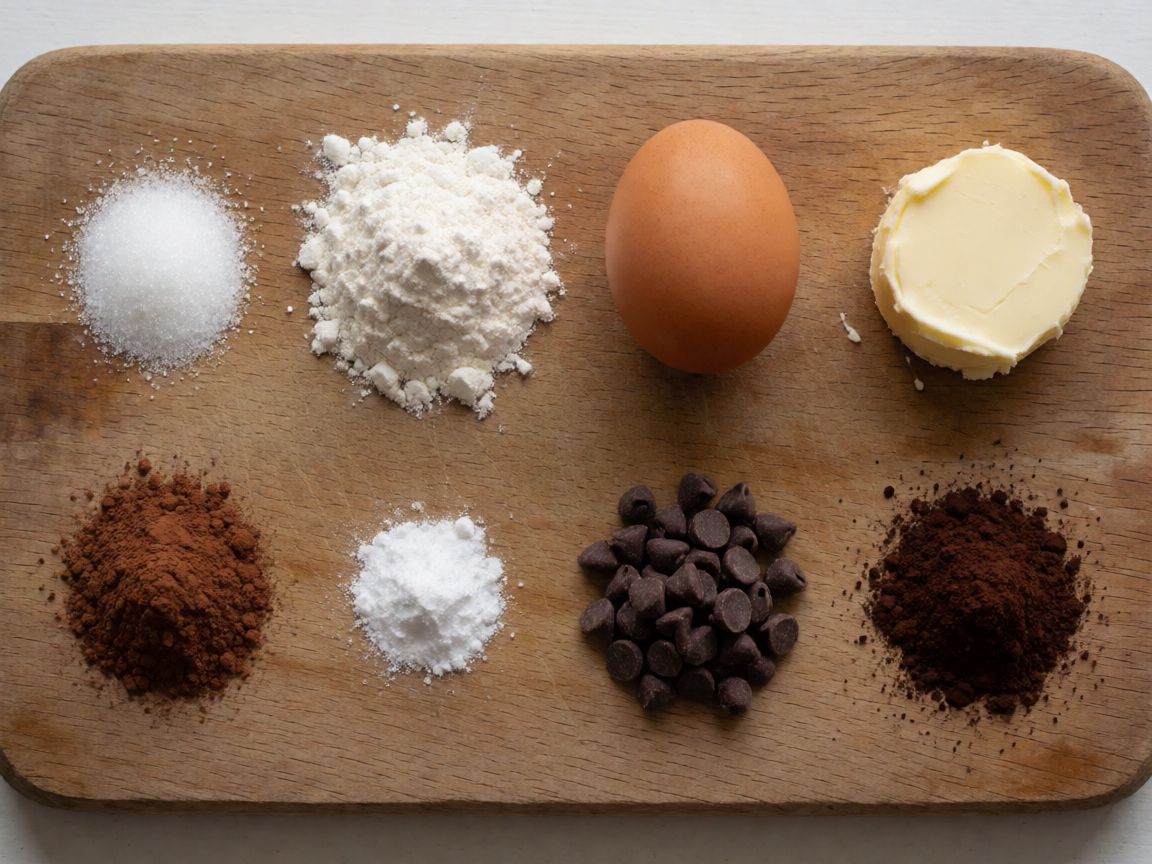
- 150 g Sugar
- 110 g Plain flour
- 120 g Butter softened
- 1 pcs Eggs
- 15 g Cocoa powder
- 6 g Baking powder
- 125 g Chocolate chips
- 2 tbsp Instant coffee
- 1 tsp Bicarbonate of soda









Steps
In a large bowl, combine the sugar and softened butter, then beat with an electric mixer.
Add the egg and continue mixing until you have a smooth, even dough.
In another bowl, sift together the flour, cocoa powder, instant coffee, baking powder and bicarbonate of soda, then mix well.
Combine the contents of both bowls, fold in the chocolate chips, mix gently, and transfer the dough to a piping bag.
Line a baking tray with baking parchment and pipe 25-30 medium-sized balls, spaced well apart.
Bake the biscuits at 180°C for 15 minutes.
15 minLet the biscuits cool slightly before serving.
What was changed
The baking temperature was adjusted at to 180°C, since the oven only allows 10°C increments.
This is a double-chocolate biscuit that leans on coffee for a job coffee rarely gets credit for: it doesn't add its own flavour, it switches on someone else's. Instant coffee dissolved into cocoa the way salt sharpens sweetness — you won't taste coffee at all, you'll taste darker, rounder chocolate. If you're expecting a mocha hit, you'll be disappointed; that's not the point of it.
What decides whether this works is two things, and neither is the oven timer. First: how well you cream the butter and sugar at the start. That's not mixing for mixing's sake — the beater drags air into the fat and sugar crystals score thousands of tiny pockets into it. Those pockets are what the baking powder and bicarbonate of soda will later inflate. Skip the proper creaming, beat it for twenty seconds and call it done, and you get a flat, dense puck no amount of leavening can rescue, because there's nowhere for the gas to go.
Second: knowing when to stop baking. People wait for the centre to look set, the way they'd wait for a cake. Don't. A biscuit this size keeps cooking on the hot tray for a good couple of minutes after it leaves the oven — residual heat in the metal and in the biscuit itself finishes the job. Pull it when the edges have gone matte and just slightly darker, and the middle still looks faintly wet and underdone. If the centre looks fully baked in the oven, by the time it's cool on the counter you've got a biscuit that snaps instead of giving — all crumb, no chew.
Butter has to be soft, not melted, and this matters more than it sounds. Melted butter is a liquid — you can't trap air in a liquid, you can only drown sugar in it. Soft butter still holds its structure enough for the beater to fold air into it while the sugar cuts through. If you've no butter, any solid fat that's flavourless at room temperature will do the same mechanical job — plain baking margarine works, though you lose a little of butter's own richness and the biscuit tastes flatter.
Sugar here isn't only sweetness — it's doing the aerating work alongside the butter, and it's also what gives the edges that faint crackle and extra colour, because sugar caramelises at a lower point than flour browns. Don't swap it for less, or for a liquid sweetener; you'd lose the texture along with the sweetness.
The egg binds the fat and flour into one dough and its proteins set during baking, giving the biscuit enough backbone to hold its piped shape without collapsing into a puddle on the tray. One egg for this quantity is already a small amount of liquid in a dry-heavy mix, so there's no room to add more without the dough turning into batter.
Flour is kept low on purpose — 110g against 150g sugar and 120g butter. This isn't bread, where gluten needs to build a chewy net; here you want just enough structure to hold the fat and sugar together, no more, or you get a tough, biscuity-in-the-bad-sense result instead of the fudgy give you're after.
Cocoa powder gives the chocolate base and, as said, the acidity the bicarbonate needs. Use plain cocoa powder, not a sweetened drinking-chocolate mix — that already has sugar and milk powder in it, and will throw off both the flavour balance and the chemistry. Instant coffee goes in dry with the other powders, not brewed as liquid; a splash of brewed coffee would unbalance the wet-to-dry ratio and you'd be fighting the dough to get it back. Any dry instant coffee works — it's not about the brand, it's about it being soluble granules, not beans or grounds.
Fold the chocolate chips in last and gently. Beat them hard into the mix and you crush them, smearing chocolate through the dough instead of leaving pockets of it that stay distinct once baked. Dark or milk chips both work; what matters is that they're a chip, not a chunk too big to pipe evenly. Piping the dough is simply the neatest way to get twenty-five to thirty biscuits the same size without rolling by hand — if you've no piping bag, a spoon and a rough hand-shaped ball does the same job, just less tidily, and spacing them apart on the tray matters either way, because the butter melts before the structure sets and they do spread.
For ten people this gives two or three biscuits each, which is about right with a pot of tea — rich food, small portions, nobody's trying to make a meal of it. And don't rush the cooling. The chips are still molten when the biscuits come out; give them a few minutes on the tray before you move them, or they'll fall apart in your hand, soft structure and no patience being a worse combination than any wrong ingredient.