
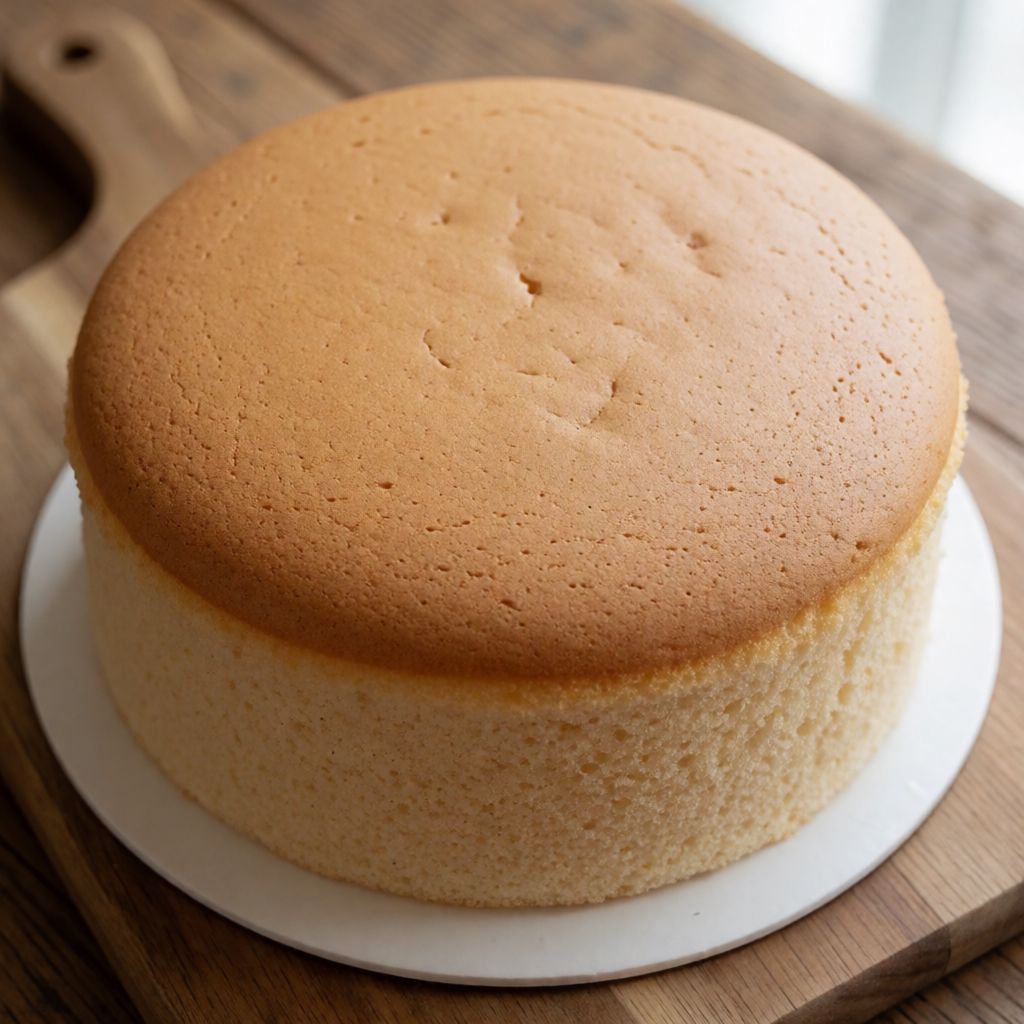
 AI photo
Coffee Sponge Cake Batter
A light sponge cake batter flavoured with coffee, ready to bake and fill as you like.
Labels are worked out automatically from the ingredients and can be wrong. Check the packaging if it matters to you.
Ingredients
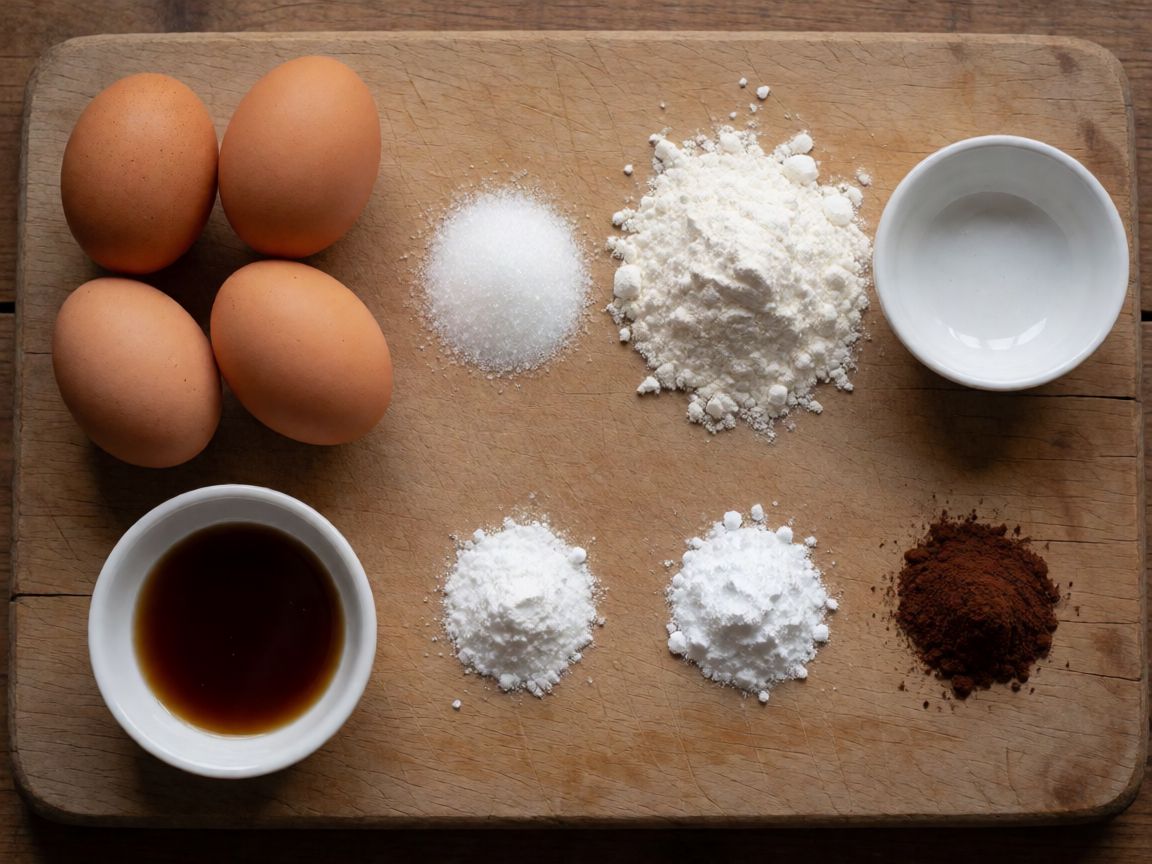
- 4 pcs Eggs
- 130 g Sugar
- 50 g Plain flour sifted
- 50 g Potato starch
- 8 g Baking powder
- 1 tsp Vanilla extract
- 5 g Instant coffee







Steps
Crack the eggs into a bowl, add the sugar and whisk with an electric mixer until light and foamy.
Pour in the vanilla extract and continue whisking.
Add the sifted flour, potato starch and baking powder.
Stir in the instant coffee.
Line a baking tray with baking parchment and pour in the batter, smoothing it out with a spatula.
Bake in a preheated oven at 180°C using the fan setting.
10 minCover the sponge with baking parchment and leave to cool.
This is not a cake you slice at a Sunday table — it's a thin sponge sheet, baked flat and meant to be rolled, the kind the French call biscuit roulé and the Poles call biszkopt. Feeds about four as a light finish, more if you're stretching the roll with cream. The coffee here is flavour and shadow, nothing structural; the real work was done in the bowl, before anything saw heat.
Whisking eggs with sugar isn't decoration — it's mechanical leavening. The whisk unfolds egg protein and beats air into it; the sugar dissolves into that foam and holds it there, so the bubbles don't collapse the second you stop whisking. Some say it's the baking powder that makes a sponge rise — no, 8 grams of it in four eggs' worth of batter is backup, not the engine. The engine is the foam you built with your arm, or your mixer, before flour ever touched the bowl.
What decides whether this works is what happens after the foam is ready: how gently you bring in the flour, starch and coffee. Stir it like soup and you knock the air straight back out — dense, flat, sad. Fold it like you're tucking a blanket round something fragile, because that's exactly what it is.
Baked thin, on a tray, it's done fast — ten minutes is a floor, not a clock you can trust blindly. And it gets covered with parchment the moment it's out, not out of ritual but because a thin sponge left bare skins over, dries, and cracks the instant you try to roll it.
Eggs: four, and size matters more here than in most recipes, because the eggs aren't just moisture and fat, they're your only raising agent that counts. Take them out of the fridge an hour before — cold egg white resists unfolding, warm white whips faster and holds more air. If you forget, sit the bowl over warm water for a minute before you start; don't skip straight to the mixer with eggs that feel like they came off an ice rink.
Sugar: 130 g isn't just sweetness, it's structural. It dissolves into the egg foam and turns it from a fragile lather into something with a bit of backbone — the same reason meringue needs sugar to hold its shape. Whisk until the mixture is pale, thick, and leaves a ribbon when it falls off the whisk; that ribbon is your proof the foam is strong enough to carry flour without collapsing.
Flour and potato starch together, not flour alone, because flour on its own brings gluten, and gluten in a sponge means chew where you want softness. Starch has no gluten to build — it just sets, absorbs a little moisture, and keeps the crumb short and tender. No potato starch in the cupboard? Any starch with no gluten and a similarly fine, dry texture does the same job — cornflour, rice starch. Just don't swap it for more flour; that's trading tenderness for toughness.
Baking powder: a small, honest insurance policy. The egg foam does the real lifting; the baking powder fills in for the air that inevitably bleeds out between the bowl and the oven door — the seconds spent pouring, spreading, walking to the oven. Leave it out and the sponge will still rise, just a touch less forgiving of a slow hand.
Instant coffee, not brewed coffee — brewed coffee is mostly water, and water in this batter dilutes the structure you worked to build. Instant coffee gives colour and bitterness without adding liquid; any soluble coffee that dissolves without leaving grit works the same way. Stir it in last, after the dry ingredients, so it doesn't clump before it has flour around it to hold onto.
On an ordinary UK hob-and-oven setup: a wide baking tray stands in for whatever specialist tin a recipe book might assume you own, lined with baking parchment so the sponge comes away clean — a thin sheet like this will tear on bare metal. Fan ovens circulate hot air and bake faster and more evenly than a conventional setting, which is exactly why ten minutes is a floor and not a guarantee: pull it the moment it springs back under a light finger touch and smells of coffee rather than raw egg, don't wait for a buzzer that was set for someone else's oven. And once it's parchment-covered to cool, be patient — rushing to roll a sponge that's still hot is how you get a crack right down the middle instead of a clean spiral.