
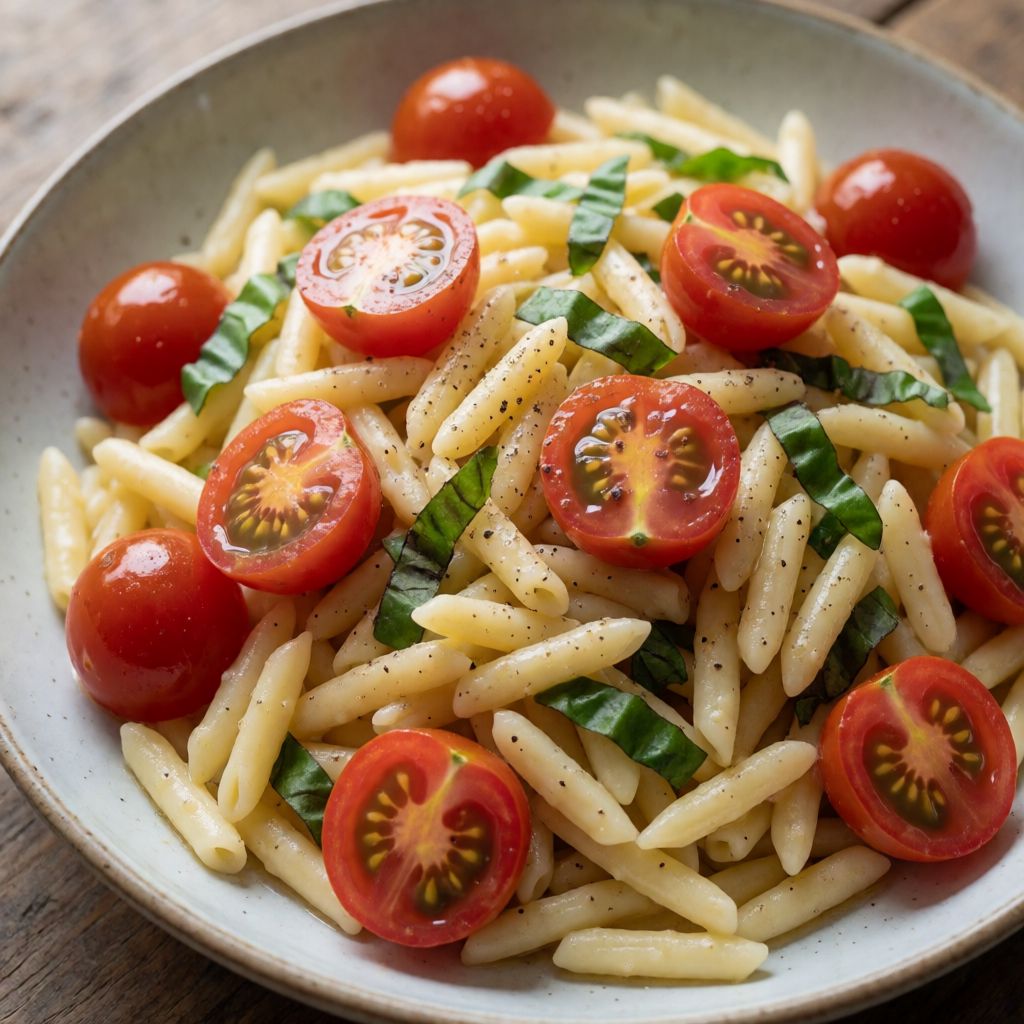
 AI photo
Cold Pasta with Cherry Tomatoes and Basil
A refreshing cold pasta salad tossed with cherry tomatoes, fresh basil and olive oil.
Labels are worked out automatically from the ingredients and can be wrong. Check the packaging if it matters to you.
Ingredients
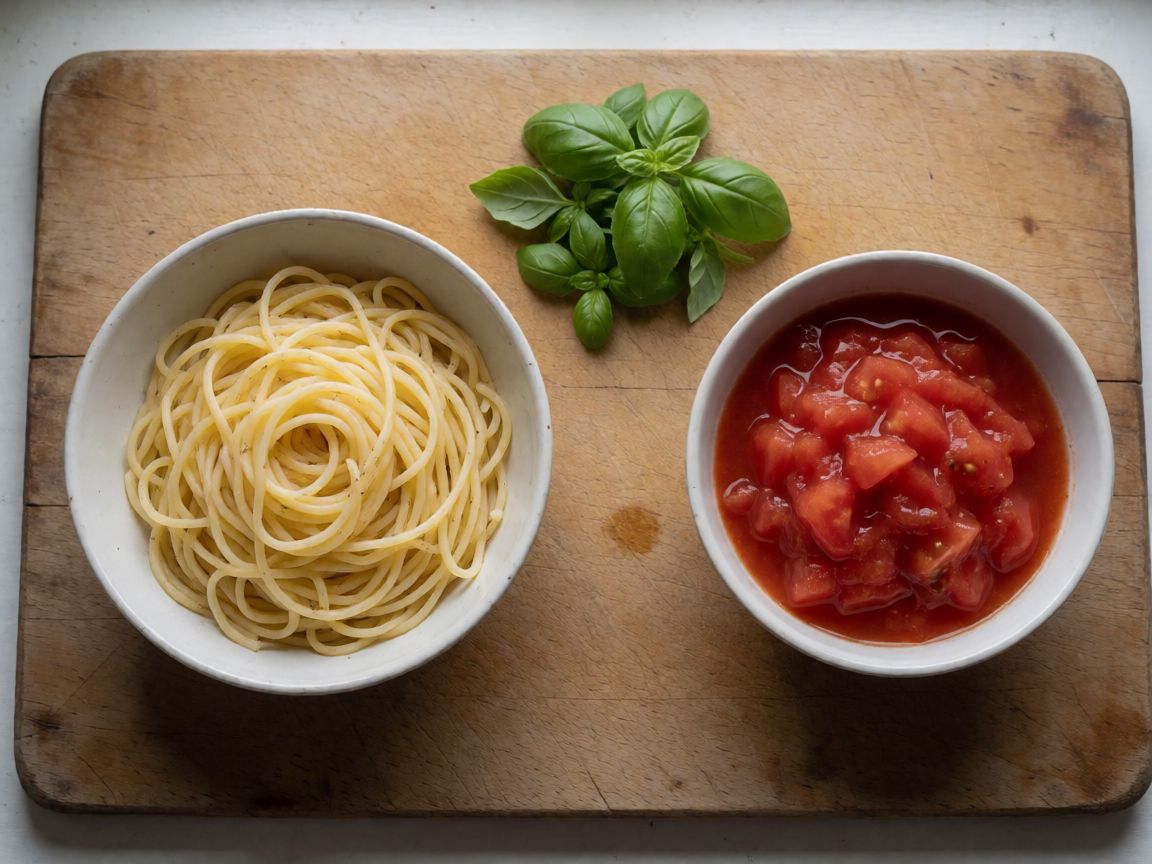
- 320 g Pasta
- 500 g Cherry tomatoes
- 30 g Basil
- Olive oil to taste
- Salt to taste
- Black pepper to taste





Steps
Thoroughly wash the cherry tomatoes and cut them into small cubes. Place them in a large bowl and season with a pinch of salt and black pepper to taste.
Gently wash the basil and tear it by hand. Use at least 30 g so the dressing turns out fragrant and full of flavour.
Add the basil to the tomatoes, stir with a spoon and dress with olive oil.
Cover the bowl with cling film and leave the dressing to infuse for about 30 minutes, stirring occasionally with a spoon.
30 minFill a pot with plenty of water and bring to the boil. Once boiling, add a handful of salt and the pasta.
Cook the pasta for as many minutes as indicated on the packet, then drain and spread out on a wide tray.
Dress the pasta with olive oil and let it cool completely.
Once the pasta has cooled, transfer it to the bowl with the dressing and mix thoroughly with a spoon.
This is not a sauce you cook — it's a sauce you build with salt and patience, while the stove is busy doing something else entirely. The tomatoes go in first, cut, salted, left alone. Salt pulls water out of a cell through its wall by simple osmotic pressure — no flame needed. Thirty minutes later that water has become juice, the juice has basil oils floating in it, and you have a dressing that no pan ever touched.
What decides whether this works is not the pasta, it's the waiting. Skip the thirty minutes and you get diced tomato sitting on noodles — crunchy, watery, two separate things that never agreed to be a dish. Give it the rest, stirring now and then so every cube gets its turn in the brine, and the tomato collapses just enough to coat a fork.
The other hinge is temperature, or rather the absence of it. The pasta has to be properly cool — not warm, not "cool enough" — before it meets the tomatoes. Warm pasta on raw basil wilts the leaf and half-cooks the tomato from the outside in, and you lose exactly the freshness that made you choose a cold dish in the first place. Spreading the drained pasta thin on a tray, rather than leaving it in a colander, is what gets rid of the heat fast — a deep pile insulates itself and stays warm at the centre for a surprisingly long time.
Some say you should shock the pasta under the cold tap to stop it cooking. Don't — that water also rinses off the starch on the surface, the very thing the oil and tomato juice need to cling to. A tray and a few minutes of air does the same cooling job without washing the pasta clean of flavour.
Tomatoes: the whole dish is a ratio of sweetness to acidity, and cherry tomatoes win here simply because they ripen with more sugar per gram than a big tomato — less water to dilute the flavour, thinner skin, less waiting for them to soften. Buy the ones that smell of tomato at the stem end before you even cut them; if they smell of nothing, salt and basil won't invent a flavour that isn't there, they'll just season an absence. Out of season, a tomato grown under glass for shelf life rather than taste will give you a watery, pale version of this — still edible, just thinner.
Basil: the 30 g isn't a style choice, it's the point below which the dish tastes of olive oil with tomato in it rather than the other way round. Basil's aroma lives in volatile oils that evaporate the moment the leaf is bruised or heated — which is why you tear it by hand rather than chop it with a knife, and why it goes into cold oil, not a hot pan. Dried basil is not a smaller version of fresh basil; drying drives off exactly those volatiles, so what's left is a different, duller herb. If you have none, fresh mint used sparingly, or a mix of parsley and a little oregano, will give you green freshness without pretending to be basil.
Olive oil: here it's not just a cooking medium, it's drunk raw, so its own flavour matters — use one with some character, the kind that tastes slightly peppery or grassy on its own, because nothing will cook that flavour into shape later. If all you have is a flat, flavourless bottle meant for frying, the dish will still work, it'll just be quieter — tomato and basil carrying the whole thing instead of oil joining in.
Salt and pepper are doing two different jobs and it's worth telling them apart. The salt on the raw tomatoes is the engine of the whole dressing — it's what drags the juice out. The salt in the pasta water is seasoning the pasta from the inside, the only chance it gets, since nothing will be reduced down onto it afterwards the way a hot sauce would. Skimp on either and you can't fix it at the table with a pinch from a shaker — that only seasons the surface.
Pasta shape isn't specified, but it's worth a thought in a flat with no stove magic to lean on: a shape with ridges or a hollow — penne, fusilli, something with grip — holds onto a loose raw sauce far better than long strands, which just slide past it on the plate once everything's cold and nothing is simmering to make it stick.
And about the tray: a domestic kitchen rarely has a kazan-sized surface, so a baking sheet or your widest plate does the job of spreading the pasta thin enough to lose its heat quickly. This whole dish, in fact, suits a British kitchen on a hot day rather well — no extra time at the hob once the water's off the boil, nothing that needs watching, which is more than you can say for a Sunday roast. It feeds four as a main, or six as a starter before something heavier.