
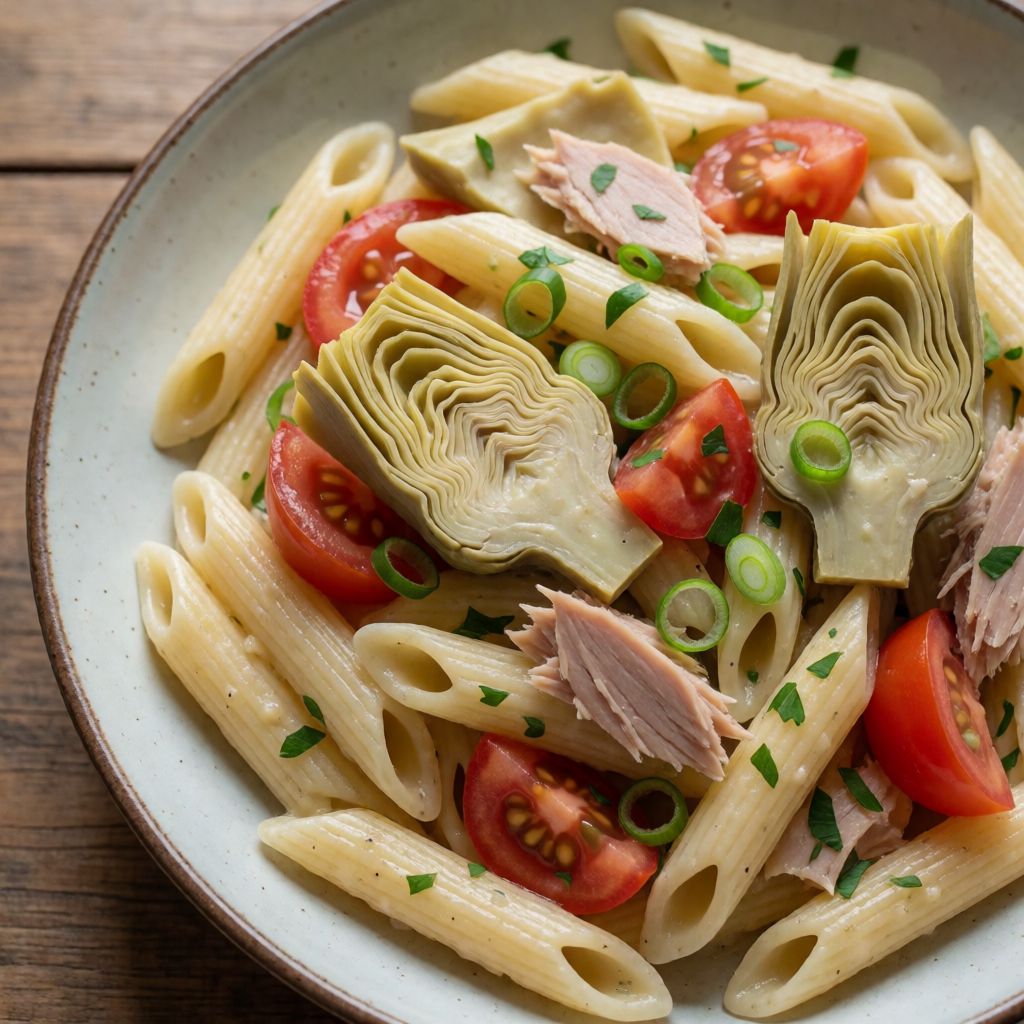
 AI photo
Cold Penne with Artichokes and Tuna
A chilled penne pasta tossed with tender artichokes, tomatoes and tuna, dressed with lemon, olive oil and parsley.
Labels are worked out automatically from the ingredients and can be wrong. Check the packaging if it matters to you.
Ingredients
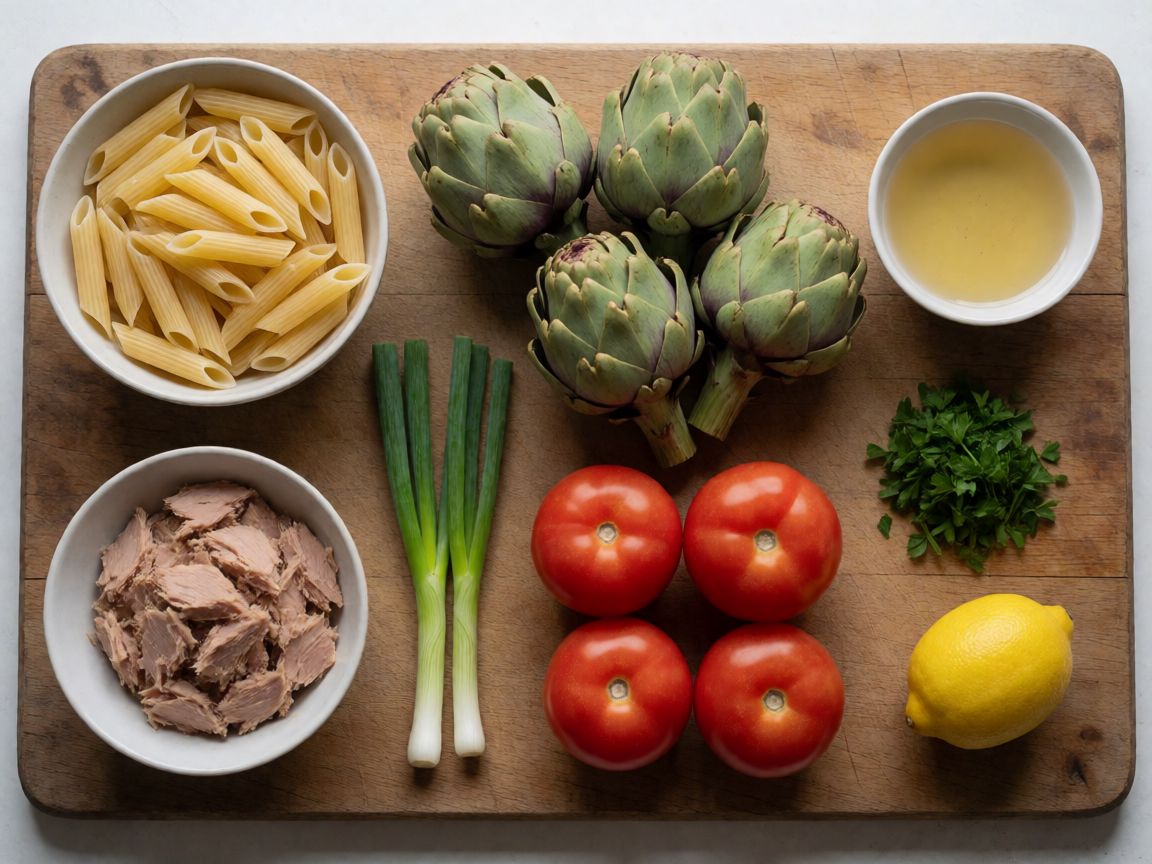
- 320 g Penne
- 3 pcs Artichoke
- 250 g Tuna in olive oil
- 2 pcs Spring onion
- 4 pcs Tomato
- 2 tbsp Parsley
- 1 tbsp Vinegar
- 1 pcs Lemon
- Olive oil to taste
- Salt to taste
- Black pepper to taste











Steps
Clean the artichokes, remove the stems and tough outer leaves, cut each into 4 pieces and remove the fibrous centre.
Clean the spring onion, slice it, and stew together with the artichokes in a pan with 3 tbsp olive oil, add the lemon juice and a little water, and cook over low heat.
12 minMeanwhile, cook the penne in salted boiling water until al dente.
Drain the pasta and toss with the vegetable sauce, half the parsley and black pepper to taste.
Place in the refrigerator.
60 minRemove from the refrigerator, add the tomatoes cut into wedges and the tuna broken into large chunks, season with salt to taste, dress with 1 tbsp vinegar and the remaining parsley.
This is a cold pasta dish, and that one fact decides almost everything. The real work isn't at the stove - it's in the fridge, where starch tightens as the pasta cools and the dressing has time to work its way into it rather than just sit on top. Skip the chill, or cut it short, and you've made warm pasta with vegetables scattered on it. Not this.
The decisive move happens earlier though: artichoke and spring onion stewed gently in a little oil, lemon juice and water, on heat low enough that nothing browns. Some cooks assume onion needs colour to taste of anything - no, because this dish is going to be eaten cold and sharp, and roasted depth would sit heavy against that. Low heat does a second job here too: it lets the tough fibrous base of the artichoke give way by slow softening rather than by drying out the way hard heat would. You know it's ready when a knife goes into the heart without resistance and the colour has dulled from bright green to something more matte - not by watching a clock.
Lemon juice in that pan isn't seasoning, it's protection. Cut artichoke browns within minutes of meeting air - an enzyme inside it reacts with oxygen the moment the flesh is exposed. Acid stops that reaction cold. The vinegar added right at the end is a different tool doing a different job: a short, clean sharpness cutting through the richness of tinned tuna oil and the general mellowness a dish picks up after an hour in the cold.
On the artichoke itself: what you're removing - the outer leaves, the stem, the furry choke in the centre - isn't dangerous, just unpleasantly fibrous and scratchy to eat, no better reason than that. Fresh globe artichokes in a UK shop are often a gamble - bruised, dried at the edges, overpriced for what you get - so if what's on offer looks tired, don't be precious about it. Artichoke hearts packed in water (not oil, which already comes seasoned and will argue with your own dressing) are a fair stand-in. You lose the slow pectin-softening you'd get from cooking a raw one down, but the dish still works.
Tuna in oil: the oil isn't packaging to be drained away, it's a built-in part of the dressing, so whatever tin you open, that oil goes into the bowl with everything else. Tuna in water or brine is leaner and drier - usable, but you'll want to make up the missing fat with a splash more olive oil, or the sauce turns thin.
Olive oil appears twice here and doesn't need to be the same bottle both times. The oil you cook the artichokes in loses whatever delicate aroma it had anyway - fine fragrance in olive oil comes from volatile compounds, and heat drives them off during that simmer. So cook with something ordinary and keep any good extra virgin oil you own for drizzling at the end, where its smell actually survives to reach your nose.
Spring onion wants to stay mild - that's the whole point of using it instead of a harsher onion, since nothing here cooks it long enough to tame a sharper variety. A shallot or any gentle onion will do at a pinch; just don't reach for anything that bites. Parsley, flat-leaf or curly, matters less for which kind and more for chopping it fine right before using it twice - once early, once at the end - since its aroma lives in the cut surface and fades once exposed to air.
Lemon and vinegar aren't two names for the same acid doing the same job, so don't substitute one for a double dose of the other. Lemon in the pan is there to stop browning and help the artichoke soften; vinegar at the finish is there to wake the whole bowl up after an hour of sitting cold and settling into itself. If the dish tastes flat once it's out of the fridge, the fix is more vinegar at the end, not more lemon earlier - the fault is almost always a missing final sharpness, not an undercooked artichoke.
For the pan itself: a wide shallow frying pan, which is what most flats here have instead of a kazan, is actually the right shape for this, not a compromise. It gives the artichoke pieces surface area to sit in that shallow pool of oil, juice and water rather than stewing in a deep pile. A plate set over the top in place of a lid holds some steam back without sealing it in completely, which is exactly what this slow, low simmer wants. And the hour in the fridge - a standard UK fridge, nothing special needed - is doing real work, not just chilling the bowl, so treat it as part of the recipe and not dead time. This feeds four as a light lunch or starter, not a Sunday-dinner-sized meal - it belongs to a Mediterranean habit of using cheap tinned fish and a short spring glut of artichokes before they turn tough, built for a hot day when lighting the stove once is already one time too many.