
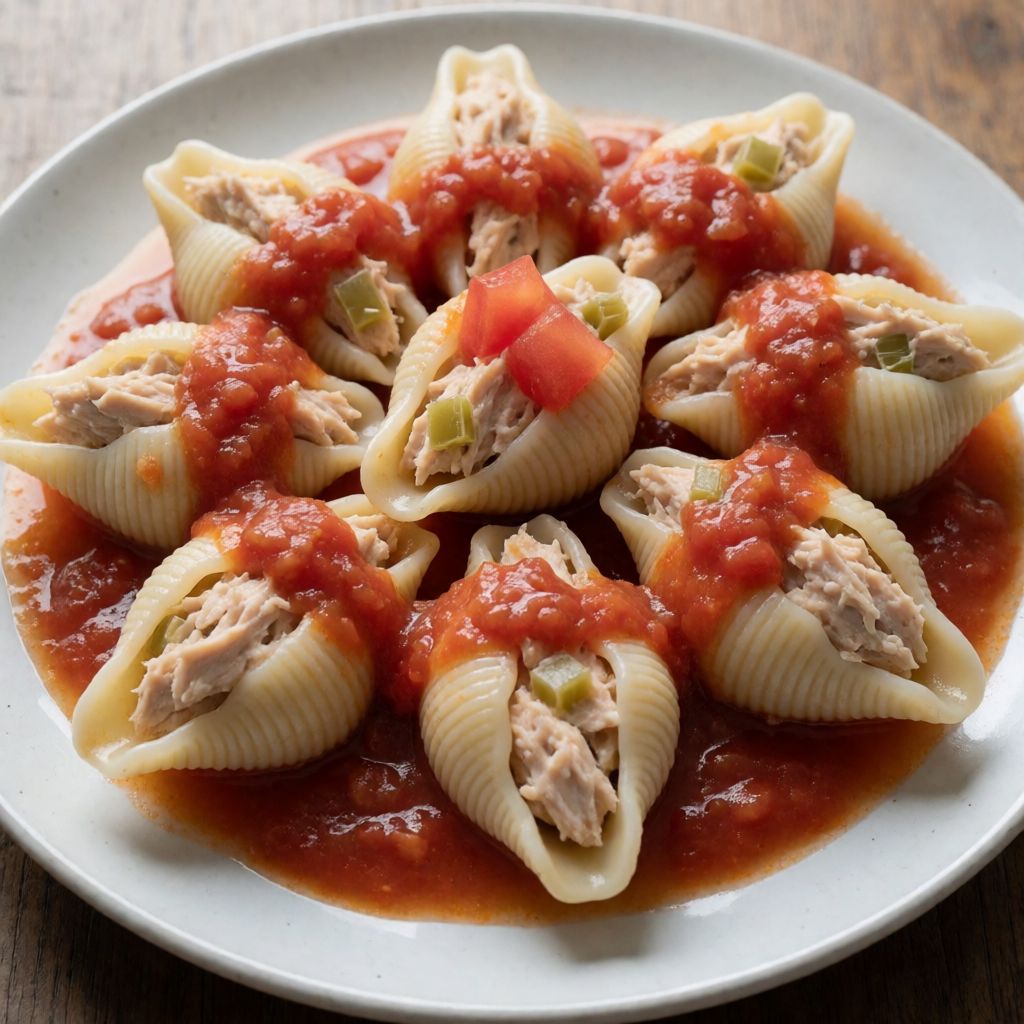
 AI photo
Conchiglioni Stuffed with Tuna and Anchovies
Conchiglioni pasta shells filled with a savoury tuna and anchovy mixture, tomatoes, olives and capers.
Labels are worked out automatically from the ingredients and can be wrong. Check the packaging if it matters to you.
Ingredients
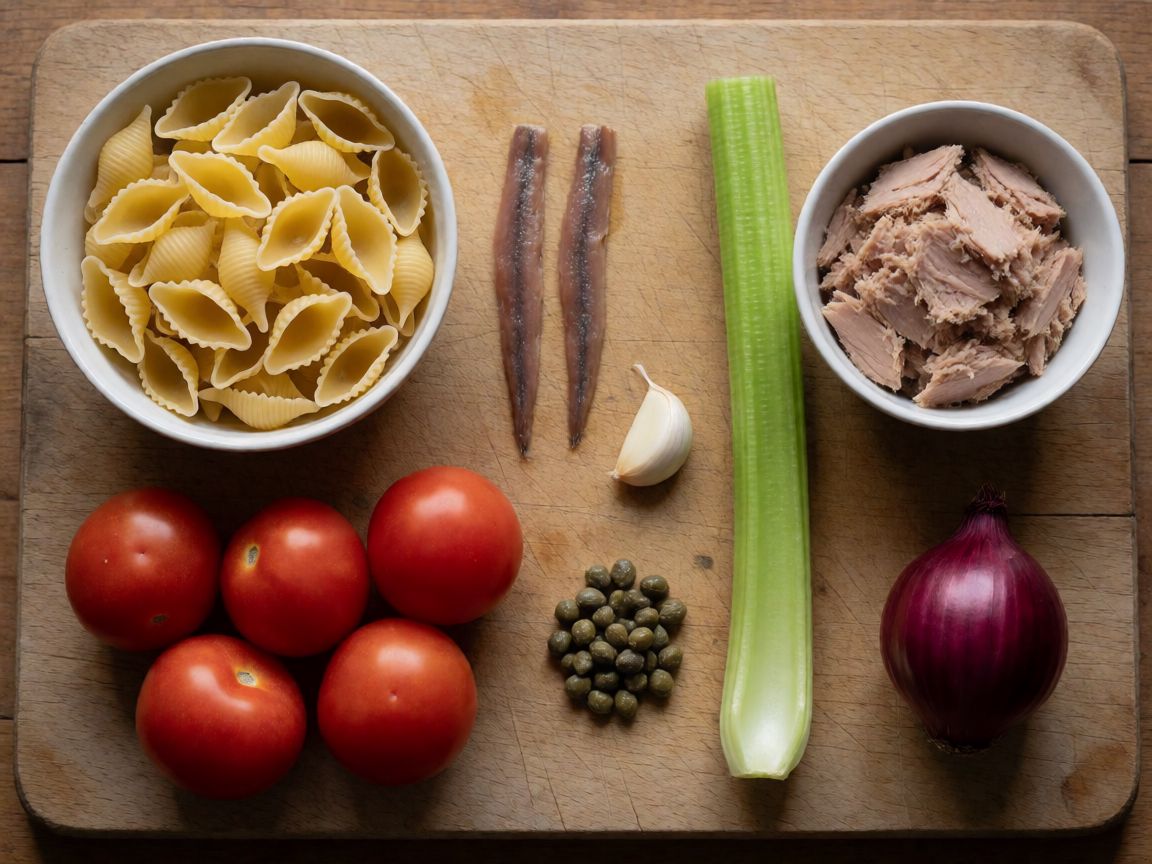
- 350 g Conchiglioni
- 400 g Tuna
- 2 pcs Anchovies
- 1 clove Garlic
- 1 pcs Celery stalk
- 5 pcs Tomato
- 1 tbsp Capers
- 1 pcs Red onion
- 100 g Green olives
- 1 tbsp Breadcrumbs dried
- Olive oil to taste
- Salt to taste
- Black pepper to taste
- Parsley to taste
- Basil to taste








Steps
Cut the tuna into small pieces and fry over medium heat with the anchovies until golden. Doneness: 63°C at the thickest point.
Finely chop the tomatoes, green olives, capers, celery stalk and red onion.
Combine the fried tuna and anchovies with the chopped vegetables, add basil, olive oil, salt and pepper.
Boil the conchiglioni in salted water until al dente, drain and rinse with cold water.
Heat olive oil with garlic and fry for a few minutes until fragrant.
Add the conchiglioni, parsley and breadcrumbs, and mix gently.
Fill the conchiglioni with the tuna and tomato mixture, arrange on a plate and garnish with basil.
Add pepper to taste if desired and serve immediately.
Conchiglioni are those big shell pasta — made exactly that shape so they can hold something, which tells you the whole dish is a vessel, not a sauce-carrier. Here the filling is a raw-cooked salad: seared tuna and anchovies, chopped tomato, olive, caper, celery, red onion, bound with oil and basil. It's served at room temperature, which is the point — cold pasta shells with a warm filling turn gluey, hot ones with a cold filling go clammy on the tongue. Everything sits somewhere in the middle, and that's a deliberate temperature, not a lazy one.
What decides whether this works is restraint in two places: how you cook the tuna, and how finely you cut everything else. The tuna goes in briefly with the anchovies — not to cook it through like a steak, but to firm the surface and let the anchovy's salt and oil melt into it. Anchovy here isn't a fish course, it's a seasoning, the way a stock cube is a seasoning — it dissolves into the oil and carries saltiness everywhere rather than announcing itself. Some say tinned anchovy is "too strong" and should be left out — no, because without it the filling has nothing holding the tomato and olive together; you'd be eating separate chopped things instead of one dish.
Tuna: fresh is better here because it sears and stays slightly pink-firm rather than flaking into threads, which matters when you want distinct pieces in the filling, not mush. If you only have tinned tuna in oil, use it — drain it, skip the frying step for the tuna itself, and just warm it briefly with the anchovies so the flavours marry, because tinned tuna is already cooked and researing it only toughens it further. Tuna steak in brine, rather than oil, needs a splash more olive oil added back in, since the tin's oil is doing real work carrying flavour, not just lubricating the pan.
Anchovies: two fillets, salted or in oil, dissolved rather than seen. If the smell puts you off raw from the tin, remember it changes character completely once it hits warm oil — it stops smelling of fish and starts tasting of salt and umami, the same shift that makes Worcestershire sauce bearable to people who'd never eat an anchovy whole. No anchovies in the cupboard — a teaspoon of fish sauce or even a dash of Worcestershire sauce does the same carrying job, though you lose the little flecks of texture.
Capers and green olives are both pickled or brined, and both are there for acid and salt, not bulk — so buy the small-caper, firm-olive kind rather than the soft jarred ones sold pre-pitted and mushy, which collapse into paste when chopped instead of staying as distinct bites. If you can't get capers, a few extra chopped olives plus a squeeze of lemon gets you close; capers are really just concentrated brine in solid form.
Celery stalk and red onion: the celery is there for that clean, slightly bitter crunch that cuts through the oily tuna — don't skip it for "just the leafy bits," the stalk's fibre is the point. Red onion rather than white or brown because it's milder raw — this onion never gets cooked, it goes in straight after chopping, so a white onion here would sit too sharp against the tomato. If red onion isn't to hand, a shallot, finely chopped, is milder still and works as well or better.
Tomatoes: five, chopped small, for juice as much as flesh — they're what keeps the filling from being dry fish-and-olive paste. Ripe, soft ones are actually better than firm salad tomatoes here, since you want them to collapse slightly into the mix, not hold cube shapes.
The pasta itself: boiling it al dente and then rinsing in cold water is not the usual advice for pasta — normally you'd never rinse it, because the starch on the surface is what sauce clings to. But there's no sauce here. The shells are a container, and rinsing stops them cooking further and stops them sticking together while you work, which matters a lot when you're filling thirty-odd shells by hand and the first ones can't be going soft by the time you reach the last.
The brief fry in garlic oil with parsley and breadcrumbs, tossed through the shells before filling, is the one hot step the pasta gets. It's not there to flavour deeply — a few seconds of contact can't do that — it's there so the shells aren't naked and dull on the outside, and the breadcrumb gives a little grip so the filling doesn't just slide back out when lifted. Patience here is mostly in the assembly, not the cooking: filling shells by hand is slow, and rushing it is how you end up with half the filling on the plate instead of in the shell.