
 AI photo
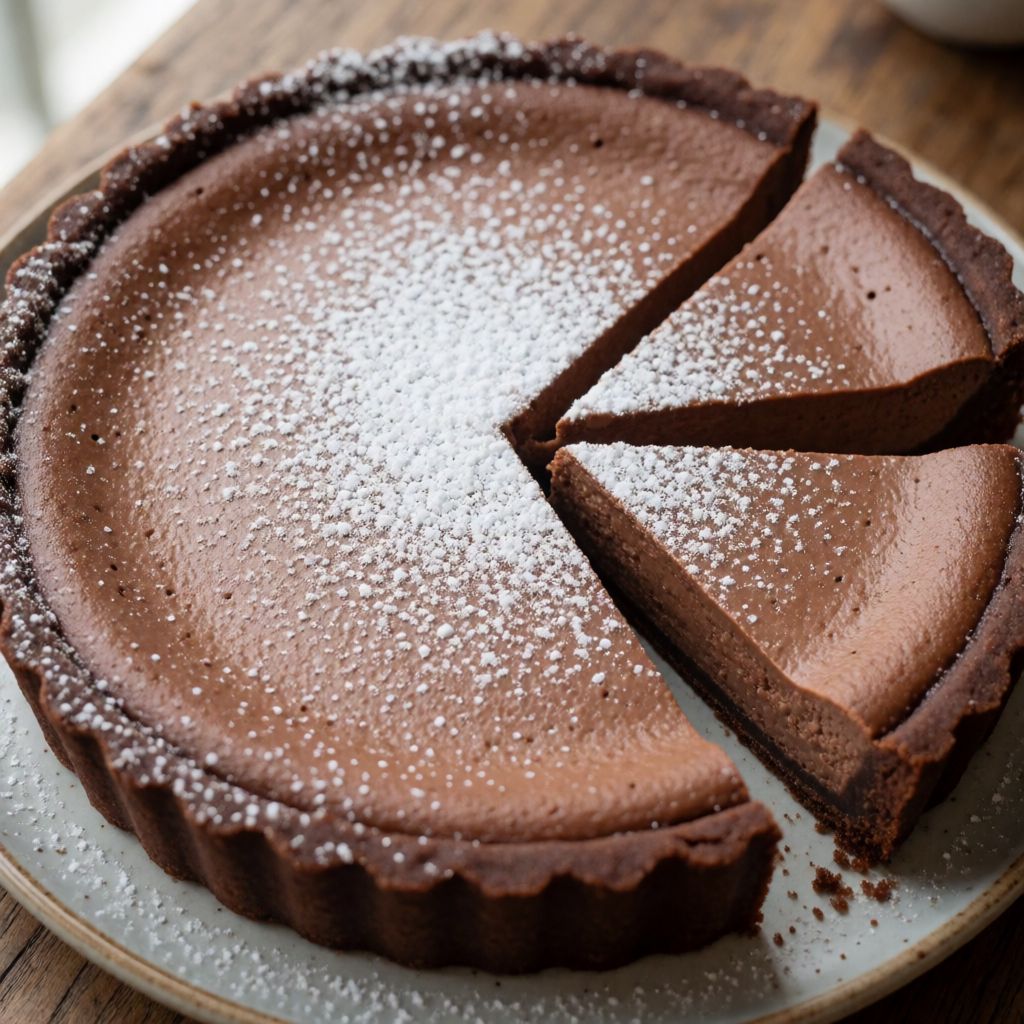
Chocolate and Ricotta Tart
A chocolate pastry case filled with a creamy ricotta and chocolate chip filling.
Labels are worked out automatically from the ingredients and can be wrong. Check the packaging if it matters to you.
Ingredients
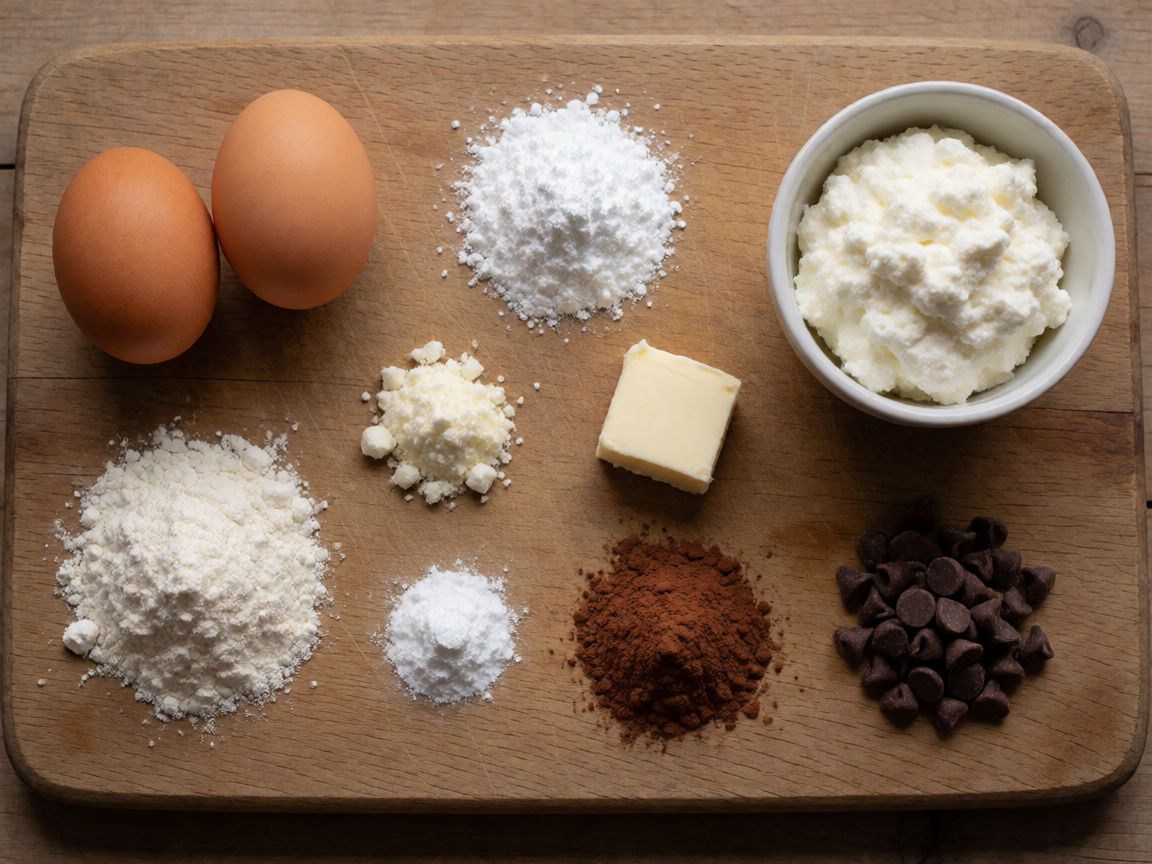
- 2 pcs Eggs
- 80 g Icing sugar
- 150 g Butter at room temperature
- 180 g Plain flour
- 8 g Baking powder
- 20 g Cocoa powder
- 300 g Ricotta
- 90 g Chocolate chips
- 100 g Caster sugar









Steps
In a bowl, whisk the eggs and icing sugar together with a mixer, then add the butter at room temperature and whisk until creamy.
Sift in the flour, add the cocoa powder and baking powder, and mix with the mixer, then with a spatula until smooth.
Transfer the dough to a piping bag, form the base of the tart in a 22 cm tin lined with baking parchment, smooth it with your fingers and shape a rim about 1 cm higher than the base.
Mix the ricotta with the chocolate chips and caster sugar for the filling.
Spread the filling over the pastry base and smooth it with the back of a spoon.
Bake in a preheated fan oven at 180°C for about 40-45 minutes.
42 min
This isn't a British tart in the usual sense — no blind-baked shell, no poured custard that sets under foil. It's closer to a Sicilian crostata: a cocoa biscuit dough gets piped, not rolled, into the shape of a case, and a sweetened ricotta studded with chocolate sits in it raw and bakes alongside. The piping is the whole trick. You cream butter into sugar and egg until it holds air, so the dough stays soft on purpose — too soft to roll, too soft to chill into a disc. Chill it and you'd have to roll it, and rolling a dough this buttery means it tears or sweats. Piped, it needs no rolling pin, no tin ring, no blind baking with beans on paper. The rim you pipe a centimetre higher than the base isn't decoration — it's the wall of the tin that this dough is replacing, holding the loose filling in while it firms.
What decides whether it works is moisture, not minutes. The filling has no egg to bind it, so it doesn't set by coagulation like a custard tart — it sets by the ricotta losing a little of its whey to the oven's heat and the sugar fusing into it, while the chocolate chips stay as pools rather than melting flat into the mix. If your ricotta came out of a tub swimming in liquid, that liquid has nowhere to go but down into the crust, and you get a soggy disc under a wet top — the fix is a firm, well-drained ricotta, not a thicker crust or a longer bake.
On the dough: eggs and icing sugar whisked first, then soft butter, is a creaming method borrowed straight from cake-making, not pastry-making. It traps tiny air bubbles in the sugar-fat emulsion, which is why the baked base ends up closer to a soft cocoa biscuit than a crisp pastry disc — and why you add the flour last, mixing only until smooth. Overwork the flour at this stage and gluten starts to form; gluten in a tart base means toughness where you want short, tender crumbling. Icing sugar rather than caster here is about grain size, not sweetness — its fine powder dissolves into the butter cleanly, so the crust doesn't carry grit.
Baking powder in a tart base looks odd if you think of this as pastry, but it isn't — it's a biscuit dough, and the lift keeps it from baking down into something flat and dense. If you have no baking powder, you can leave it out, but expect a heavier, denser base, closer to a classic pasta frolla; it will still hold the filling, it just won't have the same light give under the fork.
Ricotta is the whole filling's backbone, and the criterion for choosing it is moisture and firmness, not brand. You want a cheese that holds its shape in the tub rather than one sitting in a pool of whey — if yours is wet, tip it into a sieve lined with a napkin for twenty minutes before you use it; that's patience doing the work a fancier cheese would do for free. Where ricotta is hard to find, any mild, low-moisture fresh cheese behaves the same way — a well-drained cottage cheese pushed through a sieve, or mascarpone cut with a spoon of yoghurt to bring its fat down, both work; mascarpone on its own is too rich and will split under heat rather than firm.
Caster sugar in the filling doesn't need to vanish completely — ricotta is thick enough that a little undissolved sugar just gives texture against the melted chocolate, so don't chase a perfectly smooth mix here the way you would for the dough. Chocolate chips are chosen over a chopped bar for one reason: they're made to hold their shape at oven heat rather than spread. If you only have a bar, chop it coarse rather than fine — fine pieces melt flat into the ricotta and you lose the pools of chocolate that are the point of the filling; milk chocolate is too soft for this and will bleed.
On the oven: fan at 180°C means moving air, and moving air cooks the rim and the centre of the filling at closer to the same rate, which matters because this tart has no lid, no water bath, and no second chance once the top is set — a still (non-fan) oven runs cooler in effect and often has one hot side, so without a fan you'd want the temperature a notch higher and the tin turned once, by feel, watching that rim colour rather than trusting a dial.
Last thing, and it's the one step missing from the instructions that decides whether you get clean slices or a mess on the plate: let it cool fully in the tin before you unmould it. The filling is still soft and wet-looking straight from the oven; it firms properly as it cools, the same way a cheesecake does. Cut it warm and you'll get ricotta running into the crumb instead of a clean wedge. With tea, once it's cooled, is exactly where this tart belongs — it's rich enough that six slices from a 22 cm tin is the right call, not a shortfall.