
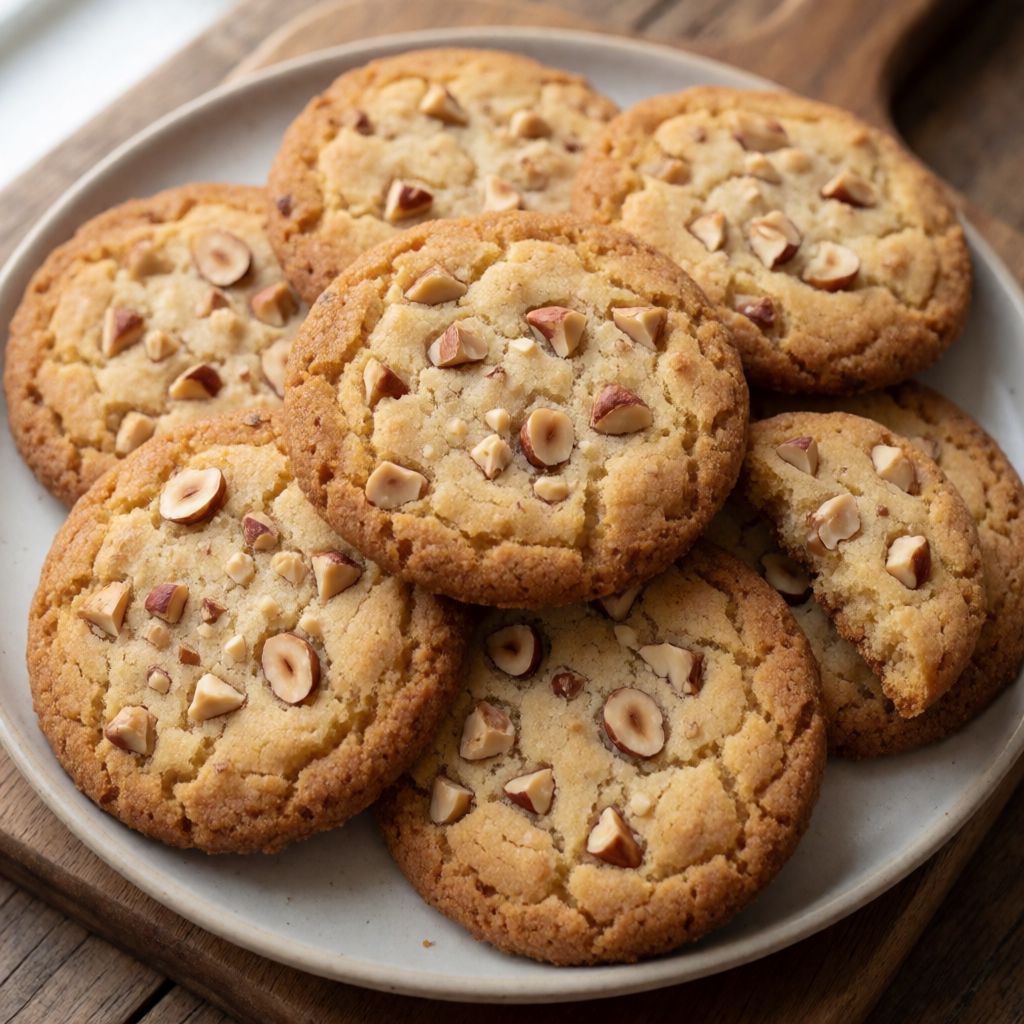
 AI photo
Crispy Hazelnut Cookies
Crisp little hazelnut cookies with a crunchy nutty coating, baked until golden.
Labels are worked out automatically from the ingredients and can be wrong. Check the packaging if it matters to you.
Ingredients
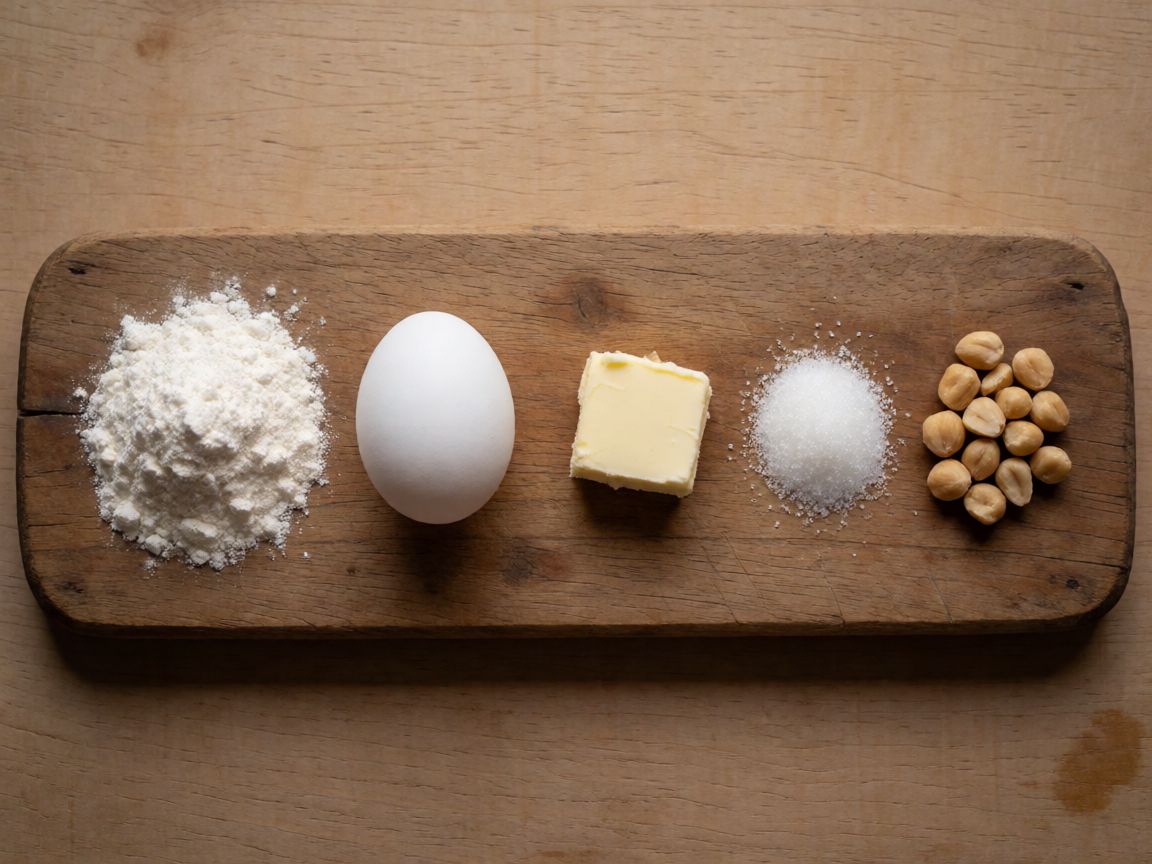
- 150 g Plain flour
- 1 pcs Egg
- 100 g Butter at room temperature
- 80 g Caster sugar
- 50 g Hazelnuts




Steps
Finely chop the hazelnuts together with 30 g of the sugar until they form a coarse crumb, for coating the cookies before baking.
Sift the flour and shape it into a mound with a well in the centre; add the egg yolk and scatter over small pieces of butter.
Work the dough vigorously with your hands for a few minutes until it becomes smooth.
Shape the dough into a few small-diameter cylinders.
Wrap the cylinders in cling film and chill in the refrigerator.
Beat the egg white with a fork for a few minutes until lightly foamy.
From the chilled dough cylinders, shape small balls, dip them in the egg white, then roll them in the sugared chopped hazelnuts.
Arrange the balls on a baking tray lined with baking paper and bake in an oven preheated to 180°C for about 15 minutes.
15 min
This is a crumbly, egg-yolk-and-butter dough rolled into small balls and dressed in a hazelnut-sugar shell — closer kin to a French sablé than to anything you'd call a biscuit at home. The nut coating isn't decoration. It's a crust that sets hard and shatters, which is where "crispy" actually comes from, not from the dough itself, which stays short and sandy inside.
What decides whether this works is what state the butter is in at each stage, not how many minutes it spends in the oven. Butter at room temperature means soft enough to smear into the flour with your hands but still holding its shape — not glossy, not oily. When you rub it through the flour like that, it coats each grain of flour in fat before any gluten can form a web. That's the whole reason the dough comes apart in short, sandy pieces rather than stretching like bread dough.
Some say room-temperature butter and melted butter come to the same thing eventually, so why bother softening rather than just melting it. No — because melted butter floods the flour instead of coating it, and once flour is wet through with liquid fat, the little gluten that's there still links up, and you get a dense, greasy biscuit instead of a short one. The chill in the fridge afterwards isn't there for flavour. It's there to put the butter back to solid, so it melts slowly and evenly once it hits the oven, instead of collapsing into a flat greasy puddle the moment the tray goes in.
Flour here just needs to be plain, nothing fortified or labelled strong. Strong flour means more protein, more protein means more gluten once you work it, and more gluten is exactly what turns a short, crumbling cookie into a tough, chewy one. Working the dough "vigorously for a few minutes" sounds like it contradicts this, but it doesn't — you're not developing strands, you're just distributing fat through flour quickly, by hand, the way pastry has been made in a well-shape on the table for a very long time because it needs no bowl and no tool, just a clean surface.
Butter is the one ingredient here with no real substitute if you want the texture this dough is built around. The criterion is: solid at room temperature, soft enough to work by hand, firm again once chilled. Margarine can technically stand in on that criterion, but it carries water differently and tastes of nothing in particular, which matters a great deal in a dough this plain — there's no vanilla, no spice, nothing to hide behind. Lard would behave the same way mechanically and taste wrong for something going in a teacup saucer. This is one of those recipes where the fat is doing a job, not just adding richness, so don't experiment with oil — oil never solidifies in the fridge, and without that solid stage the dough has nothing to hold it together once it's rolled into a ball.
Sugar does two separate jobs and is split for it, much like the egg. The 30g chopped in with the hazelnuts isn't there to sweeten the nuts so much as to keep them from turning into paste under the knife — sugar crystals get between the oily nut pieces as you chop and stop them clumping, so you end up with a coarse, dry crumb instead of a sticky one. Skip that and your coating goes gluey rather than crunchy. The 50g in the dough sweetens, obviously, but also gets in the way of gluten forming, which is a happy side effect rather than the reason it's there.
Hazelnuts: buy them whole and chop them yourself close to when you need them. Pre-chopped nuts have far more surface area exposed to air, so the oil in them turns rancid faster, and rancid nut oil in a coating this thin is not something sugar can cover up. If hazelnuts aren't to hand, the criterion for a substitute is a low-moisture nut that toasts rather than scorches in a domestic oven — almonds work cleanly on that basis; walnuts can, but go bitter if they're not fresh, and you'd taste it straight through the sugar.
On the oven: 180°C here is a working temperature for setting the egg-white glue into a shell and toasting the nut coating without the sugar on it catching and turning bitter before the inside of the cookie is even warm through. Fifteen minutes is a starting point, not a verdict — domestic ovens vary by ten degrees or more depending on where they sit on the dial, and fan ovens run differently from conventional ones. Judge by the coating: it should go from pale to a deeper gold, and the balls should feel set rather than give under a light touch. They'll still feel a touch soft straight out of the oven — that's normal, the crisp finishes setting as they cool on the tray, which is also why pulling them early to "check" and putting them back rarely ends well.
This makes a plateful, not four individual puddings — think of the "serves 4" as four people with a cup of tea each, not four plates. And don't rush the chilling: it's not downtime before the real work, it's the step that lets you roll the dough into balls at all without it sticking to your palms and smearing instead of rolling. Patience there is what keeps the shape of each cookie even, which is what keeps them baking at the same rate — uneven balls mean some centres still raw while the small ones outside have already gone past gold.